


Artificial intelligence (AI) has been on the forefront of industries to watch for the past few years, but the processes that the technology performs are nothing new. Information analysis as these models know it has been around since the 1970s; only recently has the general public felt the proliferation of the technology that innovators have been working on for years.
Implementation of AI in professional settings stretches beyond the programmers who build the software, as young adults entering the workforce are increasingly expected to use the technology to assist their workflows. In a continual effort to properly prepare graduates for the world they enter, Gwynedd Mercy University offers an artificial intelligence and machine learning (ML) concentration within its computer information science (CIS) degree, Villanova School of Business (VSB) offers an analytics and artificial intelligence co-major and Ursinus College offers an artificial intelligence minor in its school of mathematics, computer science and statistics.
Students in the classroom at Gwynedd Mercy University. Photo courtesy of GMercyU CIS
New Programs for the Changing World
When something as novel as artificial intelligence proliferates our everyday lives in the way that it has, the ability for academic institutions to educate students about it in an accurate and timely way is of the utmost importance. Cindy Casey, PhD, the director of computational sciences, program coordinator, assistant professor and chair of the computational sciences department of Gwynedd Mercy University boasts the institution’s forward-thinking outlook, having created its concentration in the best interests of the students based on “the university recognizing that this is the direction that the world is moving.”
Addressing the effect of AI beyond tech industries, Ursinus College’s William Mongan, the associate professor and coordinator for artificial intelligence, explains the logic to educate students school-wide: “The reason we started with a minor was to just have a nice, flexible platform to bring to these students across all the disciplines that we teach.” Attitudes throughout the universities align with this outlook, with VSB offering its co-major alongside analytics, marketing, finance, sports marketing and several other disciplines.
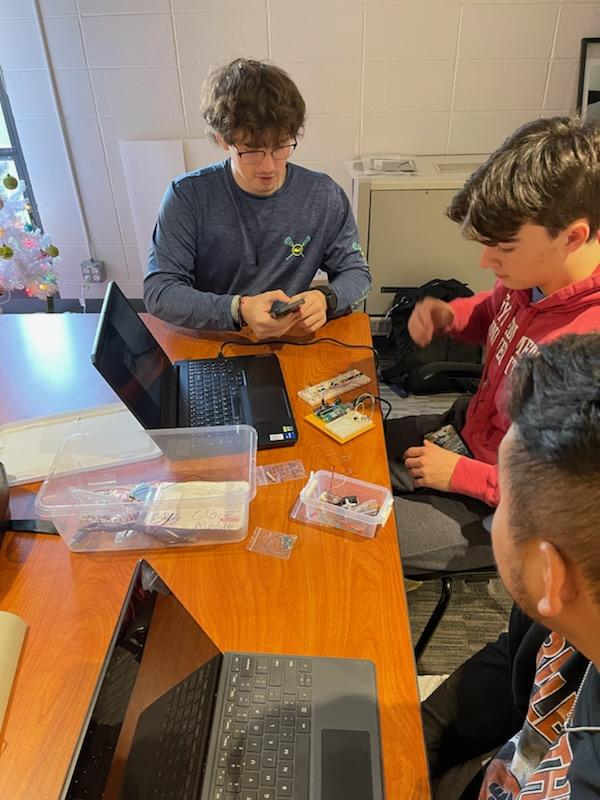 Photo courtesy of GMercyU CIS
An Ever-Changing Curriculum
The curriculums must be constantly reassessed to ensure that they are providing a holistic education about AI for students. Timeliness is of great importance for AI education because of the rapid pace at which it is developing, posing a responsibility for administrators to pay keen attention to industry updates. “It’s an ongoing process which happens throughout the academic year,” explains Julie Pirsch, PhD, the senior associate dean of teaching and programs at Villanova School of Business. “Our faculty also consistently drive on their own innovation and integration of new learning techniques.”
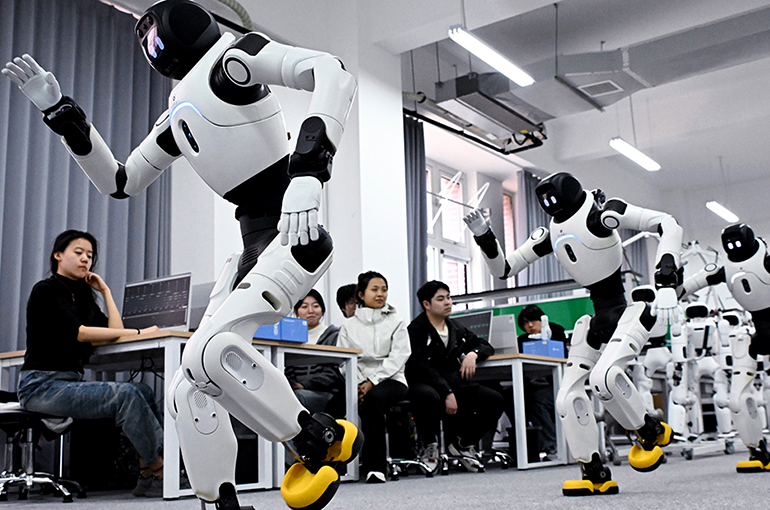
Developing accreditation for a degree in AI requires the incorporation of old classes with new, and comprehensive topic coverage determined by the school within each university. With Gwynedd Mercy’s AI studies under the CIS umbrella, Casey prides its dedicated Artificial Intelligence Lab, where students enrolled in the concentration have the opportunity to tinker with the Elephant Robotics Mercury Humanoid, and an Innovation Lab with 3D printing that gives students the ability to prototype their models. “Students get to develop what they work on,” Casey explains, “and that gives them that little bit of freedom that really excites them.”
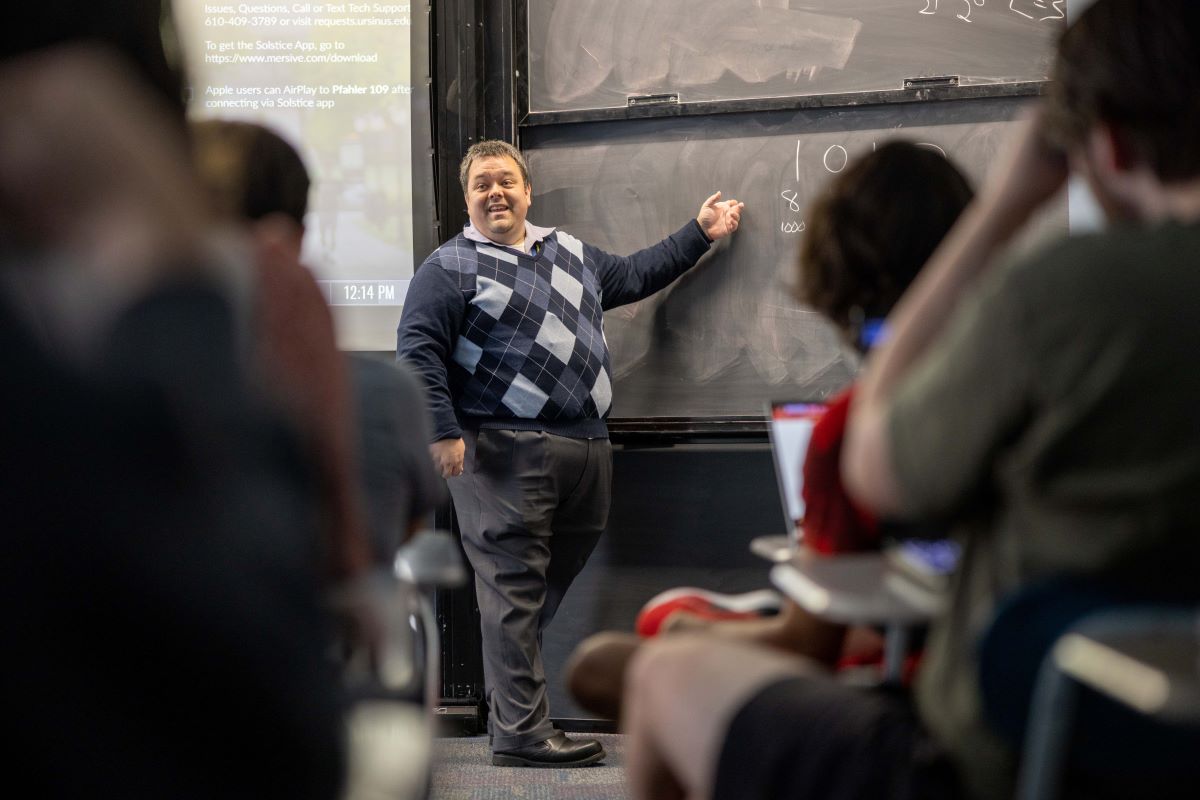
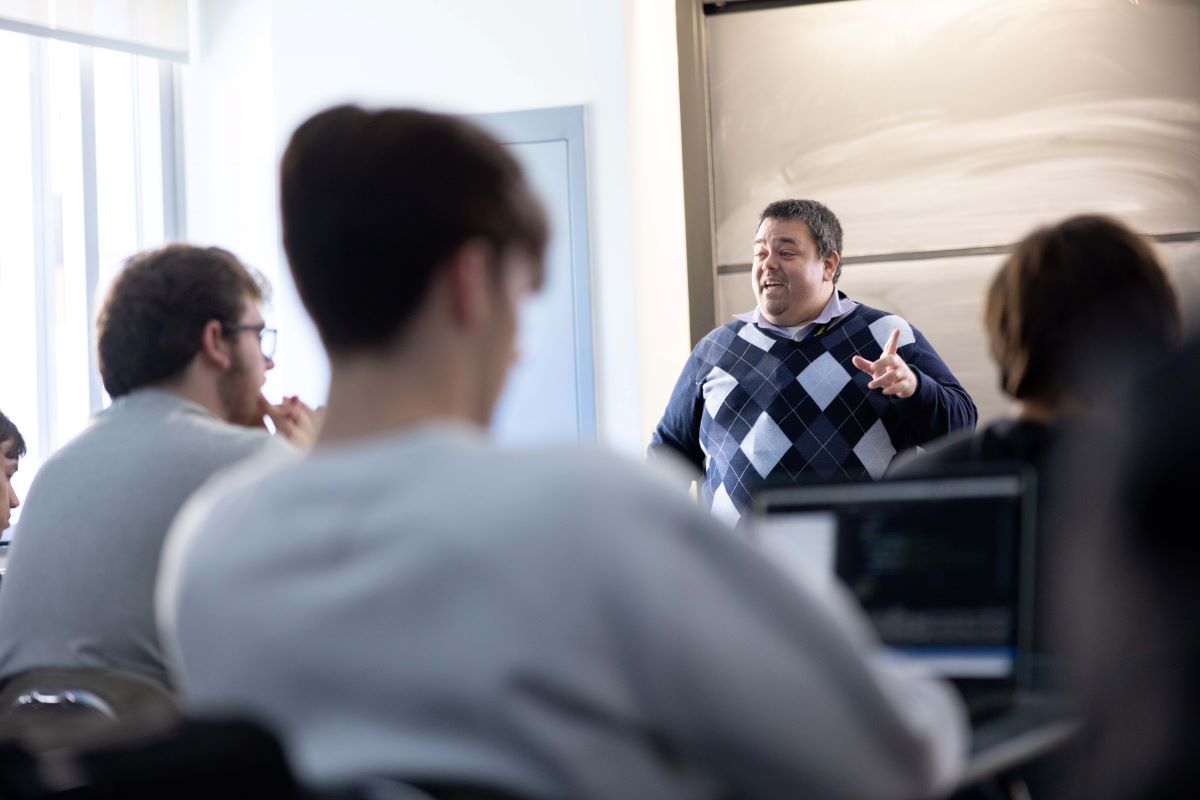 William Mongan in the classroom. Photo by Douglas Benedict, courtesy of Ursinus College
For Ursinus, whose AI minor is in the school of mathematics, computer science, and statistics, the curriculum involves more data-focused topics. “I’m requiring only a semester of programming,” Mongan mentions, “but it’s a really minimal prerequisite that we might get rid of at some point to make it a truly introductory-level type course.” Ursinus is deliberately designing the program to not require a full computing curriculum as part of its belief in providing AI education to students of all disciplines.
VSB’s co-major takes a slightly different angle, being within the business school. Although coding classes are still required, an equally strong emphasis is placed on learning how to assess code written by AI and integrate AI effectively into business settings. Pirsch details the business angle of the curriculum, with students being taught “how to work with their [professional] team to integrate technology where it’s appropriate and stay away from technology where it’s not appropriate.”
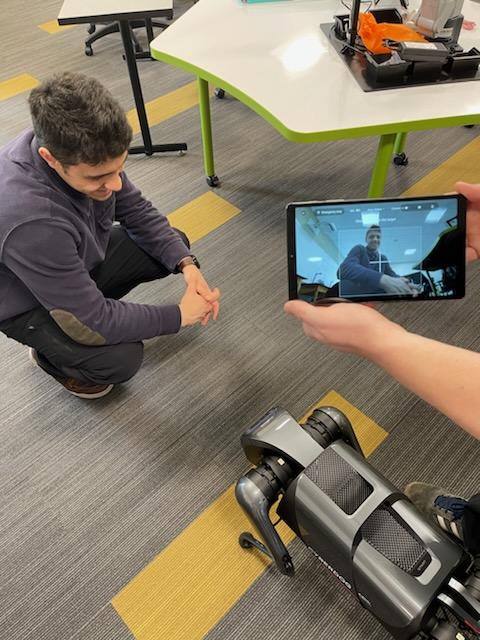 Students working with robotics technology. Photo courtesy of GMercyU CIS
The Boundaries and Limitations of AI
The boundaries of AI in settings like that are a core topic for each of the universities’ programs as well. “We have seen this kind of data modeling and data storytelling emerge since the 1970s…as much as we anthropomorphize [AI] and it looks and feels like a human conversation, it is a computer and it works differently,” explains Mongan. Ursinus emphasizes students’ understanding of that concept and effective integration of AI into the analyses that have been done by hand for decades, including dataset and information bias. Additionally, Mongan works closely with the philosophy department to have ongoing conversations with students about the essence of technology ethics and being good advocates for AI use.
Casey highlights the real-world effects that the technology can have and the lessons that Gwynedd Mercy students learn regarding improper data analysis. Because AI is fed limited information, “it’s only as good as the data going in,” Casey affirms. There are precise exercises to machine bias, surveillance, and behavior manipulation in the university’s curriculum, with students being shown case studies regarding improper data collection and aligning that knowledge to using AI effectively for information processing.
Villanova recognizes the importance of including curriculum addressing AI as a helping tool and analyzing information bias as well, but also includes AI ethics discussions across various business disciplines. Students are able to take a cyber law class which addresses legal issues associated with AI through the business law minor, and AI exercises are integrated into other areas including the accounting program and quantitative finance concentration. VSB leaders work with employers to introduce real business scenarios involving AI, further emphasizing mindful implementation as well as preparing students for post-graduation experiences.
Serving on Montgomery County’s Advisory Council on Artificial Intelligence for Public Good, Mongan translates his experiences from the council to the Ursinus classroom as well. “I am modeling the types of conversations from those experiences that students are likely to encounter when they graduate,” he says.
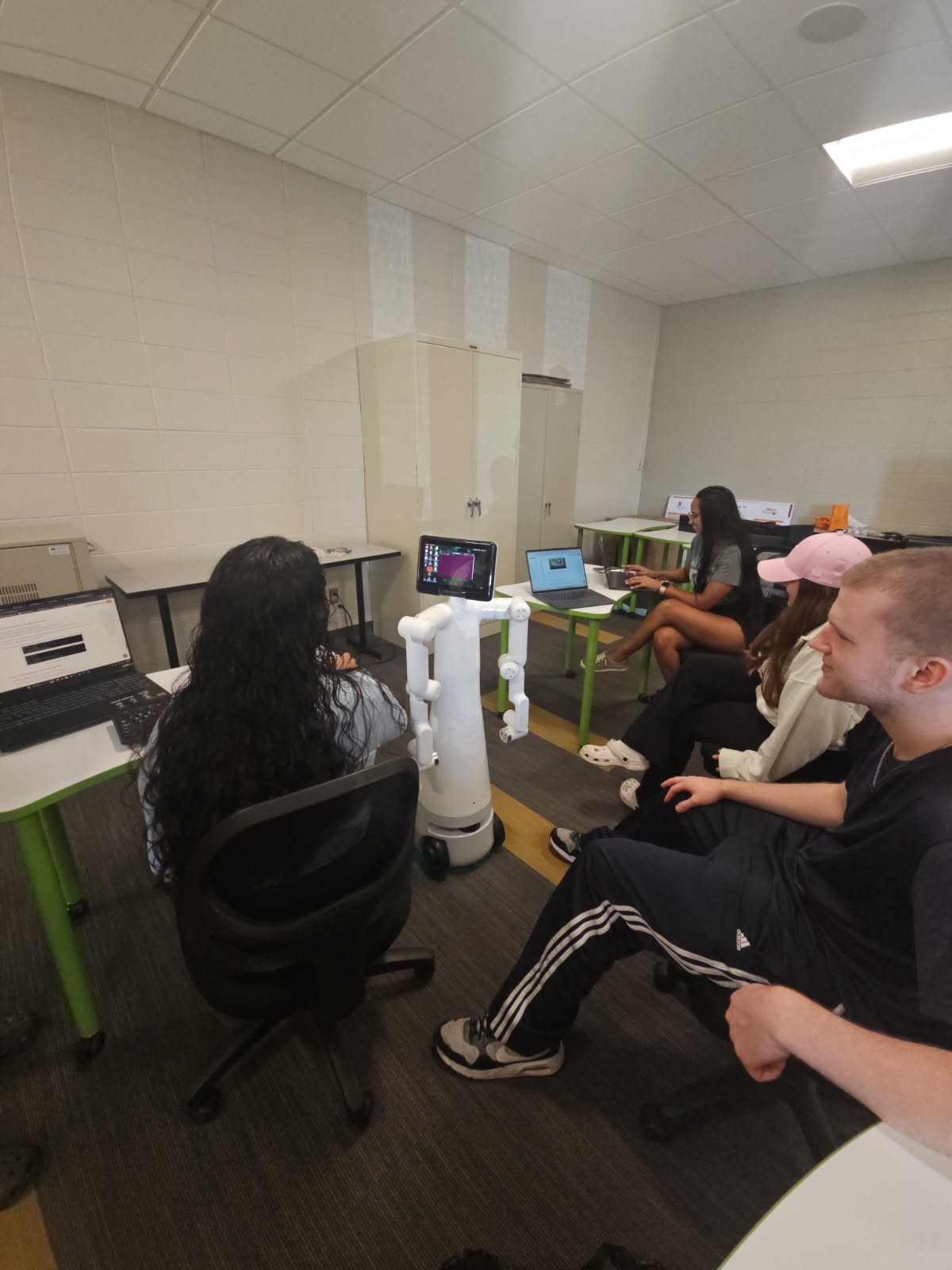 Students working with the Elephant Robotics Mercury Humanoid at Gwynedd Mercy University. Photo courtesy of GMercyU CIS
The abilities of AI are accelerating rapidly, and that requires forward-looking ideas to keep up with the novel technology. No university covered has plans to slow down anytime soon, with Gwynedd Mercy developing a one-year graduate program, VSB offering an MBA in applied artificial intelligence and undergraduate and graduate certificates elsewhere within the university and Ursinus providing AI tracks across a number of focuses, including math and tech, data-centric and philosophy.
Whether high school students or adults returning to education are considering studying AI, universities around the Philadelphia area offer quality programs focused on the world-changing technology.
Related: Rest Is More Important Than Ever, Main Line Area Experts Explain