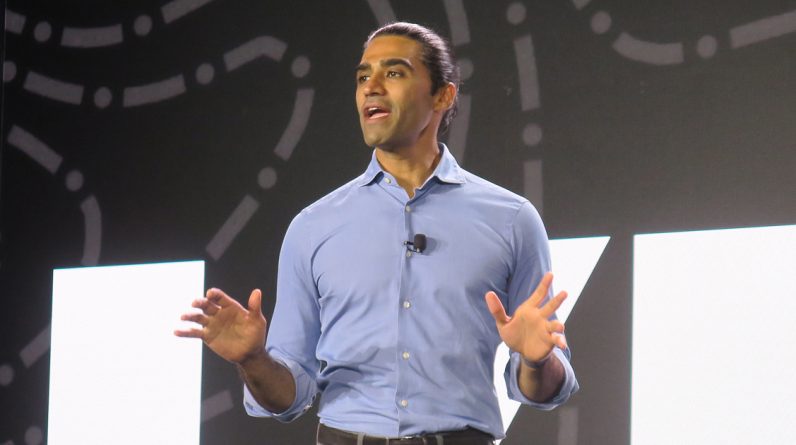




According to research from the Lawrence Berkeley National Laboratory, power outages and infrastructure failures cost the U.S. economy up to $150 billion a year. Companies absorb most of that hit through stalled production, delayed shipments, and rising operational costs. Households feel it through higher energy bills and more frequent disruptions. The strain on America’s aging energy system has become a barrier to growth and global competitiveness. That is the challenge Juan Manuel Perdigón Sistiva has spent his career working to solve.
Perdigón is an AI and digital transformation leader in the energy sector, and his work centers on the idea that most industrial failures are preventable. With real-time data and predictive automation, companies can anticipate problems instead of reacting to them. “The biggest economic opportunity lies in predicting and preventing failures before they turn into costly downtime,” he explains. “Most losses come from problems that were fully avoidable.” His approach replaces reactive maintenance with systems that learn from real-time patterns, detect early warning signs, and help operators intervene before equipment breaks.
He has also seen firsthand how quickly progress stalls when companies scale automation on top of bad data. Many operators are generating more information than ever, but lack the governance and consistency needed to make AI reliable. “If the data foundation is weak, even the best ML models will deliver unreliable insights,” he says. He has stepped into projects where teams made multimillion-dollar decisions based on signals that looked scientific but came from incomplete datasets. By rebuilding data pipelines and introducing governance frameworks, he helped companies reduce operational errors, regain decision clarity, and restore confidence in automation tools. Applied across the sector, this shift alone could prevent costly misfires and strengthen the modernization of the country’s grid.
As industries like EV manufacturing, data centers, and AI computing accelerate energy demand, Perdigón sees a different kind of risk emerging. It’s not only about data quality; it’s about whether the country can scale reliable infrastructure fast enough to support the industries driving the next decade of economic growth. Many mid-size operators still rely on manual processes that slow response times and leave the grid vulnerable to overloads or failures. The gap between demand and operational capacity is widening. Without faster modernization, he warns, the U.S. could fall behind nations updating their grids at a far more aggressive pace. Strengthening this backbone isn’t just a technical challenge. It’s a competitiveness imperative.
China and South Korea are rapidly modernizing grids, automating industrial systems, and deploying AI-driven infrastructure at a national scale. The U.S. leads in innovation, but its deployment speed can sometimes lag. Perdigón believes the United States must move faster. He advocates for modernizing critical infrastructure with real-time data systems rather than patching legacy equipment. He also believes in supporting small and midsize operators, who represent a large share of domestic production, and in expanding public-private partnerships that accelerate adoption instead of trapping innovation in pilot stages.
For smaller operators, modernization often comes down to economics. Many run on thin margins and cannot absorb unexpected failures. “When they realize that AI and automation can reduce downtime, prevent costly equipment failures, and stabilize production, modernization stops being a luxury and becomes a practical business decision,” he explains. Predictive systems reduce risk, increase output, and extend equipment life, making even modest upgrades financially meaningful.
Automation does not eliminate jobs in energy. It changes them. Field technicians transition into predictive maintenance specialists. Operators move into roles focused on remote monitoring, automation oversight, and data interpretation. “These are better jobs. They are safer, more stable, and higher-skilled,” Perdigón says. He believes universities and trade schools need to prioritize data literacy, automation fundamentals, and digital tools so the next generation of workers can move easily into these roles. Companies must commit to retraining and continuous skill development.
The national payoff for adopting these systems at scale is substantial. Energy costs decline as emergency repairs and reactive maintenance shrink. Emissions fall as waste and inefficiencies are reduced. Grid resilience improves through earlier detection and faster response. These gains add up to a more competitive industrial base, stronger regional economies, and a more reliable infrastructure network supporting millions of businesses and families.
The $150 billion Americans lose every year to preventable failures is not inevitable. Perdigón’s work shows that much of it can be reclaimed through better data, targeted automation, and a modernization strategy that empowers operators of all sizes. For a country working to stay competitive in a rapidly shifting global landscape, these solutions offer a path to a more resilient, efficient, and economically stable energy system. Adopted at scale, they could help build a stronger and more reliable foundation for America’s future growth.
Jordan French is the Founder and Executive Editor of Grit Daily Group , encompassing Financial Tech Times, Smartech Daily, Transit Tomorrow, BlockTelegraph, Meditech Today, High Net Worth magazine, Luxury Miami magazine, CEO Official magazine, Luxury LA magazine, and flagship outlet, Grit Daily. The champion of live journalism, Grit Daily’s team hails from ABC, CBS, CNN, Entrepreneur, Fast Company, Forbes, Fox, PopSugar, SF Chronicle, VentureBeat, Verge, Vice, and Vox. An award-winning journalist, he was on the editorial staff at TheStreet.com and a Fast 50 and Inc. 500-ranked entrepreneur with one sale. Formerly an engineer and intellectual-property attorney, his third company, BeeHex, rose to fame for its “3D printed pizza for astronauts” and is now a military contractor. A prolific investor, he’s invested in 50+ early stage startups with 10+ exits through 2023.