


A few months ago, during a team AI training workshop, one of our writers asked me, “If AI helped me draft a paragraph, do I still call it my work?”
At the start of 2026, the question has shifted from “should we” to “how will we.” AI is embedded in every stage of content creation and consumption.
What began as a simple question has become unavoidable, especially after India’s proposed AI-labelling mandate. Global tech firms such as Microsoft, OpenAI and Google are studying India’s new rules.
The rules proposed by MeitY are aimed at curbing deepfakes and misinformation online. The draft, released on October 22, requires AI and social media platforms to label all AI-generated content. The label must cover 10% of the content area and apply to text, video, and audio. Public and industry feedback is open until November 6.
This mandate is really a turning point. It prompts a rethink of what authenticity means in online engagement. It’s about time we had this conversation.
Especially now, when AI’s footprint online is growing fast. A recent report finds that over half of all content on the Internet (52%) is now AI-generated. The good news? Search engines like Google are filtering effectively, with only 14% of ranked content found to be AI-generated.
For years, creators have built their voice around authenticity. But in an era where AI can mimic tone, style and even emotion, authenticity now needs structure.
Labelling AI-generated content is about trust. Audiences need to be made aware what’s real and what’s assisted. It’s like food packaging labels, the idea is to help people make informed choices. We don’t buy less because it shows ingredients. We buy with greater confidence. Similarly, an AI label won’t hurt creativity. Rather, it will strengthen credibility.
For content creators, marketers, and communication leaders, this is the next big shift. The future will demand that we disclose, differentiate, and design with integrity.
There’s a myth that AI will replace creativity. It won’t. It will redefine it.
AI is a co-creator. It can spark an idea, build structure or test variations in seconds. But can it replicate human ingenuity, empathy or a lived experience? It can’t. The creators who thrive will be those who blend machine intelligence with human instinct.
Imagine saying, “This piece was co-crafted with AI to speed up research.” But every word reflects human judgment. Then it’s not a disclaimer. It’s evolved creativity.
The proposed labelling rule invites creators to embrace that collaboration, not hide from it.
This is not just an India story. Similar efforts are underway globally.
The Coalition for Content Provenance and Authenticity (C2PA) is building standards for watermarking AI work. Project Origin by Microsoft Research is developing tools to verify where content comes from.
Soon, content will carry a digital passport. Think of it like a traceable signature of origin.
/filters:format(webp)/afaqs/media/media_files/2026/01/16/ai-article-image3-2026-01-16-12-36-44.png)
For brands, it’s protection. For creators, it’s differentiation.
I believe technology should amplify and augment storytelling, not replace it. AI is a co-creator. The difference is in treating it as a partner and not a ghostwriter. That’s what matters. Do you want to be the loudest voice? Or the most trustworthy one? That’s where the future of marketing will be built.
Soon, every digital artifact, be it a post, image, video, or caption, may carry a visible or embedded label indicating its origin.
Yes, it adds a layer of governance. But it also opens a world of opportunity. AI is helping creators deliver faster and personalise like never before. But the human touch with judgment, empathy and purpose remains the differentiator. For content creators, the key takeaway is that transparency builds trust. Trust drives relevance.
AI labelling won’t mean the end of creativity. Rather it signals the start of a more responsible, transparent, and credible era in digital storytelling.
Because great content earns trust and belief. And in a world shaped by algorithms, that will be the real measure of impact.
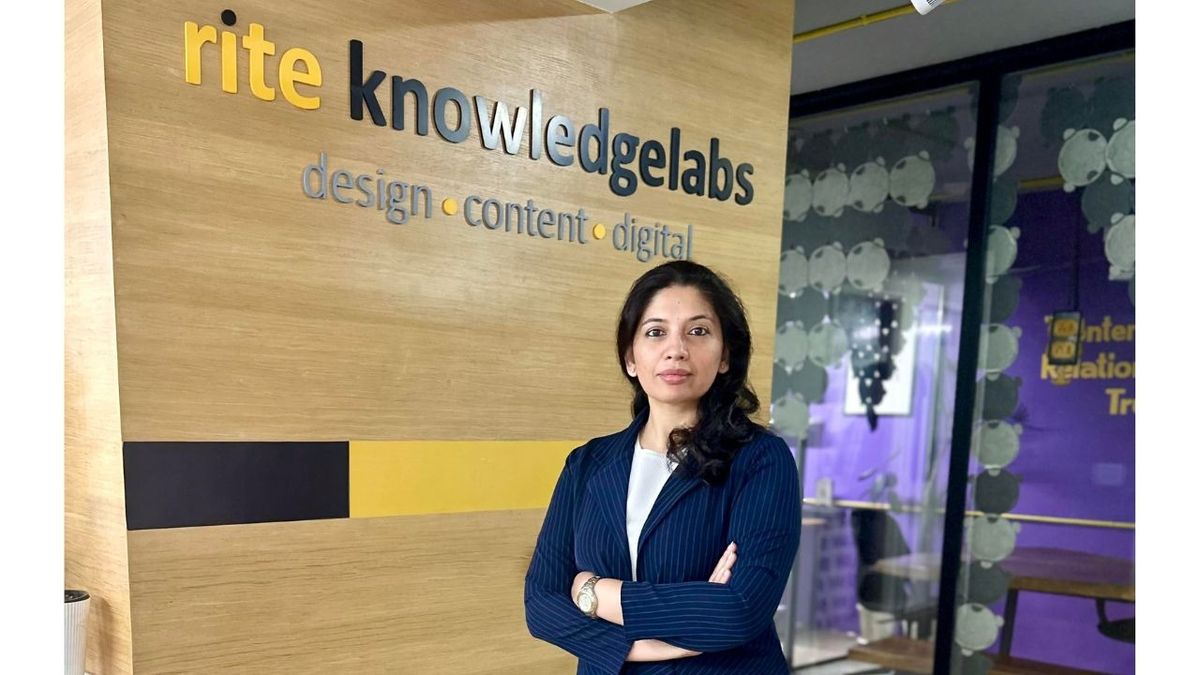
(Zahara Kanchwalla is the co-founder & CEO of Rite KnowledgeLabs. Views expressed are personal.)