


Because ASCs are under mounting pressure to do more with less, many leaders have come to believe AI is no longer a future investment. It’s fast becoming a practical lever to protect revenue, stabilize operations and maintain a competitive edge over hospitals.
From revenue cycle automation and AI-enabled robotics to real-time data intelligence, supply chain optimization and ambient documentation, the following five developments are reshaping how ASCs operate, and separating the centers that scale efficiently from those that struggle to keep pace.
1. AI automation strengthens revenue cycle performance: AI is gaining traction in ASC revenue cycle operations, particularly in denial follow-up, coding validation and front-end registration audits. Rather than overhauling operations, centers are introducing targeted automation to reduce repetitive tasks and prevent downstream billing errors.
Automation of billing, coding and claims submission improves accuracy, lowers administrative costs and accelerates reimbursement.
Kathrynne Johns, CFO of Corpus Christi, Texas-based Allegiance Mobile Health, told Becker’s AI agents have allowed her organization to scale without expanding staff.
“We added nine 911 contracts this year … with no extra headcount in RCM,” she said.
As payer demands grow and labor shortages persist, revenue cycle automation is emerging as one of the clearest early AI wins for ASCs.
2. AI-enabled robotics are accelerating orthopedic and spine ASC growth: Beyond administrative automation, AI is increasingly shaping surgical technology adoption, particularly through next-generation robotic systems in orthopedics and spine.
David Orskey, administrator at Raleigh (N.C.) Neurosurgical and Spine Surgery Center, told Becker’s that “second-generation spine/orthopedic robotic systems with AI” are increasing accuracy and driving growing investment across outpatient surgery.
“Patients are increasingly asking about robotic surgery and if it will be used in their surgical case,” he said, pointing to generational shifts in surgeons and healthcare leadership as a key growth driver.
3. AI tools are expanding clinical visibility and real-time operational insight: Beyond revenue cycle automation and robotic surgery, AI is increasingly being embedded into ASC platforms to give clinicians and administrators a clearer, faster view of patient and operational data.
AI-enabled EHR tools can retrieve medical records across providers nationwide, giving clinicians a more complete picture of patient history without time-consuming information retrieval. AI-driven analytics are also helping ASCs turn turnover times, staffing patterns and case volume data into actionable, near-real-time insight.
4. AI is digitizing supply chain and prior authorization workflows: Beyond revenue cycle and clinical applications, AI is increasingly being used to reduce two of the most burdensome operational pressures for ASCs: supply management and prior authorizations.
Predictive models are helping centers forecast inventory needs, reduce waste and pair automation with value-analysis programs to drive supply chain efficiencies. At the same time, AI-enabled tools are streamlining prior authorization workflows, balancing machine learning with human oversight to ease administrative strain.
5. Ambient AI is redefining documentation and surgeon productivity: As ASCs push for greater efficiency and personalization, ambient AI tools are emerging as clinical workflow enablers rather than just note generators.
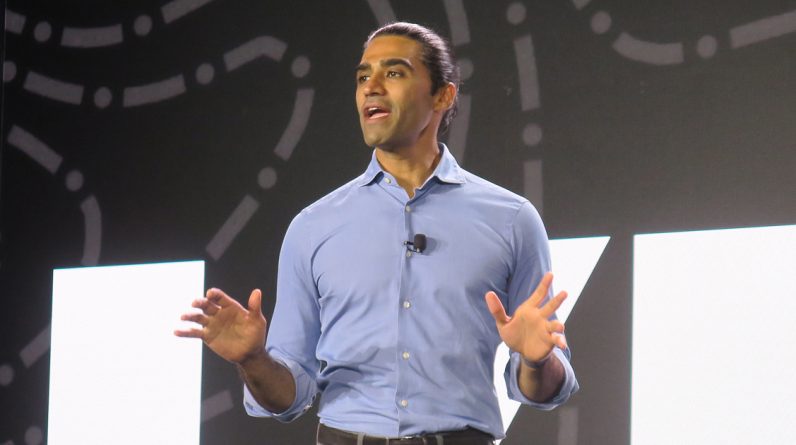
During Becker’s 31st annual meeting on the business and operations of ASCs, Thomas Kelly, MD, founder and CEO of Heidi, said AI tools can transcribe procedures, generate operative notes, create visit summaries and coordinate post-op tasks in real time, allowing surgeons to focus fully on patient care.
“I don’t need a desk,” Dr. Kelly said. “I just focus on what I am trained to do, which is figure out what to do for my patients.”
Dr. Kelly emphasized that transcripts are more than documentation.
“Anything that happens needs to be documented,” he said. “Having that transcript is an amazing source of value,” noting its role in insurance claims, clinical tasking and patient outreach.