


Artificial intelligence is transforming how people work, but one question keeps surfacing whenever productivity tools improve. If AI helps us complete tasks faster, will workers finally get something in return?
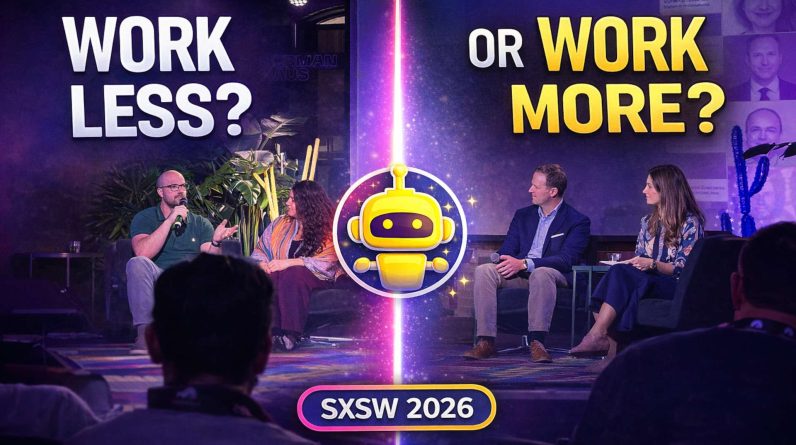
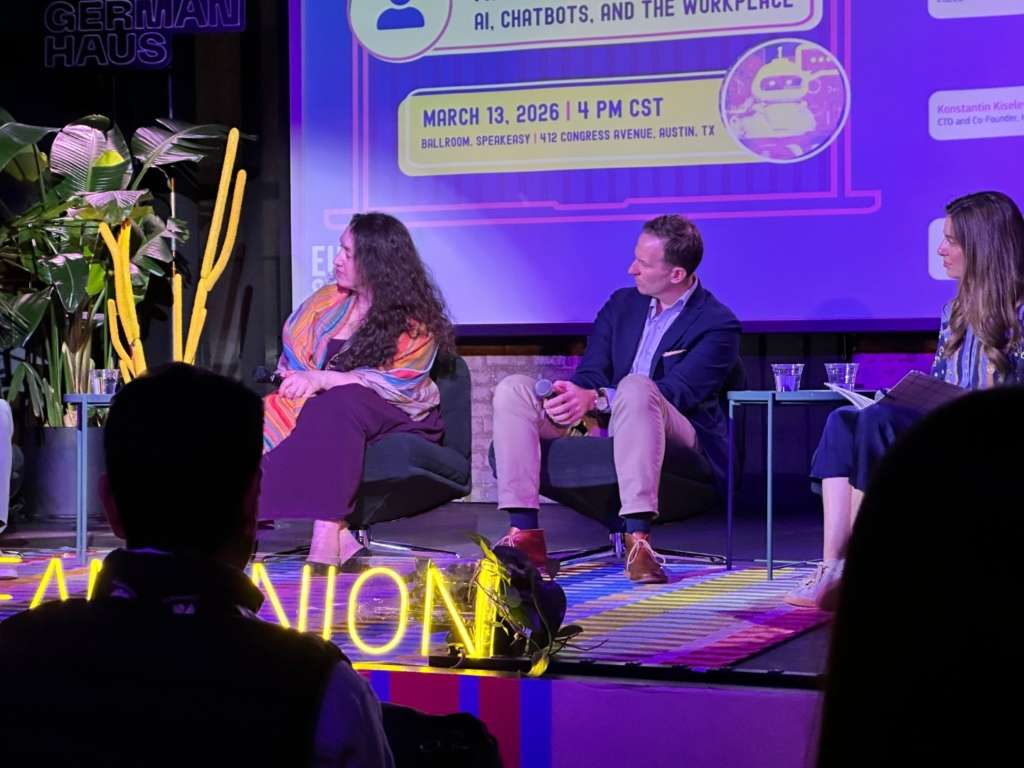
That question sparked one of the most relatable discussions during a SXSW 2026 panel titled “Meet Your New Work Team: AI, Chatbots, and the Workplace.” As companies race to adopt automation tools, many workers are wondering whether the productivity boom from AI could lead to something long promised but rarely delivered: a four-day work week.
The debate highlighted an uncomfortable reality. Artificial intelligence may help people finish work faster, but that does not necessarily mean companies will ask them to work less.
The Productivity Promise of AI
Across industries, artificial intelligence is already improving productivity. AI tools can draft reports, summarize meetings, analyze data, and generate ideas in seconds. Tasks that once took hours can now be completed in minutes. For many workers, the appeal of these tools is obvious. They remove tedious steps and free up time for more creative or strategic work.
Some employees have even started using AI quietly to streamline their workflow. A task that once required half a day may now take only an hour. In theory, that kind of efficiency could open the door to shorter work schedules. The idea of a four-day work week has gained momentum in recent years, with pilot programs appearing in several countries. AI could accelerate that movement by dramatically increasing the output of individual workers.
Who Benefits From the Efficiency?
At SXSW, the panelists pointed out that productivity gains do not automatically translate into fewer working hours. Companies may simply expect employees to produce more work within the same schedule. Instead of shortening the work week, businesses could use AI tools to expand output and increase revenue.
This tension reflects a long-standing pattern in the workplace. Technology often boosts efficiency, but the benefits are not always shared equally between companies and employees. For workers hoping that AI might finally deliver better work-life balance, the outcome may depend less on technology and more on corporate culture.
A Global Divide in the Conversation
The discussion also revealed a cultural divide in how different regions approach the future of work. In parts of Europe, policymakers and labor organizations frequently discuss how automation could reduce working hours while maintaining productivity. Experiments with shorter work weeks have already taken place in several countries.
In the United States, the conversation often focuses on economic growth and competitiveness. Companies may prioritize efficiency and profitability rather than reducing the work schedule. This difference could shape how AI changes work around the world. The same technology may produce very different results depending on how businesses and governments respond.
Working Smarter or Working More?
Artificial intelligence is often marketed as a tool that allows people to work smarter instead of harder. Yet the reality may be more complicated. When new technology appears, organizations tend to adapt by raising expectations. If employees can complete tasks faster, managers may simply assign additional work.
In that scenario, AI becomes a multiplier for productivity rather than a pathway to shorter work weeks. Still, the technology does create an opportunity. If companies choose to share productivity gains with workers, artificial intelligence could help redefine the structure of the modern work week.
The Future of Work May Still Be a Choice
At SXSW, no one claimed that AI will automatically create a four-day work week. Technology alone rarely determines the structure of society. Instead, the panel suggested that the outcome will depend on how businesses, governments, and workers respond to the tools now entering the workplace.
Artificial intelligence may dramatically increase productivity over the next decade. The real question is what people decide to do with that extra capacity. It could lead to higher profits, faster growth, and greater output. Or it could finally give workers something many have wanted for decades: a little more time away from the office.