



| Contributor
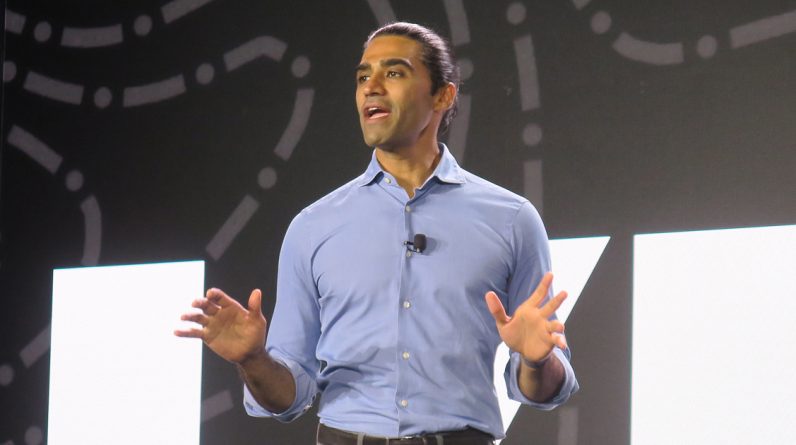
Mbodi AI aims to advance a new category of industrial automation, one where robots may no longer have to be confined to rigid programming but instead evolve through continuous learning. Founded by Sebastian Peralta and Xavier Chi, the company is guided by their education in technical engineering, computer science, and physics, and strengthened by Peralta’s technical background in robotics and education from GRASP Lab. Together, they leverage their backgrounds to build a platform that can bring flexibility and intelligence to manual labor.
This begins with a focus on enabling industrial robots to acquire and refine skills through natural language processing, voice input, and quick demonstrations. Peralta notes that this may remove the need for specialized coding and potentially shorten the path from deployment to productivity. The platform, he explains, is designed to help factories and warehouses gain the ability to build their own scalable libraries of robotic skills and create systems whose functionality can improve over time.
“This approach aims to help their robots respond to unexpected situations and recover from certain errors in a way that draws inspiration from human behavior, which is a stark contrast from the way robotics has been implemented so far,” Peralta says.
Mbodi AI emerged after Peralta observed limitations in the conventional realm of robotics. He believes that industrial automation has relied on highly customized integrations that may take months to implement and are difficult to modify once deployed.
“Even minor changes in a production environment can disrupt its performance and require additional engineering effort and costly downtime,” he explains. To help address this, Peralta curated the platform, prioritizing adaptability at every stage, from design to deployment to real-time operation, allowing the machines to generate new actions through dynamic task and route optimization when faced with different variables.
According to Peralta, such adaptability can largely benefit industries like manufacturing and logistics, where variation is often unprecedented, and efficiency often depends on system responsiveness. Mbodi AI’s system is intended to lessen reliance on extensive operational data and may help minimize the amount of on-site engineering support typically required for coordinating multiple units.
The technology behind the platform is empowered by the Mbodi AI stack, which includes advanced artificial intelligence capabilities that perform perception to comprehend tasks in real time, cognition to make data-driven, adaptive, and intelligent decisions, and lastly, learning, which champions continuous improvement with every deployment.
Pointing to a client project of the company, Peralta recalls navigating initial assumptions about the direct integration of robots in the hands of factory operations. In practice, however, Mbodi AI found that decision-making and workflow design often sit at a higher level of authority.
“We found that the platform could work better with the decision-maker specifying what workflow means for the factory workers, and the robot will then adapt accordingly,” he explains. The platform now integrates natural language capabilities into its strategic framework to enable leadership teams to define operations while supporting robots in carrying out tasks with a degree of on-site adaptability.
Rather than pursuing generalized robotics applications, Mbodi AI is focused on solving specific, high-value challenges. The company’s immediate efforts center on structured tasks such as pick-and-place operations. From there, Peralta highlights that the roadmap will expand methodically by building toward more complex forms of automation as the underlying system matures.
In the upcoming years, Peralta envisions Mbodi AI becoming the foundational layer for how physical work is automated. The goal is to transition from direct deployments to a platform model that empowers integrators to deliver solutions at speed and scale. He positions the company as a natural language skill library owned by manufacturing and logistics companies that expands and grows. Over time, Peralta believes this could reshape how industries approach broader labor allocation.
As he explains, “What we’re building is something that can scale across every environment where physical work happens. When a new product is created, you should already have the automation capabilities to produce it and get it to customers.”
Ultimately, with its emphasis on adaptability and ongoing on-site learning, Mbodi AI is positioning itself as a contributor to the industrial automation space, exploring ways to introduce software-like agility into physical operations.