


On Tuesday morning, everything was business as usual at OpenAI. By the end of the day, the company had announced that it would scrap its video-generation app, Sora, and reverse plans for video generation inside ChatGPT; it would wind down a $1 billion Disney deal; it would shuffle the role of a high-level executive; and it would raise an additional $10 billion from investors, adding up to more than $120 billion total for its latest funding round.
OpenAI is now in a frenzy to turn a profit, or at least lose less money. Since its launch, Sora seems to have taken up a massive amount of compute without the financial return to justify it. Industry sources told The Verge that it’s been lagging behind competing video-generation models. But despite its short life, it’s leaving behind a legacy of eroded trust in judging what’s real.
As OpenAI faces questions from investors and hot competition from Anthropic and Google, executives seem to agree that a change in direction is warranted. “We cannot miss this moment because we are distracted by side quests,” Fidji Simo, OpenAI’s CEO of AGI deployment (after being moved from her role as CEO of applications), reportedly told staff recently. “We really have to nail productivity in general and particularly productivity on the business front.” That means backing off projects like Sora, as well as reportedly deprioritizing the “adult mode” sexting capabilities it had been exploring for ChatGPT.
Sora was already struggling to compete in the cutthroat AI video generation industry, according to Trevor Harries-Jones, board member at the Render Network Foundation, a nonprofit that allows creators to explore and compare AI-generated video on its platform.
“The state of innovation and the plethora of choice means there’s just little to no moat and it’s very simple to switch between,” Harries-Jones told The Verge. “If your model is not the top at any one thing, it’s very hard to get mass usership.”
Harries-Jones said that he would guess OpenAI’s decision is due to the “staggering” rate of innovation in the video-generation part of the AI industry and steep competition from companies including Google and Kling.
“For us, there wasn’t anything that they were winning, in terms of one of the use cases,” Harries-Jones said, so Sora didn’t have an obvious edge. “It had fallen off from really a very strong start, to be eclipsed by some of the other competitive players in the space.” He also said that the announcement of Sora and the marketing videos seemed “groundbreaking” but that there was a “gap” between the buzzy demo videos and the actual launch. “As with all these, the devil is in the details on the cost, the timeframe that can be generated, and more,” he said.
Sora’s user struggles may be reflected in download numbers from Sensor Tower, a market intelligence firm. Seema Shah, the firm’s VP of insights, told The Verge that Sora was “one of the fastest-growing apps when it first launched” but that it “really dropped off” after a couple of months, potentially due to competition from Google and other companies. Sora started off strong in October with about 4.8 million worldwide downloads and 6.1 million in November, followed by a sharp drop-off in December (3.2 million) and in the following months: 2.1 million in January, 1.4 million in February, and just 1.1 million month-to-date for March.
“What’s most notable about it is dropping off while they’re expanding into new markets — that should be driving growth,” Shah said, adding, “You should’ve seen an uptick in that. Even if nobody else in the US downloaded it again, there should be some growth, presumably.”
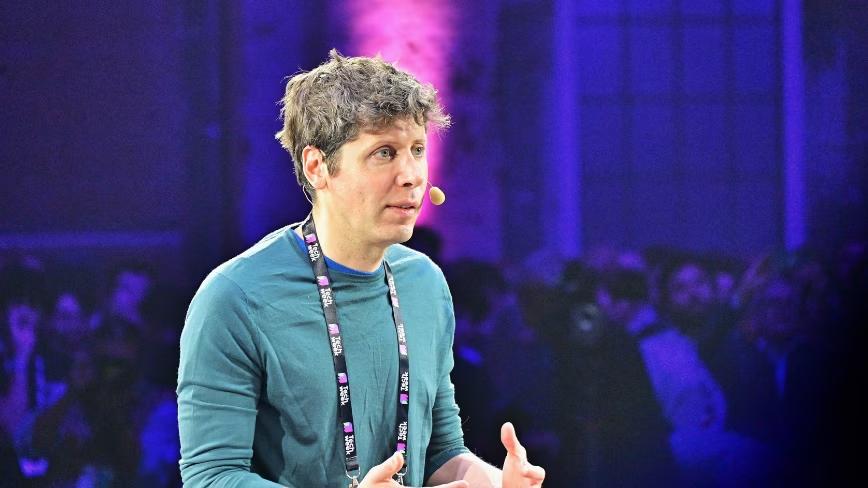
Video generation burned up a lot of expensive computational power at a time when OpenAI desperately needed it. In October at the company’s annual DevDay event, OpenAI executives repeatedly expressed the need to generate more revenue and concerns about how compute constraints could block OpenAI from scaling. “Obviously someday, we have to be very profitable,” OpenAI CEO Sam Altman said at the time, mentioning that the company was in a phase of “investing aggressively.”
That same day, company president Greg Brockman told reporters, “Asking, ‘How much compute do you want?’ is a little bit like asking, ‘How much of the workforce do you want?’ The answer is you can always get more out of more.” OpenAI also teased ads within ChatGPT Pulse at the time, which famously turned into ads throughout ChatGPT last month.
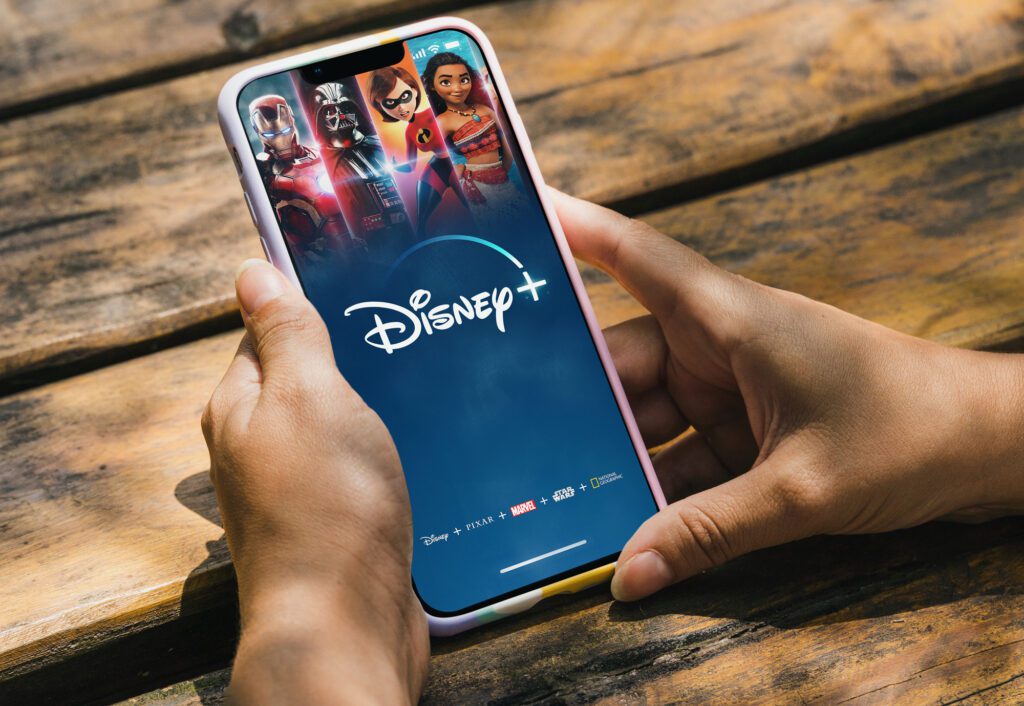
The revenue push is further frustrated with the loss of the Disney deal. Last year, the entertainment giant promised a $1 billion equity investment in OpenAI with the option for Disney to buy additional equity, and it also stipulated that Disney become a “major customer” of OpenAI, using the company’s products to build new products for Disney+ and the rest of the company, plus making ChatGPT available to employees. The deal also allowed Sora to feature AI-generated videos of hundreds of Disney, Pixar, Star Wars, and Marvel characters, of which a selection would be available to stream on Disney+ itself. Then, reportedly less than an hour after OpenAI and Disney were working together on a Sora-related project, Disney was blindsided by plans to discontinue the app.
The rapid cancellation of the OpenAI-Disney partnership — just over three months into a three-year licensing agreement — seemed to cause the most public surprise. While some online chatter suggested it demonstrates a larger failure of AI in entertainment, Dave Davis, chief content officer at Protege, which licenses audio and visual content to AI companies for model training, said that it was clear that Disney is very much still open to licensing agreements with other companies working on video-generation AI. That could eventually mean partnering with companies like Google, Runway, Luma, Moonvalley, Kling, or Seedance.
“We see a lot of momentum in licensing,” Davis said, adding that for well-known companies like Disney, it’s typically a strategic play to inspire fan interaction in new ways. “The Disney-OpenAI deal was one sign of that. I think it’s great that in the exit announcement, Disney made it clear that they are wide open for business to continue character licensing with other parties.”
The Sora shutdown news came one day after OpenAI published a blog post about how to use Sora safely, saying the company was continuing to “strengthen Sora’s guardrails” and introduce stricter protections for videos featuring kids and teens. OpenAI had also reportedly planned, earlier in the month, to integrate Sora’s video-generation capabilities into ChatGPT itself, before scrapping that strategy.
“We’ve decided to discontinue Sora in the consumer app and API,” OpenAI spokesperson Kayla Wood told The Verge in a statement, pointing to an X post promising more information on timelines for winding down the app and API soon. “As we focus and compute demand grows, the Sora research team continues to focus on world simulation research to advance robotics that will help people solve real-world, physical tasks.”
OpenAI also said that it needs to focus its existing compute on its AI agent goals, and that Sora was a step toward the goal of better world simulation research, particularly robotics. Fittingly, the original Sora wind-down announcement post was edited, possibly to lay the groundwork for OpenAI’s continued work on world simulation AI, which may very well use the AI model behind Sora to further its work.
As OpenAI works to shift its focus from a flurry of moneymaking efforts — like forays into social media, new browsers, new subscription tiers, new advertising plans, and new government contracts — and expand its resource output into coding and enterprise tools, it’ll be competing even more directly with Anthropic. Its rival has built up a reputation for a clear enterprise focus and is leading the market, at least by many accounts, on coding tools.
Sam Gregory, executive director at Witness, a nonprofit fighting against deceptive AI and deepfakes, says he’s not sorry about the loss of a tool to generate “AI slop.” But he is incensed that “in the absence of real money, real investment, real will,” things only seem to change for business reasons, not real harm.
“Sora launched with a splash in terms of this ability to create hyper-realistic content… what angers me actually is what they normalized in the period of six months, a set of things that I think have really long-lasting implications,” Gregory said. “They normalized a world in which in multiple seconds people are really uncertain about what they are seeing in their timelines both when it matters and when it doesn’t matter… whether it’s casual comedy… or conflict footage from Iran.” He added, “The consequences will reverberate even if the app is gone.”
Altman’s statement in October that the company was “investing aggressively” now seems to have turned into aggressively attempting to appease the company’s own investors, especially as OpenAI reportedly plans to IPO as soon as this year. As billions of dollars continue to pour into the AI industry, investors are beginning to take a closer look at whether they’re getting a return and which parts of the industry may be a bubble.
Follow topics and authors from this story to see more like this in your personalized homepage feed and to receive email updates.
- AIClose
AI
Posts from this topic will be added to your daily email digest and your homepage feed.
FollowFollow
See All AI
- AnalysisClose
Analysis
Posts from this topic will be added to your daily email digest and your homepage feed.
FollowFollow
See All Analysis
- OpenAIClose
OpenAI
Posts from this topic will be added to your daily email digest and your homepage feed.
FollowFollow
See All OpenAI
- ReportClose
Report
Posts from this topic will be added to your daily email digest and your homepage feed.
FollowFollow
See All Report