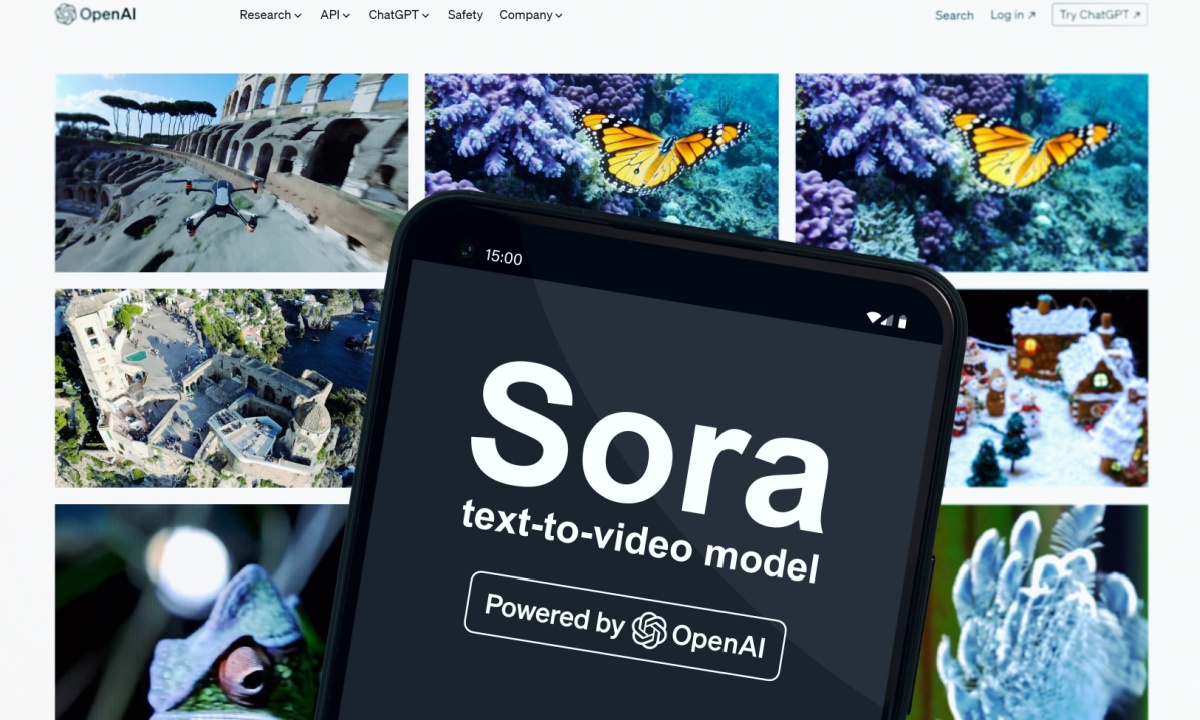



In February 2024, OpenAI, best known for creating ChatGPT, showcased Sora AI to the world. Sora AI was described as a text-to-video model where a user inputs prompts and receives short videos that are generated by artificial intelligence. The program was subsequently released in December of the same year.
Sora was said to be the next step in making AI-generated video mainstream, opening the door to capabilities in art and social media. Sora might be a technological advancement, however, it represents a lack of creativity, reliance on technology and loss of culture. The program, and other AI-generated videos, have no place in the current arts and culture landscape. Video generated with Sora may look polished at first glance, but it is a cheap imitation of creative works of the past. Notably, the styles of Pixar and Studio Ghibli were often imitated by the AI platform. The polish does not last, as the videos quickly become what’s been coined as “AI slop.” Backgrounds change, movements feel off and videos struggle with transitioning from one focus to another. The videos lack structure, detail, purpose and most importantly care.
Now, with reports of Sora AI shutting down and The Walt Disney Company withdrawing its $1 billion investment, the Sora experiment is coming to a close. Disney did not suddenly develop a conscience, and they are not absolved of attempting to invest in such a program. Disney didn’t consider the unethical nature of their investment, they only withdrew because it was no longer financially viable.
The involvement from Disney in Sora AI’s development is troubling. The AI platform is fundamentally unable to create. Instead, it takes pieces of created works, mashes them together and presents the abomination as a finished piece. These “Franken-videos” go against everything Disney Animation should stand for. The Walt Disney Company is built on the work of animators, editors, actors, writers and other creatives who have a meaningful story to tell. A $1 billion investment into such a soulless platform labels all of the aforementioned roles at Disney as replaceable for the right price. The creative process has no cost, no timeline; it is meant to be flexible so that the product has meaning and care. Signaling that corners are willing to be cut, time shaved and pennies pinched is not supporting artists, it’s attempting to replace them.
From Disney’s perspective, its investment in Sora AI was likely to remedy the rising costs of filmmaking, especially animation. With recent projects put out by Walt Disney Animation Studios and Disney Pixar being well over the $200 million mark for their budgets. Framing the situation in this way misses the point of art. The time and cost of filmmaking are not flaws in the system that need to be solved, they simply are the system. Tools can be developed to aid artists in their filmmaking processes, such as the advent of CGI in the 1970s, however, tools are not meant to replace. The level of detail and effort needed to make something that resonates with an audience warrants the high price tags and time in development that Disney films have. The process of animating frames, designing models and storyboarding can’t be rushed without losing the essence of the art.
Sora was an effort to bypass parts of the creative process, not assist the artists. It aimed to remove the people who make decisions in the animating, editing and writing rooms and replace them with a system that is unable to make decisions at all. The result may be faster and cheaper, but it feels empty. The program was simply not good enough to justify the investment from Disney or its upkeep by OpenAI. The content created by Sora AI was not coherent, fluid or of any quality at all, hence the term ‘slop.’
Sora did not collapse because it caused controversy or would’ve put artists out of jobs. The project failed because it was bad for what it cost. One analyst estimates the daily operating cost of Sora for OpenAI was upward of $15 million. At such a high price tag, with the greatest contribution of the project being social media joke videos, Sora AI was not going to get the foothold in the animation and effects industry that it intended. What was described as the future of filmmaking was an incoherent mess of poorly imitated existing film clips.
However, the shutdown of Sora AI does not signify a victory for artists in the war against AI. Sora AI was the first battle of many, with each new iteration of an AI video creator more streamlined than the last. If Sora was able to produce something usable, the story would be different, and OpenAI would still be operating the service. There will be a successor to Sora; the new AI program will be able to mask its flaws better and the attempted replacement of writers, animators and editors will be tried again. With the new system, the conversation will shift to how impressive the technology is and how refined the product. However, the topic of discussion must remain on what is lost when replacing human hands and minds with those of a machine in the art process.
Art is expensive. Art takes time. That is something no machine can optimize to the point of replacing the creative mind behind the project. The ultimate cost of art is giving the artist the tools needed to see their vision through. The value of a film should not be measured by its profit margins or speed at which it was produced, even for executives at The Walt Disney Company. We must continue to judge film by how much it resonates with the audience; that is something Sora AI and all other AI video generation cannot do. If the goal is to make something that matters, evokes emotion and ultimately lasts, there is no shortcut.
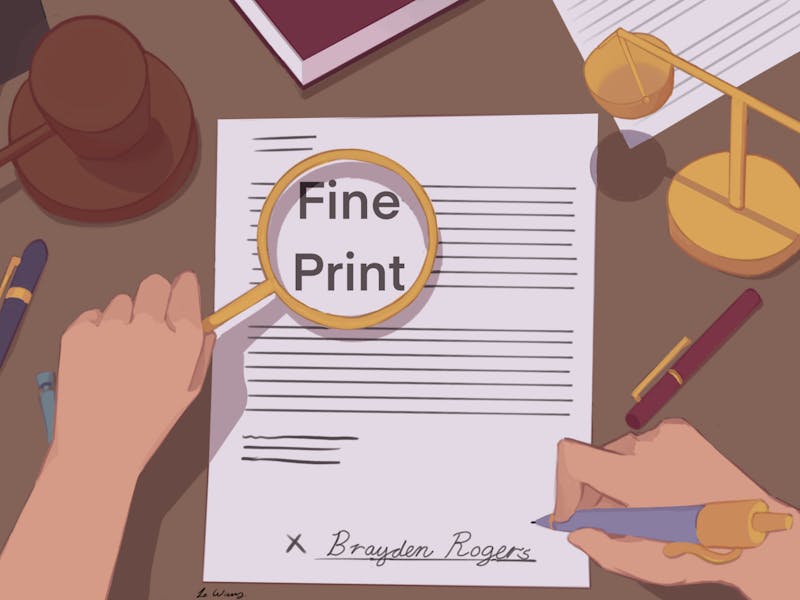
‘Fine Print’ is a column analyzing how business and legal forces impact our enjoyment of arts and entertainment.
Brayden Rogers
Brayden Rogers is a member of the Class of 2028 in the College of Arts and Sciences. He is a columnist for the Arts & Culture department and can be reached at brogers@cornellsun.com.
Read More