



Big Tech’s New Layoff Story: AI as Cover, Discipline as Motive
Almost 80,000 tech workers have already lost their jobs in 2026, making this one of the most aggressive workforce resets since the pandemic-era hiring boom. Nearly half of these cuts have been linked—at least on paper—to artificial intelligence and automation. Yet the deeper you look, the more AI starts to look like a convenient narrative rather than the primary driver.
Across Silicon Valley and beyond, executives are explicitly citing AI as the reason for job cuts, particularly in the United States, where it has become the single largest stated cause of March layoffs. In March alone, employers tied roughly 15,000 job cuts—about one in four—to AI. Set against the scale and speed of the current restructuring, however, this explanation only tells part of the story.
For boards, investors, and senior leaders, the real question is not whether AI is affecting jobs—it is—but whether Big Tech is using it to mask a much more old-fashioned reset: correcting for years of cheap money, exuberant hiring, and eroding cost discipline. That is where the real shift begins.
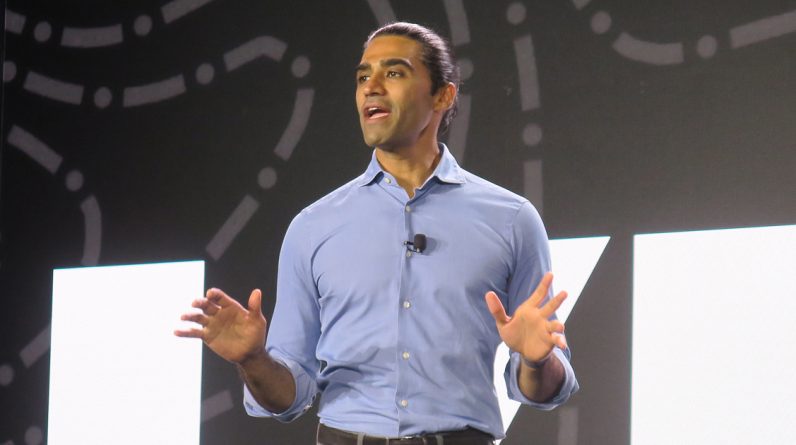
“Almost every company that does layoffs is blaming AI, whether or not it really is about AI,” Sam Altman, CEO of OpenAI, said at BlackRock’s US Infrastructure Summit. Using AI as an excuse for laying off workers has been referred to as “AI washing.”
The Big Development: A Rapid Tech Workforce Reset
By early April, reporting indicated that roughly 78,000 to 80,000 tech jobs had been cut globally in the first quarter of 2026, with more than three quarters of those losses in the United States. Industry analyses suggest that around half of these cuts were officially linked to AI or workflow automation. For a sector that only recently framed itself as a relentless engine of growth and hiring, the reversal is stark.
The layoffs are not confined to second-tier players. Meta has told employees it plans to cut around 10% of its workforce in May—about 7,800 roles—while also closing thousands of open positions, and has signaled that deeper cuts cannot be ruled out. Microsoft has circulated voluntary buyout offers to a meaningful share of its staff, and other names—from Oracle to Spotify and Eventbrite—have all joined the list of firms reducing headcount as they adjust to a different economic and capital-cost regime.
This is not a correction at the margins. It is a broad-based recalibration of how much labor, at what cost, is considered acceptable in an industry that spent much of the last decade hiring aggressively into growth, often with limited near-term profitability constraints. For many firms, the pandemic era looks, in hindsight, like the peak of overreach.
Why This Moment Matters: From Zero Rates to AI Narratives
The root causes predate the current AI boom. During the pandemic, the US Federal Reserve cut the federal funds rate effectively to zero, fueling a wave of cheap capital, rapid growth expectations, and unprecedented hiring across Big Tech and high-growth software. When inflation forced policymakers to reverse course, rates rose above 5% by 2023, driving up capital costs and forcing a harsh reappraisal of bloated cost structures.
At the same time, many technology firms hired ahead of demand, betting that pandemic-era usage patterns—remote work, streaming, e-commerce, digital advertising—would persist indefinitely. Internal headcount targets and hiring plans often assumed durable double-digit growth. As those assumptions normalized, the arithmetic became unforgiving: too many roles, not enough incremental revenue, and investors newly focused on margins rather than just topline.
Into this pressure-cooker environment, AI arrived as both a genuine productivity platform and a compelling communications tool. Blaming AI for layoffs sounds forward-looking, strategic, even unavoidable. Blaming poor capital discipline, flawed forecasting, or pandemic-era exuberance does not. That tension is now at the core of how these cuts are being explained to markets, employees, and regulators.
Inside the Strategy: Cost Discipline, AI Investment, and Quiet Overstaffing
Look closely at the internal messaging from major players and a pattern emerges. Meta has framed its roughly 10% workforce reduction as an effort to “run the company more efficiently” and free up capital for massive investments in AI infrastructure and talent. The company is spending heavily on data centers and specialized researchers, and headcount cuts are positioned as the funding mechanism for that pivot.
Oracle, meanwhile, is cutting thousands of roles even as it ramps up AI-related cloud spending, signaling a reallocation from legacy operations toward higher-margin, AI-enabled services. Microsoft’s voluntary buyout program is more subtle but points in the same direction: shift the payroll mix away from lower-priority functions and toward AI, cloud, and core strategic bets.
Behind these strategic narratives lies a simpler reality: many large tech firms entered 2024 and 2025 overstaffed by a meaningful margin after pandemic-era hiring binges. External commentators and industry insiders suggest that headcount at some companies was inflated by 25% to 75% versus what current growth and profitability targets can justify. Today’s “AI layoffs” are, in many cases, a belated correction to that imbalance—wrapped in a more palatable story.
Market and Economic Impact: More Signal Than Shock
Despite the scale of tech layoffs, overall US layoffs in the first quarter of 2026 remain below the peaks seen in 2022, suggesting this is a sector-specific reset rather than a systemic jobs crisis. Across the economy, employers announced around 217,000 job cuts in Q1, with technology representing a disproportionate share of the reductions.
Within tech, AI’s role as a stated cause is growing rapidly. In March, AI accounted for 15,341 of the 60,620 announced layoffs in the US, making it the single largest category of cited reason. Year-to-date, AI ranks fifth overall but already represents about 13% of total planned reductions—and its share appears to be rising.
For investors and policymakers, the near-term macro impact is nuanced:
- Tech job cuts free up skilled labor for startups and emerging sectors.
- Profitability metrics may improve faster than revenue, supporting share prices.
- Regions heavily exposed to tech—California, Washington, key European hubs—face localized cooling in hiring and compensation.
In other words, the layoffs are less a sign of collapsing demand and more a sign of companies adapting to higher capital costs and the need to show operating leverage in an AI-driven cycle.
Industry Ripple Effect: How AI Layoff Narratives Reshape the Ecosystem
The way Big Tech frames these decisions will influence how the broader corporate world talks about automation and workforce strategy. If “AI made us do it” becomes the default explanation for restructuring, boards in non-tech sectors—from manufacturing to logistics and retail—may adopt similar language as they introduce automation and software-driven efficiency gains.
Already, the sectors most affected by layoffs in early 2026 include not only technology but also logistics, retail, manufacturing, and automotive, each grappling with digitalization, robotics, and AI-enhanced planning tools. When tech giants normalize the idea that AI justifies large-scale headcount reductions, it provides cover for others to follow, even when the underlying drivers include overcapacity, strategy missteps, or shifting demand rather than pure technological substitution.
At the same time, this rhetoric carries reputational and regulatory risk. If AI is consistently named as the cause of job losses, expect rising scrutiny from policymakers on algorithmic accountability, workforce transition support, and the concentration of AI capabilities in a handful of global platforms. The narrative that AI is “taking jobs” can quickly become politically salient—and that changes the equation for corporate license to operate.
Risks and Challenges Ahead: Scapegoating, Trust, and Execution
The biggest risk for executives is not the act of cutting jobs itself—markets often reward swift cost action—but the perception that AI is being used as a blanket excuse for years of misallocation. When companies cite AI while insiders and analysts see overhiring and capital mismanagement, trust erodes among employees, regulators, and sophisticated investors.
There is also a real execution risk: AI productivity gains are not instantaneous. Senior AI leaders caution that it may take twelve months or more before companies fully realize the impact of modern AI tools on their workflows. Cutting too deeply, too early, on the assumption that AI will seamlessly replace headcount can leave organizations under-resourced just as competition intensifies.
Finally, overemphasizing AI as a negative force in labor markets may trigger sharper regulatory responses—from targeted taxes to labor protections—that slow down innovation or push activity into less regulated jurisdictions. For global companies managing complex supply chains and cross-border talent hubs, that kind of policy whiplash is a material strategic risk.
What Happens Next: Metrics to Watch
The next phase of this story will be defined less by headline layoff counts and more by the quality of redeployment—of both capital and talent. Investors should watch how much of the savings from headcount reductions flows directly into AI infrastructure, cloud capacity, and strategic R&D versus simply boosting short-term margins.
Key indicators over the next 12–24 months will include:
- AI-attributed layoffs as a share of total job cuts.
- Revenue per employee and operating margin trends at major tech platforms.
- Hiring patterns in AI engineering, data infrastructure, and adjacent ecosystems such as chip design and cloud services.
- Policy responses in major markets around AI, labor, and industrial strategy.
If AI investments translate into higher productivity, stronger earnings, and new categories of employment, the current layoff wave may, in hindsight, look like a painful but necessary reset. If not, today’s workforce cuts will be remembered less as strategic foresight and more as a delayed admission of past mistakes.
The Bigger Business Trend: From Exuberance to Discipline in the AI Era
This moment sits at the intersection of three structural shifts: the end of ultra-cheap money, the normalization of pandemic-era demand, and the rise of AI as a general-purpose technology. Tech’s 2026 layoffs are where those forces collide.
For global CEOs, the lesson is not that AI inevitably destroys jobs, but that narratives can obscure more than they reveal. The real competitive edge lies in disciplined capital allocation, honest internal diagnostics, and a coherent workforce strategy that treats AI as a lever—not a shield. Companies that use this period to rebalance their cost base, redesign roles, and build credible reskilling pipelines will emerge stronger. Those that simply hide behind AI rhetoric risk burning through trust just when they most need alignment.
This is not just a tech story. It is a preview of how automation, industrial policy, and macroeconomic headwinds will interact across sectors—from finance and logistics to manufacturing and energy. The firms that navigate it best will be those that can explain, with clarity and honesty, why they are changing—and where growth will come from next.
Key Insights And Takeaways
- Around 80,000 tech workers lost their jobs in Q1 2026, with most cuts in the US.
- Nearly half of Q1 tech layoffs were officially linked to AI or automation, though deeper drivers include cost pressures and overhiring.
- In March 2026, AI accounted for about 25% of US layoffs, the largest single cited cause.
- Meta, Oracle, and others are cutting staff while heavily increasing AI and cloud investments.
- Pandemic-era hiring and the shift from zero rates to above 5% have forced a major tech cost reset.
- How companies frame AI-related layoffs will influence regulation, investor trust, and industry norms.
FAQs
Is AI the main cause of 2026 tech layoffs?
AI is a major factor in some cuts, but overhiring and higher capital costs are equally important drivers.
Why are companies citing AI in their layoff announcements?
AI framing signals strategic modernization and helps mask corrections for past hiring and capital allocation mistakes.
How significant are AI-related layoffs in the wider US economy?
AI accounted for about a quarter of US layoffs in March and roughly 13% of cuts year-to-date.
Which tech companies are leading this layoff wave?
Meta, Oracle, Microsoft, and several other major tech firms have announced substantial reductions in 2026.
What should investors watch over the next year?
Track AI-related capex, revenue per employee, operating margins, and the regulatory response to AI-linked labor changes.
Does this signal a long-term collapse in tech employment?
It signals a reset and reallocation, not a structural collapse; AI may eventually create new roles even as it replaces others.
Have you read?
Europe’s ETIAS Rollout Won’t Replace Golden Visa Paths.
Why U.S. States Are Stockpiling Gold Bars.
The Collaboration Trap: Why It’s Hurting Performance.
How Rootstack Is Scaling a Tech Company in Panama.
Strategy Isn’t Math: Why Judgment Still Wins.