


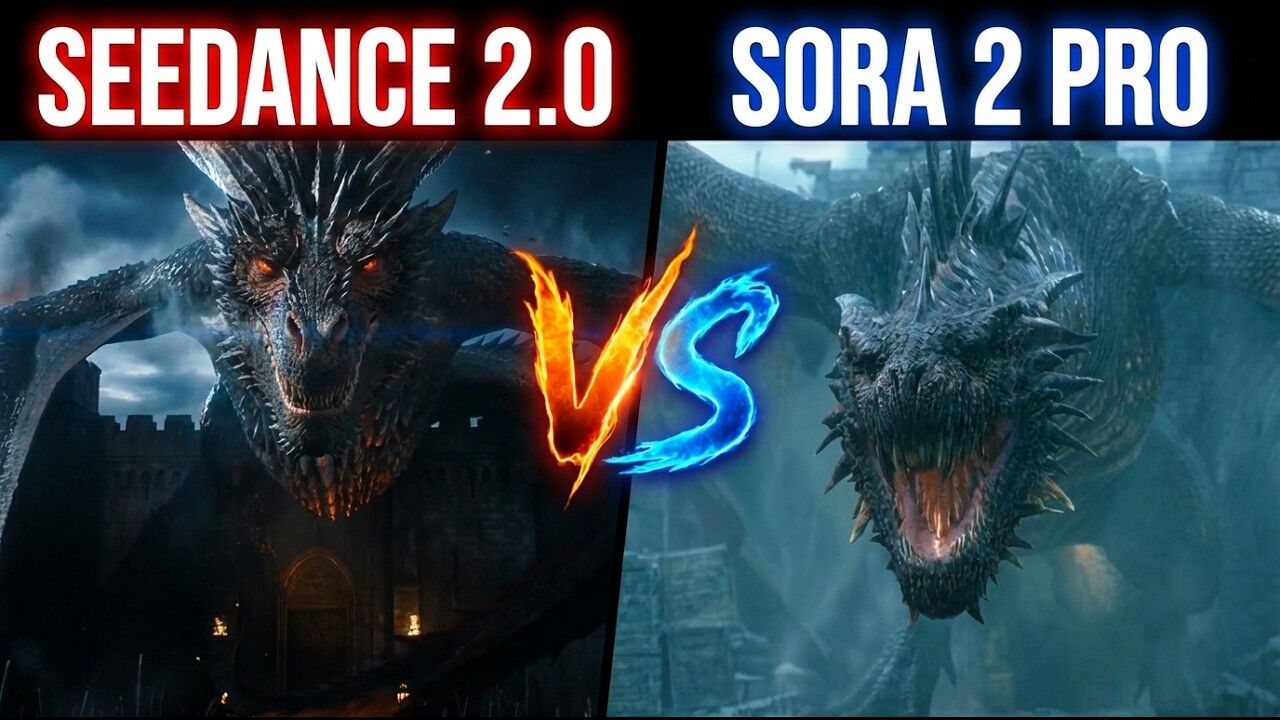
Everyone wants to talk about specs. Resolution. Frames per second. Input modalities. Those things matter — but they won’t tell you which AI video tool actually fits into the way you work.
I spent time putting both models through real-world scenarios: a short brand ad, a music-synced social clip, a cinematic nature sequence, and a multi-character dialogue scene. The results surprised me in a few places. Here’s what I found.
The Setup: Two Very Different Philosophies in One Race
Before getting into the results, it’s worth understanding what each team was actually trying to build.
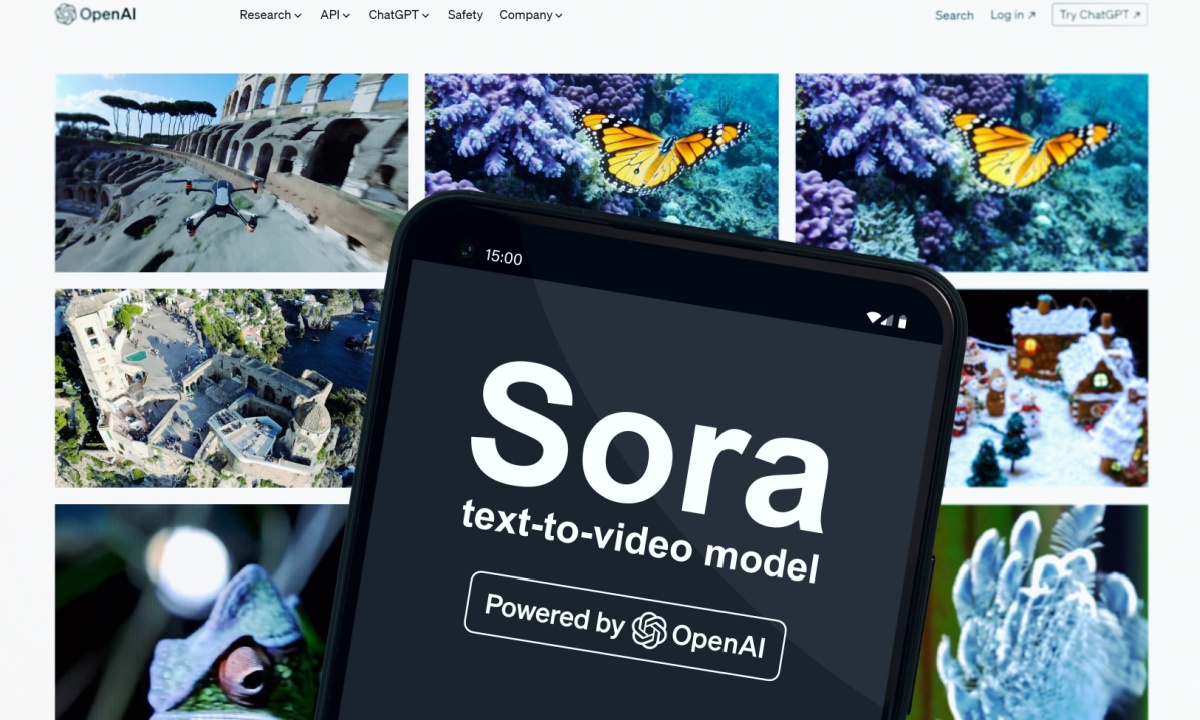
OpenAI’s Sora 2 is, at its core, a physics simulator dressed up as a video generator. It doesn’t just render scenes — it tries to understand them. Gravity, momentum, light refraction, fabric weight. When you watch a Sora 2 clip of a coffee cup sliding across a wet table, the liquid behaves the way liquid actually behaves. That kind of fidelity takes serious compute and serious training data, and it shows.
Seedance 2.0 comes from ByteDance’s research lab and takes a completely different angle. The question it’s trying to answer isn’t “how do we simulate reality?” — it’s “how do we give creators actual control?” The model accepts up to 12 reference files at once: photos, video clips, audio tracks, text prompts. You’re not describing what you want and hoping. You’re showing it.
That distinction shapes everything downstream.
Round 1: The Brand Ad Test
What I gave each model
A product shot of a minimalist coffee mug, a mood board image, a 15-second audio track with a soft jazz riff, and a text prompt describing the scene: steam rising, warm morning light, a slow camera pull-back.
Sora 2’s result
Genuinely beautiful. The steam physics were accurate. The light felt warm and natural. The color grading had a quality that looked less like AI and more like a thoughtful cinematographer. The problem? It generated the audio independently — ambient coffee-shop sounds that didn’t match the jazz track I wanted. Getting the visual and the audio I needed required two separate workflows.
Seedance 2.0’s result
The audio sync was immediate. I uploaded the jazz track as a reference, and the video cut to the rhythm without me having to do anything extra. The visual quality was slightly less nuanced in the lighting department, but it came out native 2K — sharper on screen, more room to crop in post. For a 15-second Instagram ad where timing to music matters, this was the better output.
Takeaway: If audio alignment is part of the brief, Seedance 2.0 cuts the workflow in half. Sora 2 needs post-production help to get there.
Round 2: The Cinematic Sequence
The prompt
A lone hiker cresting a mountain ridge at sunset. Wide shot. Wind-blown grass in the foreground. No audio required.
Who won
Sora 2, and it wasn’t close. The grass moved with weight. The hiker’s jacket responded to wind in a way that felt real rather than procedural. The light transition from golden hour to the edge of dusk was handled frame-by-frame with a kind of patience that AI video rarely shows. This is the kind of output that makes you stop and look twice.
Seedance 2.0 produced a good clip — sharp, well-composed, nothing broken — but it lacked that same physical confidence. The grass animation felt slightly looped. The lighting was solid but flatter. If someone asked me to guess which clip came from an AI, I’d have pointed at the Seedance output first.
For purely cinematic work where you’re not referencing specific assets and you just need the output to look real, Sora 2 is still ahead.
Round 3: The Character Consistency Challenge
This is the test most comparison articles skip, and it matters enormously for anyone doing serialized content, branded characters, or video series.
I gave both models the same character reference image — a fictional woman in a blue blazer — and asked them to generate three separate clips: walking into a coffee shop, sitting at a desk, and talking to camera. The goal was whether she’d look like the same person across all three.
Sora 2 handled the single-shot character well. Within one clip, she looked consistent. Across three separate generations, the results drifted noticeably — the hair color shifted slightly, the face shape wasn’t quite locked down.
Seedance 2.0’s role-based asset tagging was built for exactly this problem. Tag the character once, reference her across as many clips as you need. The blazer stayed blue. The face stayed consistent. The expressions varied naturally. For anyone building a content series or running a campaign with a recurring character, this capability alone could be the deciding factor.
Round 4: Speed and Cost at Scale
Here’s the part that doesn’t get talked about enough: what happens when you’re not generating one clip, you’re generating fifty.
Sora 2 required a ChatGPT Pro subscription at $200/month for serious use. The per-clip cost sat around $1.00 for a 10-second generation. Before its consumer app shutdown in April 2026, it also had no meaningful free tier to test with before committing.
Seedance 2.0’s premium tier runs around $9.60/month. Per-clip pricing comes to roughly $0.60 for a 10-second clip. There’s also a free tier with enough daily credits to test the model properly before spending a dollar. If you want to try it before committing, you can use Seedance free and run real prompts against your actual use case.
At volume, the math gets dramatic. The cost difference between the two models at scale is not a rounding error — it’s a budget decision.
The Thing Everyone Keeps Getting Wrong in This Comparison
Most articles frame this as “Sora 2 is better quality, Seedance 2.0 is cheaper.” That’s an oversimplification that will lead you to the wrong tool.
The real split is this:
Sora 2 is a world simulator. Give it a scene and it figures out how that scene should look, move, and behave. If you work in a space where physical realism is the goal — documentary-adjacent content, realistic product visualization, cinematic storytelling — Sora 2 is still the benchmark for that specific output. Or rather, it was, before its shutdown trajectory began.
Seedance 2.0 is a director’s tool. It gives you control, not just quality. You bring your assets, your audio, your reference clips, and the model executes your vision rather than interpreting it. For brand work, social content, character-driven campaigns, and anything where you need consistent output across many clips, it’s the more practical choice.
So Which One Do You Actually Need?
Ask yourself one question: Do you know exactly what you want, or are you exploring?
If you’re exploring — you have a vague brief, a creative instinct, and you want the AI to surprise you with something cinematic — Sora 2 at its best is genuinely remarkable. It thinks for itself in a way that can produce results you didn’t know to ask for.
If you know what you want — a character, a mood, a rhythm, a specific look — Seedance 2.0 will get you there faster, at higher resolution, with better audio sync, and at a fraction of the cost.
Given that Sora 2’s consumer app is no longer available and its API is winding down through September 2026, the practical decision for most creators right now leans heavily toward Seedance. The smartest move is to start with the free tier, run a few real prompts, and see how it fits your workflow before scaling up.
You can do that today at Seedance’s free plan — no credit card, no commitment required.