


Geneva, Switzerland, 11 July 2026: The Global Alliance for AI Ethics, a pioneering international initiative hosted by Qatar Foundation member Hamad Bin Khalifa University, has been launched on the sidelines of the inaugural United Nations Global Dialogue on AI Governance in Geneva, Switzerland.
Supported by a High-Level Strategic Roundtable through the United Nations Office for Digital and Emerging Technologies (UN-ODET), the initiative establishes a landmark platform dedicated to transitioning the global AI ethics discourse from a restrictive, monocultural arena where non-Western perspectives are often merely an echo to an inclusive, polycentric paradigm. This framework elevates the rich moral traditions of the Global South to an active, guiding voice in shaping global technology governance.
The Global Alliance for AI Ethics (GAAIE) responds to the urgent need to shift the global AI ethics discourse from a prohibition-focused model to an innovation-enabling, human-centric one. It is designed to counterbalance narrow techno-commercial solutionism with values-based frameworks that position human dignity and socio-cultural well-being as foundational requirements in early-stage AI engineering.
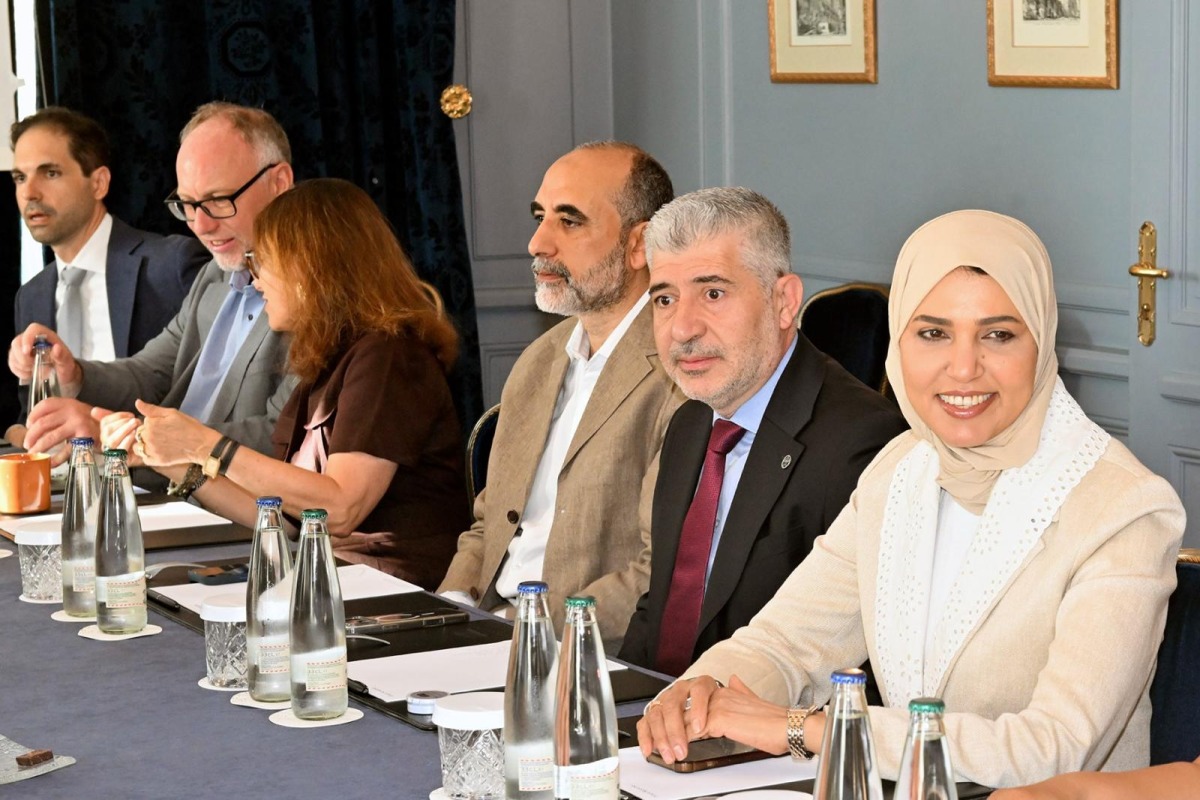
To translate its vision into immediate action, the alliance convened a high-level strategic roundtable titled ‘Epistemic Equity in the Digital Age: Forging a Polycentric Global AI Discourse through North-South Collaboration’. This side event brought together the alliance’s newly appointed Advisory Board and senior UN-nominated experts to develop a long-term GAAIE Collaboration Roadmap with international institutions dedicated to diversifying the global AI ethics discourse, including UN-ODET.
This milestone was formally recognized in the State of Qatar’s official statement, which was delivered to the UN Global Dialogue plenary prior to the session by His Excellency Mohammed bin Ali Al-Mannai, Minister of Communications and Information Technology and Head of the Qatari Delegation to the Global Dialogue.
“At Hamad Bin Khalifa University, we believe that technological progress is only meaningful when it is guided by robust human-centric values,” stated Dr. Ahmad M. Hasnah, President of Hamad Bin Khalifa University.
“This alliance seeks to build a global framework where ethics becomes a driver of responsible and sustainable AI innovation, advancing not only what is technologically possible, but also what is genuinely beneficial for humanity. By creating a space where the world can define AI ethics together, we are helping to develop AI that is inclusive and, therefore, can be trusted globally.”
Her Excellency Dr. Hind Abdulrahman Al Muftah, Permanent Representative of the State of Qatar to the United Nations Office in Geneva, said: “The Geneva launch during this landmark UN Dialogue provides the ideal platform to showcase Qatar’s capacity for strategic, values-led technological leadership. This milestone is a crucial step in translating theoretical ethical principles into actionable, internationally recognized frameworks.”
Dr. Mohammed Ghaly, Alliance Co-Chair and Director of the Research Center for Islamic Legislation and Ethics (CILE), said: “For too long, the global AI ethics discourse has functioned as a Western-centric echo, leaving major non-Western civilizations digitally marginalized.
“With the launch of GAAIE, we are establishing a truly pluralistic voice. Our flagship initiatives will provide the empirical, culturally authentic data required to balance existing biases and build equitable global models.”
At the heart of the GAAIE’s mission is the deployment of core, action-oriented initiatives, including the Global AI Ethics Observatory, which is dedicated to the independent auditing, ethical scoring, and comparative analysis of AI systems, and the Global Heritage AI Project, which coordinates the large-scale digitization of underrepresented cultural and scholarly archives alongside low-resource languages, including Arabic.
As the alliance expands its global operations, it invites academic institutions, civil society organizations, and international policymakers to join its collaborative network. Through its dual approach of empirical research and normative advocacy, the alliance is positioned to establish new frameworks for inclusive, pluralistic AI governance on the global stage