


-
By Yang Mein-chieh
and Jake Chung /
Staff reporter, with staff writer
Academic integrity and artificial intelligence (AI) ethics should be incorporated as core teaching content, as nearly half of surveyed students did not understand rules and ethics regarding AI use, student group EdYouth said yesterday.
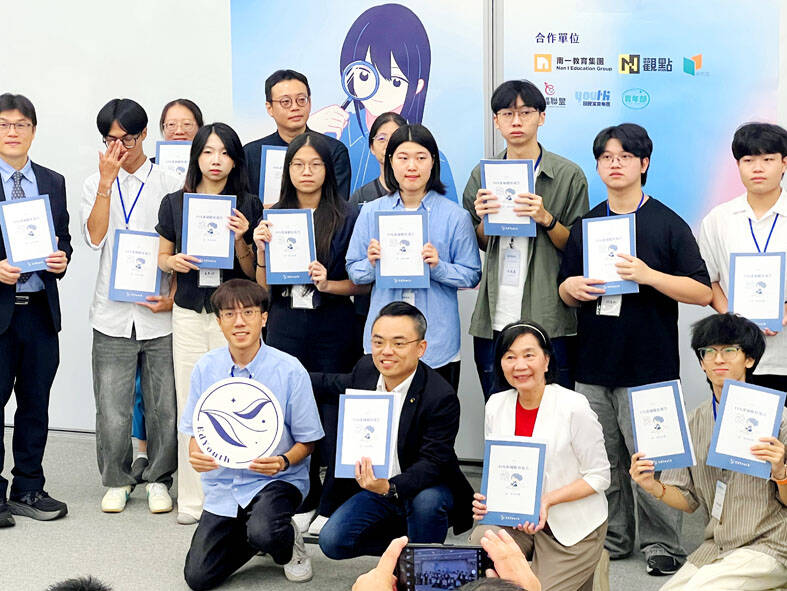
The organization presented its fifth 2019 curriculum observation report, which seeks to understand students’ views of how the curriculum is being implemented. The latest report was the first on science and social science subjects.
The report included data on academic integrity education, digital learning platform observations and what affects students’ choices of school clubs, as well as information on arts education, local languages, psychiatric consultation and vocational education.
Photo: CNA
Taiwanese schools do not have a standalone course for academic integrity, and nearly one-quarter of respondents said no one had taught them about it, said National Chengchi University second-year student Chen Yin-chia (陳胤嘉), one of the main authors of the report.
Despite the Ministry of Education warning students about the use of generative AI, nearly half of respondents said they “did not understand” or were “very confused” regarding regulations on the technology.
Deputy Minister of Education Chu Chun-chang (朱俊彰) said the ministry would work with students to expand their ability to conduct logical arguments, develop empathy, focus on teamwork and include courses on academic integrity.
The ministry has been studying what AI could do for students and to the educational field, and in May proposed a road map on how to develop students’ ability to use AI responsibly, for learning and to resolve issues, while cultivating abilities and skill sets that cannot be substituted by AI, Chu said.
Four students from Taipei, New Taipei City, Changhua County and Taitung County said that if students “outsource” their thought processes to AI, they risk becoming passive learners.
That would make it difficult to realize the core competencies emphasized by the curriculum, such as independent action and interactive communication, they said.
The course would help stimulate critical thinking, media literacy and public participation, the students said.
Two students from Kaohsiung and Hualien County said that students need to learn what should be left to AI and what can be done by themselves, and why there should be such distinctions.
The students suggested that curricula around AI be standardized, and that courses to understand AI limitations should be introduced into the national curriculum.