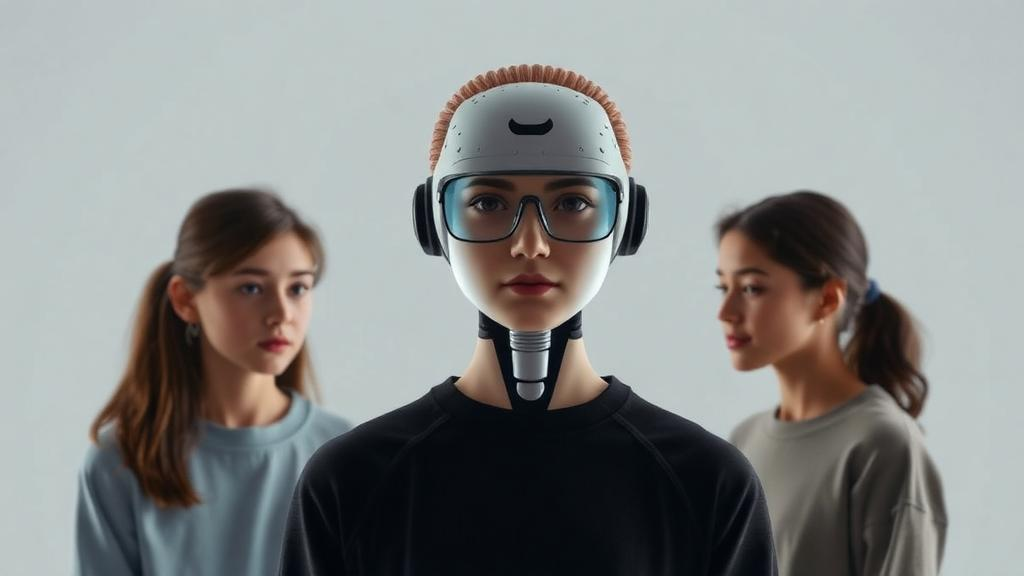




Just like electricity transformed the functioning of world some hundred years ago, Artificial Intelligence or AI, would soon become the core of everything humans are going to interact in the coming years. For example, if your store could predict a surge in demand, replenish your inventory automatically by negotiating price, ordering and optimising delivery routes before stockout could occur. Then it may not be magic but smart inventory management through autonomous operations driven by intelligent AI agents.
Artificial intelligence. (Thinkstock)
There have been many paradigms in the field of Artificial Intelligence. However, Agentic Artificial Intelligence (AAI) has been a significant evolution in this field, moving beyond assistive and generative systems toward models characterised by autonomy, proactiveness and minimal human intervention. AAIs can interpret complex objectives, make plans, execute multiple tasks, monitor progress and thus exhibits a greater autonomy compared to its predecessors in deciding the next step rather than waiting for human intervention. Gartner Report 2026 states that organisations must balance AI and human readiness to sustain their value. Hence, organisations are aspiring to transform themselves from AI enabled to AI integrated as per the demands of Industry 5.0. Thus, organizational thinking has begun shifting from using AI as tool to AI as a teammate.
In this scenario, business schools play a critical role in grooming leaders for the age of AAI. The challenge here is to build capabilities to lead hybrid organisations where humans and AI agents collaborate. Hence, there is a need for shifting the focus of the curriculum from AI literacy to AI leadership. Rather than merely equipping with the foundations of AI, the curriculum should be redesigned to understand the business value creations of AI. It calls for building capabilities to redesign workflows by blending human workforce and AI agents, supervise the governance and ethical aspects of AI deployment, assess the value creation as well as lead continuously through an AI-driven era. Tasks featuring automation, analysis, monitoring and execution could be effectively delegated so as to improve speed and efficiency. However, tasks involving creativity, ethics, strategy, decision making and leadership should essentially be human-centred. AI may provide valuable insights and recommendations but the ultimate onus of judgment, accountability and organisational output remains fundamentally human-centred.
Therefore, understanding one’s organisational needs stand out as a prerequisite for designing an effective human-AI operating model as Gartner Report also states that 40% of AAI projects would be cancelled by the end of 2027 because of unclear business value. Hence, before the deployment of AI agents, managers must be taught to understand the vision, strategy, processes as well as the capabilities of its workforce. Only then they can build an optimal Human-AI collaboration for work allocation in order to ensure that technology complements rather than supplants organisational performance.
While technology may automate tasks, optimise work process and augment decision-making processes, it is the human side which has emotions, values, relationships and ethics that would make dynamic sustainability in organisations. Frontier technologies may transform how work is performed but it cannot replace human qualities that define leadership and organisational culture. Hence, while preparing leaders for managing business with high end technological developments, it is equally important to create a profound understanding of the fundamentals of management education in aspiring managerial leaders.
(The views expressed are personal)
This article is authored by BBL Madhukar, president, FORE school of Management and former chairman and MD, MMTC Ltd.