


OpenAI has announced one of its unreleased artificial intelligence (AI) models has found an answer to one of the biggest open questions in mathematics, the Navier-Stokes Millennium Prize problem. The Millennium Prizes offer million-dollar rewards for solutions to seven notoriously difficult mathematical puzzles, and until now only one had been solved.
Mathematical problems at this level are extremely complex. A solution to the similarly difficult ABC conjecture ran to more than 500 pages, and it took mathematicians six years to understand it enough to spot potential flaws. Researchers can devote entire careers to these problems, in the hopes of getting close to a solution.
And this is what seems to have happened here: building on the work of several human mathematicians, OpenAI unleashed a swarm of 10,000 AI agents running a new experimental model, which churned through millions of dollars’ worth of computing power in the space of a few days to complete what the American Mathematical Society called “the final steps” of the solution process.
So what is the Navier-Stokes problem, and what did OpenAI do? And why are a lot of mathematicians impressed with the result but unimpressed with the AI company’s behaviour?
A fluid situation
OpenAI’s announcement concerns the Navier-Stokes equations, which model the behaviour of fluids such as water and air. These equations underpin modern science and engineering, but our mathematical understanding of them is incomplete.
To explain the problem, imagine looking at the flow of water, before zooming in with a camera. According to the equations, both the zoomed and un-zoomed water should look exactly the same, except that things will look a little faster in the zoomed-in view.
We know this can’t be right in the real world. If we keep zooming in far enough, we will stop seeing a smooth fluid and start seeing a teeming crowd of molecules jostling against one another. So the Navier-Stokes equations must break down somewhere.
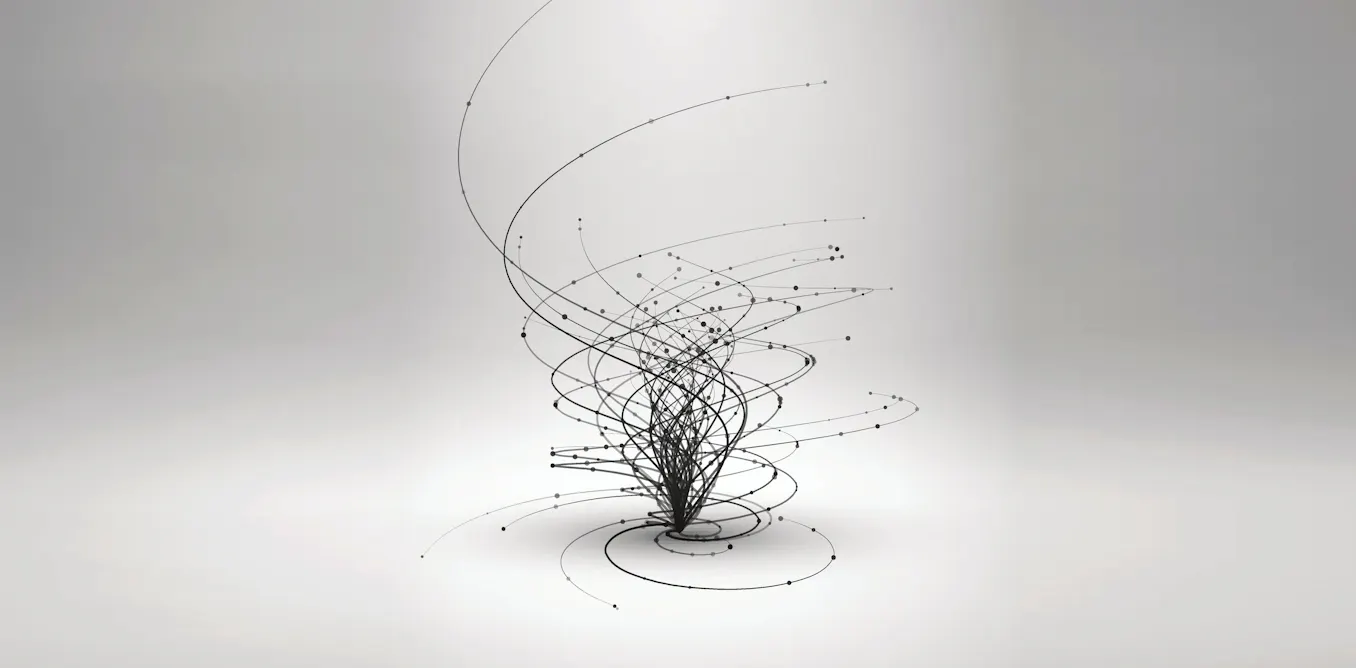
The biggest concern is whether fluid swirls can shift their energy into smaller, faster swirls, accelerating every time we zoom in. If this is possible, then the fluid may become impossibly fast, creating a “blow-up” in speed (also known as a “singularity”).
We know this can never happen in the real world, but the Millennium Prize was about finding out whether it could happen in the equations. OpenAI found that yes, the Navier-Stokes equations do allow a blow-up under certain conditions.
A blow-up in finite time
As OpenAI tells the tale, their researchers heard rumours mathematicians at rival company Anthropic were close to solving two Millennium problems on September 1. They deployed their latest in-development model in an effort to crack one first.
After launching a swarm of agents, the model produced a solution in just 88 hours, with verification taking another 17. The result is a coup for OpenAI, which is trying to demonstrate the capacity of its models against those of its leading competitor Anthropic, as both companies head towards planned share market listings.
One of the rival teams closing in on a Navier-Stokes solution featured Anthropic staffer Levent Alpöge, who was collaborating in a private capacity with mathematician Tristan Buckmaster from New York University.
Read more:
‘hello there the jacobian conjecture is false thanx’: why a tiny social media post has mathematicians rethinking AI
As it turns out, OpenAI had contacted Buckmaster to discuss his work and theirs. In a statement published hours before OpenAI’s, Buckmaster said he and Alpöge had been using OpenAI’s publicly available models in their work for some time, and had been pursuing a line of thinking similar to what was used in OpenAI’s result.
He says he asked whether their data had been used by OpenAI’s model to produce its results, but received no answer to this question. Instead, he says OpenAI offered to collaborate with him if he removed Alpöge’s name from the work, because of Alpöge’s Anthropic affiliation. (OpenAI denies this claim.)
Other mathematicians have also raised concerns, with German mathematician Andreas Thom suggesting OpenAI’s models were hoovering up unpublished human work and presenting it as AI generated.
The ripple effect
OpenAI’s Navier-Stokes result looks like a big win for mathematics. But some mathematicians are not so sure.
US-Australian mathematician Terence Tao has been vocal in his reservations about some tendencies in AI mathematical research. He is concerned about “the indiscriminate use of powerful solution-extraction tools” to “achieve the immediate short-term goal of solving problems” at the expense of broader understanding.
OpenAI’s behaviour in this instance has also provoked alarm. Asking for an author’s name to be removed from work due to corporate politics is completely unaligned with scientific practice.
Moreover, as Tao put it, if AI companies jump on a rumour of promising work and throw millions of dollars at trying to scoop competitors, researchers may end up “no longer sharing any promising research with the broader community”.
This would destroy the principles of open and reproducible science. It could also remove the foundation stones scientists use to identify and solve the next wave of new, interesting problems. Why would you spend years on a problem if rumours of your work might spur an AI company to spend millions to beat you to the punch?
And that’s before we get to privacy and intellectual property concerns. OpenAI insists no specific user data was accessed by its researchers. However, serious questions remain about whether their model was trained on Buckmaster and Alpöge’s private work.
Companies and individuals around the world will now be re-examining how much they can trust OpenAI and other AI companies to handle their private and business data.
Meanwhile, the Millennium Prize conditions say prizes cannot be awarded until at least two years after the publication of a potential solution. For now, the Navier-Stokes problem is still officially unsolved.