


[True Story] How I Made 29,000 Yen a Month Creating Short Videos Introducing the Production Process of a Pottery Workshop Using AI Video Generation
What changed after working with AI—it’s that I, a retail store manager, can now call myself a “video production company.” I will disclose everything, including the process, unit prices, and failure stories, about how I received an order for short videos introducing the production process of a pottery workshop using AI video generation, and earned 29,000 yen a month by combining Sora 2 and Gemini 3.
To be honest, I had zero experience in video editing. I had only ever posted still images for my store’s Instagram, and I was the type to get nervous just hearing the word “video.” That was until the summer of 2026, when a local pottery workshop asked me to “make a short video introducing the production process,” which led me to start using AI video generation tools in earnest.
Conclusion: The breakdown of 29,000 yen per month and the two AI tools used
I’ll start with the conclusion. I earned 29,000 yen for creating short videos introducing the production process of a pottery workshop (three 15-second videos and one 45-second video), mainly using Sora 2 and Gemini 3. The total work time was about 9 hours, which comes out to about 3,222 yen per hour. …It’s not bad, but it’s not exactly a huge profit either. These are the honest numbers.
If I break it down a little more, it looked like this.
| Item | Time | Tools Used |
| — | — | — |
| Hearing/Drafting the composition | 1.5 hours | ChatGPT Agent |
| Generating/Adjusting raw video footage | 4 hours | Sora 2 / Gemini 3 |
| BGM/Subtitle editing | 2.5 hours | Vrew (Auto-subtitles) |
| Revision handling (2 times) | 1 hour | Sora 2 |
In terms of costs, I was using a monthly subscription plan for Sora 2 (a little under 3,000 yen per month), and Gemini 3 was included in my existing Google AI Pro subscription, so the additional cost was almost zero. Honestly, it was a big help that I could divert the costs I was already paying for the store’s SNS management.
I mainly used two tools. I used Sora 2 for generating shots that emphasize texture, such as close-ups of pottery hands in motion or scenes of the potter’s wheel spinning, and I used the video generation function of Gemini 3 for shots where I wanted to bring out the atmosphere of the entire workshop and the softness of the lighting. I will write about the details of this in the process section later.
It started with a consultation about store flyers
It didn’t start on a job posting site, but through local connections. My store (a general goods and stationery retail store) is located in a corner of a shopping street, and I was an acquaintance of the female owner who runs a pottery workshop in the next town over through gatherings of the local shopping district association.
It seems that the story of how I started making my own store flyers with Canva AI and posting them on SNS around last autumn had become a bit of a rumor in the shopping district association—thinking back on it now, I wasn’t doing anything that significant, but in a rural shopping district, that alone gets you certified as an “AI expert.” It’s a bit embarrassing, but that was the first trigger.
At the end of June, at a drinking party for the shopping district association after the store closed, the workshop owner approached me. “I want to grow my pottery experience’s Instagram Reels for young people, can you make videos?”
Honestly, at that moment, I could only say, “I think I can do it.” In reality, I had barely touched AI video generation, so that was half a bluff. …No, I’ll admit that honestly. But I remember going home, opening the official Sora 2 website that night, watching the sample videos, and being convinced that “I can do this.” I was playing with it until about 1 a.m. while my wife was exasperated. Even though she said, “Are you installing new apps again?”, she watched over me quietly, perhaps because my seriousness came across at that time.
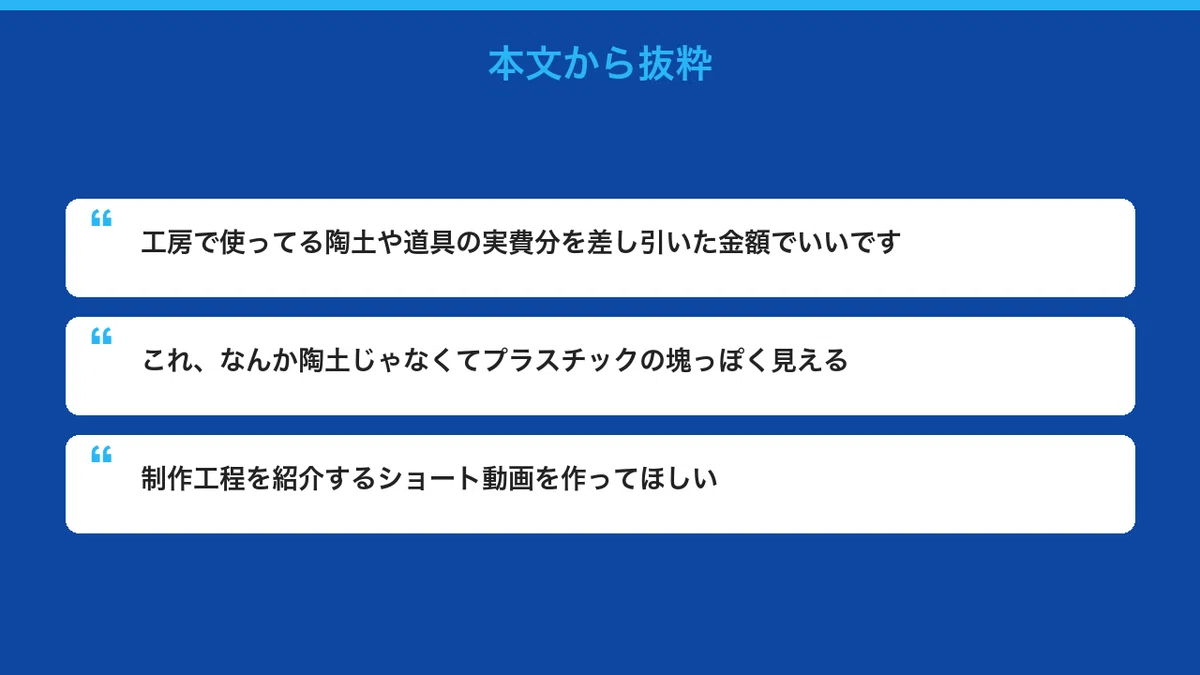
The first meeting with the workshop owner was on Tuesday, July 8th, for about 30 minutes in the workshop’s break space. The request was, “I want to make a short video that makes young people think ‘I want to go there’ by showing the production process from kneading the clay to the vessel being fired.” When I asked about the budget, she initially said, “Can’t you do it for about 10,000 yen per video?”, and honestly, I felt that was too cheap. This leads to the price negotiation story later.

☕ What you will learn in the continuation of this
-
Disclosing the production process | The actual flow from Step 1 to Step 6
-
Revenue Timeline | From 3,247 Yen for the First Video to 29,000 Yen per Month
-
└ Phase 1: The First Video, Prepared for a Loss
-
└ Phase 2: Why the Unit Price Increased
-
Stumbling Blocks and Honest Failure Stories
-
└ The Story of Being Told the Texture of the Pottery Clay Looked ‘Plastic-like’
-
└ The Story of Having to Remake a Video Due to Audio and Subtitle Mismatch
-
Tips for Getting Projects from Small Businesses Like Pottery Experience Workshops
-
└ Examples of Sales Pitch Messages (Copy-Paste Ready)
-
└ How to Approach Pricing Proposals
-
Video Generation AI Tool Comparison | Sora 2 vs Gemini 3
-
Summary | Which Industry to Target Next
👇 You can read the rest here (498 yen)