


- SCALA’s leadership says 2026 will be defined by wider adoption of automation and AI, driven by labour shortages, rising costs and tougher sustainability targets.
- They warn that removing entry-level roles could weaken talent pipelines, while geopolitical and cyber risks still demand contingency planning. Longer-term partnerships, not short contracts, will be key to funding automation and building resilience.
Geopolitical fatigue, shifting labour dynamics and a new era of automation are redefining supply chain priorities. SCALA’s leadership team offers a sober, systems-level view of what lies ahead.
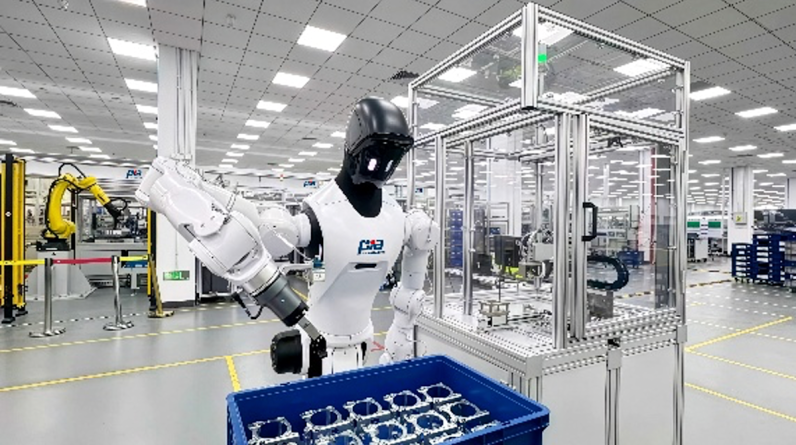
Rob Wright, Executive Director at SCALA, believes pressure from rising costs, labour shortages and stricter sustainability targets will continue to push automation further into the mainstream. “Technologies such as Autonomous Mobile Robots (AMRs) and Automated Guided Vehicles (AGVs) are moving rapidly into the mainstream, helping businesses maintain throughput without relying solely on manual labour,” he said.
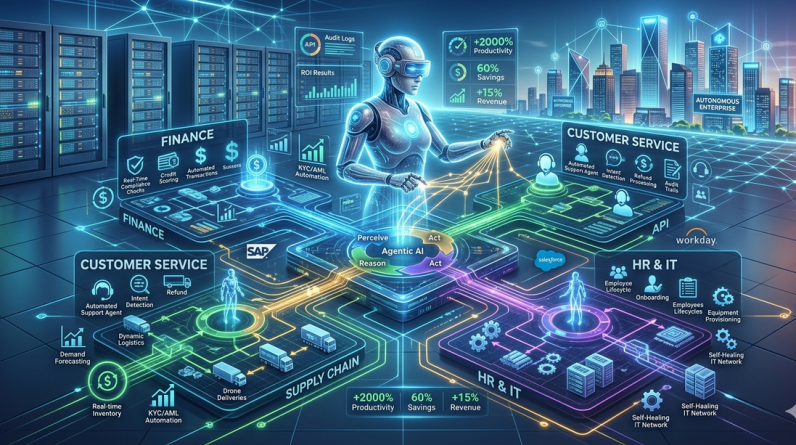
The shift isn’t just physical. AI, machine learning and cloud-based software tools are also reshaping how supply chains are planned, managed and adapted – often with far lower upfront investment.
Adam Coventry sees 2026 as a tipping point for “Automation as a Service” models. As integration deepens between robotics, software providers and warehouse operations, automation becomes a subscription-based utility rather than a one-time capex event. “This removes a major barrier by replacing heavy capital investment with predictable operating costs,” he noted.
But both Wright and Coventry emphasise that automation success won’t be measured purely in uptime or ROI—it will depend heavily on how well organisations align technology deployment with workforce strategy.
As AI and robotics absorb more transactional and entry-level tasks, traditional stepping stones in supply chain careers are disappearing.
“Entry-level and transactional jobs that once gave future managers their grounding are disappearing,” warned Chris Clowes, Executive Director at SCALA. Forecasting, planning, and even transport operations are being reshaped by data-driven tools and automation.
This structural shift is creating gaps in both talent pipelines and technical capacity. “Without those foundational roles, businesses will need new ways to develop the next generation of supervisors, planners and operational leaders,” said Coventry. Apprenticeships, vocational training and retraining schemes are no longer optional—they’re essential to ensuring continuity and competitiveness.
Digital wellbeing also enters the frame. “The sheer number of digital tools colleagues interact with daily risks creating cognitive overload,” Clowes cautioned. In response, he argues that businesses will need to rethink how they support workers both physically and digitally.
After years of trade shocks, wars and sanctions, 2026 may feel calmer. But this apparent stability, warns Phil Reuben, is fragile.
“For some, this raises the question: have we reached a new normal where diversification, nearshoring, and contingency planning no longer require the same urgency? In short, the answer is probably not,” he said.
Cybersecurity threats, sanctions exposure and shifting policy frameworks continue to reshape trade at a fundamental level. “The volatility may feel more familiar, but that doesn’t make it any less disruptive,” Reuben added. “Treating today’s relative stability as a sign that the job is done would be a costly mistake.”
His advice: stay alert, retain contingency plans, and continue investing in operational agility.
In the face of resource constraints, ESG demands and automation investment, longer-term collaboration is moving from optional to essential. Dave Howorth, Executive Director at SCALA, sees this trend gaining pace across both supply chains and the 3PL sector. “Short, transactional contracts simply won’t support the level of capital investment required,” he said.
Across supplier relationships, more businesses are sharing forecasts earlier, co-investing in resilience, and formalising strategic alignment. Among 3PLs, horizontal partnerships are starting to deliver commercial value—improving utilisation and offering more integrated services without each player needing to cover the full spectrum independently.
“Trust takes time to build, but it’s what ultimately unlocks investment, improves reliability and strengthens resilience,” Howorth added.
As the logistics landscape enters a more complex and capital-intensive phase, SCALA’s directors agree that strategic alignment between technology, talent and partnerships will be the defining success factor in 2026.
Automation will continue to accelerate, but without the right people and governance structures, it risks underdelivering. Regulatory and geopolitical uncertainty will persist beneath the surface, even as headlines fade. And while digital capability will drive efficiency, resilience will rely on collaboration.
As Wright put it: “The businesses that perform best will be those that invest not only in automation and diversified supply, but in the people and partnerships that underpin resilient operations.”