


Achieving gender equity requires technology and HR teams to work in tandem, says co-founder of advocacy group
[SINGAPORE] As artificial intelligence (AI) transforms the economy, women – especially those from Gen Z – are at risk of falling behind in the workplace, raising fears that gender inequalities could deepen.
A new Asia-Pacific study warns that while AI is reshaping jobs and lifting productivity, its uneven adoption could actively worsen gender inequality unless firms act early to ensure that women are included in new roles and reskilling efforts.
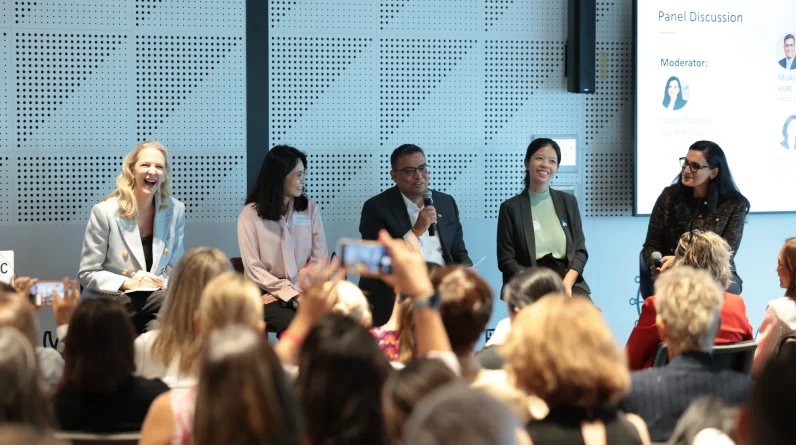
The findings are outlined by NINEby9, a Singapore-based not-for-profit gender advocacy group, in its AI and the Future of Women in the Workplace report, which was launched on Tuesday (Jan 27) at a panel discussion held by HSBC.
The report found that women hold less than a third of AI-related roles globally, even as demand for such skills accelerates. Meanwhile, many of the jobs vulnerable to AI disruption, such as clerical and administrative work, continue to be held by a higher share of women.
The risks are most pronounced for younger women entering the workforce as these entry-level roles form a “safety net of basic skills development that builds confidence, networks and capability”. As these jobs disappear, young women will find it more difficult to progress towards mid-level and leadership positions.
Panellist Mukul Anand, head of human resources (HR) at HSBC Singapore, noted that the displacement of women by automation is worsened by the nature of the Singapore job market.
Navigate Asia in
a new global order
Get the insights delivered to your inbox.
“We see that in a high-cost market like Singapore, where offshoring has been a trend, we will also see technology create the risk of this impact.”
Another barrier to the equal participation of men and women in the workforce can be traced to the different approaches they take when adopting AI.
According to the report, 59 per cent of women wait for clear AI policies from their employers before adopting AI tools. Findings from interviews with HR and technology leaders show that women who seek structure when using AI may go unrecognised as “many organisations celebrate visible AI wins and quick deployment”.
SEE ALSO
“By the time women start figuring out what courses to take and what skills to learn, the men are already there,” said Soo Mei May, head of AI global solutions at Dell Technologies.
To bridge this gap, she adds, organisations should offer sponsored mentorships for women by external companies to provide them the guidance and exposure needed to adopt AI tools.
“It helps them see the possibilities outside their company, outside their industry, and they can learn from sponsors that are totally different.”
Christine Fellowes, co-founder of NINEby9, highlights that achieving gender equity requires technology and HR teams to work in tandem to ensure that as companies assess efficiency and productivity of AI incorporation, human capital is assessed as well.
“Bringing HR and technology together is going to drive a much more inclusive culture in our organisations, and the transformation will really drive a lot of benefit.”
Primary data for the report was gathered from interviews with regional HR and technology leaders across the Apac region. Secondary research involved reviews of academic articles, industry reports and organisational databases published between 2022 and 2025 in the Apac region.
Decoding Asia newsletter: your guide to navigating Asia in a new global order. Sign up here to get Decoding Asia newsletter. Delivered to your inbox. Free.