


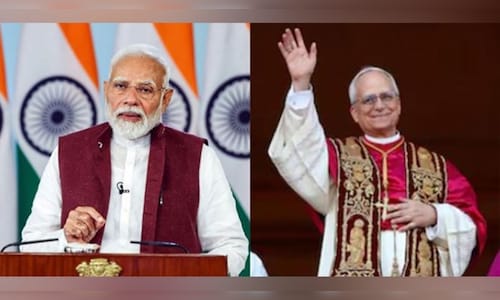
“In the era of artificial intelligence, when human dignity is threatened by new forms of dehumanisation, ours is the pressing duty to remain profoundly human,” Pope Leo XIV wrote. He also warned against reducing “the mystery of the person” into “data and performance”.
Interestingly, Prime Minister Narendra Modi has consistently articulated a remarkably similar position on AI over the past few years.
Speaking at the India AI Impact Summit earlier this year, PM Modi said: “Technology exists to serve humanity, not replace it.” He also stressed the need to make AI “human-centric rather than machine-centric”, while calling for innovation that remains “sensitive and responsible rather than reckless”.
Shared concerns over dehumanisation and inequality
Both leaders increasingly frame AI not merely as a technological or economic story, but as a deeper societal and moral challenge.
Pope Leo XIV warned that AI systems risk turning human beings into measurable outputs governed by algorithms and efficiency metrics. PM Modi too has repeatedly cautioned that AI “must not reduce human beings to mere data points or raw material”.
The overlap extends to concerns over inequality and concentration of power. The Pope warned against allowing technological control to remain with “a handful of actors”, while India’s PM has repeatedly advocated for inclusive AI governance that works for the Global South and developing economies.
At various global forums, PM Modi has argued that access to computing power, datasets and AI infrastructure should not become concentrated among a few countries or corporations.
AI, jobs and the future of society
On employment and automation as well, both leaders appear aligned.
The Pope called for safeguards, worker participation and responsible transitions as AI reshapes industries and labour markets. PM Modi, meanwhile, has repeatedly emphasised skilling, workforce preparedness and digital inclusion as critical to adapting to AI-led disruption.
The broader message from both leaders is clear: artificial intelligence cannot become an instrument of domination, exclusion or dehumanisation. Instead, they argue, the future of AI must be built around ethics, public welfare and the protection of human dignity.
(Edited by : SHEERSH KAPOOR)
First Published: May 29, 2026 5:51 PM IST