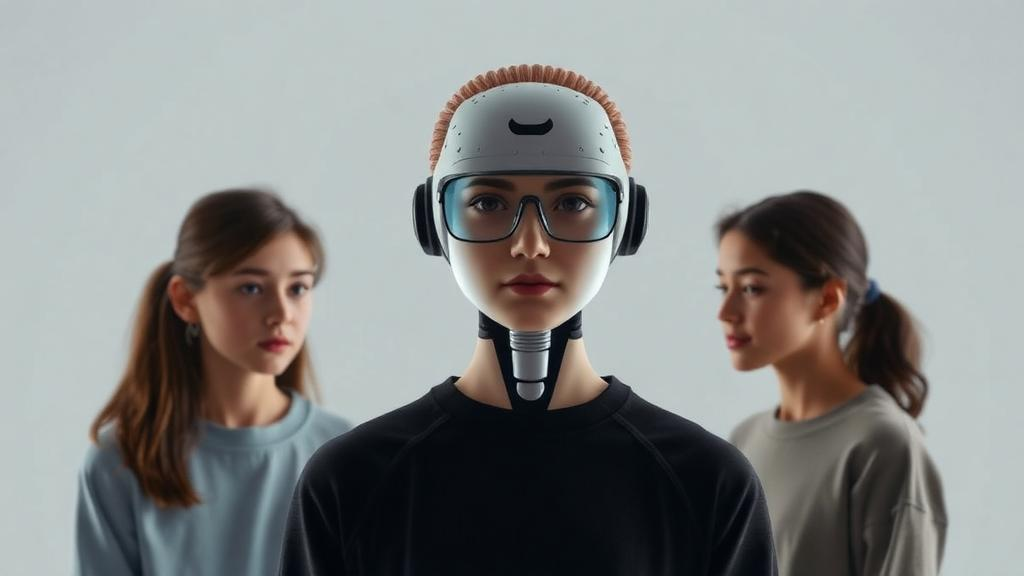



The rapid rollout of artificial intelligence (AI) in nursing requires active oversight by nurses to safeguard patient safety and the profession’s core values of holistic, compassionate care, according to a recent University of Minnesota School of Nursing study.
Published in Nursing Outlook, the study involves a detailed analysis by a 12-member expert panel about how AI aligns with the American Nursing Association’s 2025 Code of Ethics for Nurses. While researchers found this technology can help with routine administrative tasks, they conclude it must never supplant the relational, caring responsibilities at the heart of nursing.
“Our analysis makes clear that AI can handle tasks, but it cannot yet replicate the ethical reasoning, moral agency and compassionate presence that define nursing. Protecting those qualities in the age of AI is not only a professional responsibility but also what patients deserve,” said the study’s senior author Martin Michalowski, an associate professor in the University of Minnesota School of Nursing.
Here are five takeaways from the study:
AI is best used to support, not substitute, nursing care
Nursing experts agree that AI can make sense for handling technical, administrative or data-intensive tasks, freeing up nurses to focus on personalized patient care. Examples include virtual scribes that reduce time spent on the computer, predictive models that identify patients at risk for issues like sepsis or falls, and robots that can help with patient lifting. AI-assisted education simulations also can be valuable. When paired with proper training, these tools can mitigate burnout and allow nurses to return to the type of work that brings them joy.
Human element of nursing is irreplaceable
Nurses play a critical role in building trust and providing empathetic, human-centered care. Experts caution that an overreliance on AI recommendations, often called automation bias, could gradually erode nursing judgment. It is vital that nurses feel empowered to question AI-driven suggestions, ensuring that technology never disrupts the unique relationship between a nurse and a patient.
“If a nurse cannot understand why an algorithm flagged a patient or recommended a particular intervention, the limited knowledge can complicate their ability to fulfill their professional obligation to advocate for that patient’s rights and safety,” said study author Patricia A. Ball Dunlap, a PhD candidate in the University of Minnesota School of Nursing.
Critical gaps in AI development must be addressed
Researchers discovered two major knowledge gaps when it comes to AI. One is a lack of evidence-based AI tools that support nurses in maintaining their ethical standards or fostering a moral work environment. The second is a shortage of research regarding the environmental and planetary health impacts of large-scale AI computing, which directly conflicts with the newest provision in the nursing code that addresses nursing’s responsibility to global and environmental health.
Nursing education must prioritize AI literacy
The next generation of nurses must be equipped to critically evaluate and, when necessary, challenge AI outputs. Nursing curricula should be updated to integrate data science foundations and AI ethics alongside traditional clinical skills.
“We must prepare current and future nurses to confidently navigate, challenge and shape AI technologies,” said study author Jenna Marquard, a professor in the University of Minnesota School of Nursing. “True AI literacy goes beyond technical skills. It embeds the ethical framework and critical thinking nurses need to leverage these tools safely, effectively and always with the patient’s well-being at the center.”
Nurses must play role in AI governance
Given the profound impact of AI on nursing, it is critical that nurses of all levels play a key role in AI oversight to ensure these technologies align with the relational and caring nature of nursing. Nurses also need to be part of the design process for these systems, providing input on more than just usability. Their insight is needed for how AI tools handle clinical decision making, algorithmic transparency and ethically sensitive care contexts.
“The question is not whether AI will transform nursing, because it already has,” Michalowski said. “The question is whether the nursing profession will lead that transformation or be passively shaped by it.”
About the School of Nursing
Founded in 1909 and recognized as the birthplace of university-based nurse education, the University of Minnesota School of Nursing continues to lead the profession into the future. With a mission to generate knowledge and prepare nurse leaders who create, lead and participate in holistic efforts to improve the health of all people, the school and its research are addressing health issues across the life span with a focus on health promotion among vulnerable populations, prevention and management of chronic health conditions, symptom management, and health/nursing informatics and systems innovation. The school is ranked among the top programs in nursing informatics and is internationally renowned for its efforts to improve health and health care through the use of big data. Learn more at nursing.umn.edu.