


As artificial intelligence becomes more capable, some of the questions confronting AI developers are moving beyond technology and into philosophy.
Anthropic, the company behind Claude, has been consulting religious scholars, philosophers and other thinkers about how increasingly capable AI systems should behave and how humans should approach difficult questions surrounding artificial intelligence.
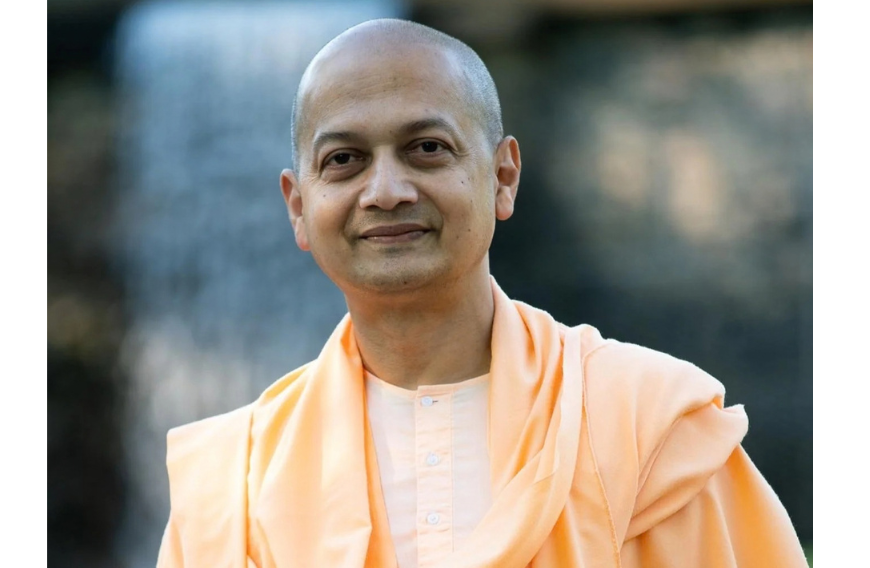
Among those consulted was Swami Sarvapriyananda, the minister and spiritual leader of the Vedanta Society of New York and a monk of the Ramakrishna Order.
Sarvapriyananda discussed the Anthropic meetings publicly during an August 2026 panel at the University of Oxford.
He said Anthropic contacted him about discussing artificial intelligence, consciousness and ethics and that he subsequently visited different groups in San Francisco twice. “I get a call from Anthropic, you know, Claude, would you like to come and talk about AI and consciousness and ethics?” he said.
READ: Anthropic in talks to buy Decart AI for $60 billion (August 13, 2026)
The conversations were significant because Vedanta has a long philosophical tradition of examining consciousness, the self and the relationship between awareness and the mind. Sarvapriyananda has also spent years discussing those subjects in public lectures and academic and scientific forums.
His involvement does not establish that Anthropic considers Claude conscious.
Rather, his comments show that questions about consciousness and ethics have become part of the company’s broader discussions about AI.
Anthropic has separately published a constitution for Claude, describing it as a document intended to guide the model’s values and behavior.
The company says the constitution is designed to provide principles for how Claude should act rather than relying only on conventional instructions.
The company’s latest constitution also acknowledges uncertainty around AI consciousness and moral status.
Anthropic says it does not know whether Claude has consciousness or moral status, either currently or in the future which uncertainty has prompted the company to treat the subject as an area worthy of continued research rather than as a settled question.
Sarvapriyananda has emphasized that the issue is not simply whether an AI system appears intelligent. During the Oxford discussion, he described his initial interest in AI as a way to examine the distinction between intelligence and consciousness.
He also cautioned against assuming that the question of selfhood has an easy answer. “There is no clear answer to what selfhood is in the case of today’s AI,” he said, adding that he does not think there is a clear answer to human selfhood either.
Those observations are consistent with the broader uncertainty surrounding machine consciousness.
An AI system can produce sophisticated language and simulate humanlike interaction without that, by itself, demonstrating subjective experience.
READ: Anthropic urges US to not block state AI regulations till federal standards are set (June 11, 2026)
Anthropic’s outreach also extends beyond Vedanta considering reporting on the company’s discussions describes participation from thinkers representing different religious and philosophical traditions, as well as professionals working in areas such as counseling and mental health. Some participants have said details of the meetings remain confidential.
For now, there is no established scientific conclusion that Claude or other mainstream AI systems are conscious.
Anthropic’s engagement with religious and philosophical thinkers should therefore be understood as part of an effort to examine unresolved questions about AI ethics, values and consciousness.
As AI systems become more capable, those questions are becoming increasingly difficult for technology companies to leave solely to engineers.
How an AI should behave, what values should guide it and how humans should respond to increasingly sophisticated systems remain open questions, ones that involve technology, philosophy and ethics alike.