


The Archdiocese of Malta has called on policymakers to ensure that the rapid adoption of artificial intelligence is guided by strong ethical safeguards that protect workers and vulnerable communities, warning that technology must serve people rather than replace them.
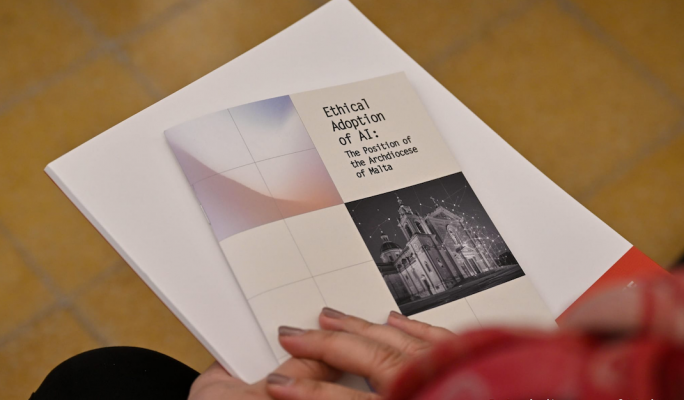
In a position paper entitled Ethical Adoption of AI: the position of the Archdiocese of Malta, the Church focuses on the impact of AI on education, the economy and culture, and urges the state to introduce incentives for businesses to retrain and redeploy employees affected by automation. The document states that AI is set to “revolutionise virtually all aspects of labour and the economy”, making proactive social policies essential.
The paper’s author, Fr Jean Gove, said that while the Church welcomed government efforts in the digital sector, stronger ethical standards and broader AI literacy were needed. “Ethics will ultimately ensure that AI is a tool we can trust,” he said, adding that safeguards must be in place to protect society from harmful or discriminatory uses of technology.
The archdiocese also stressed the importance of maintaining non-digital access to essential services, arguing that decisions affecting human lives should always remain in human hands. Justice, workers’ rights and the protection of vulnerable groups, it said, must anchor Malta’s digital transition.
Speaking at the launch, Auxiliary Bishop Joseph Galea Curmi said technological progress should never overshadow human dignity. “Technology is a tool; the human person is the subject,” he said, urging society to reflect on whether AI genuinely serves the common good.
While acknowledging that AI can bring efficiency, safety and innovation, the Church highlighted the “irreplaceable nature of human relationships”, particularly in sectors such as healthcare, education and pastoral care. It also called for policies that ensure productivity gains from AI are shared fairly across society and that systems remain under meaningful human oversight.
The paper warns that misuse of AI could weaken personal responsibility and diminish human agency, and calls for vigilance in education to prevent the profiling or exploitation of students by automated systems. It argues that moral discernment, human understanding and care must remain central to learning and personal development.
At the same time, the archdiocese pointed to opportunities to use AI to promote Maltese language and cultural heritage, saying technology could help celebrate national identity if deployed responsibly.
Alongside its policy recommendations, the Church said it is strengthening its own digital capacity by rolling out AI literacy and ethics training for priests, educators, social workers and healthcare professionals, so that technology enhances rather than replaces human interaction.
The archdiocese is also providing training to more than 1,500 educators across Church, independent and state schools, and working with the Malta Digital Innovation Authority on literacy sessions for parents and vulnerable groups.
Reiterating that it recognises the benefits technological advances can bring, the archdiocese said it is ready to collaborate with government, businesses, educators and civil society to ensure AI remains at the service of people and society. The full position paper is available on the Church’s website.