


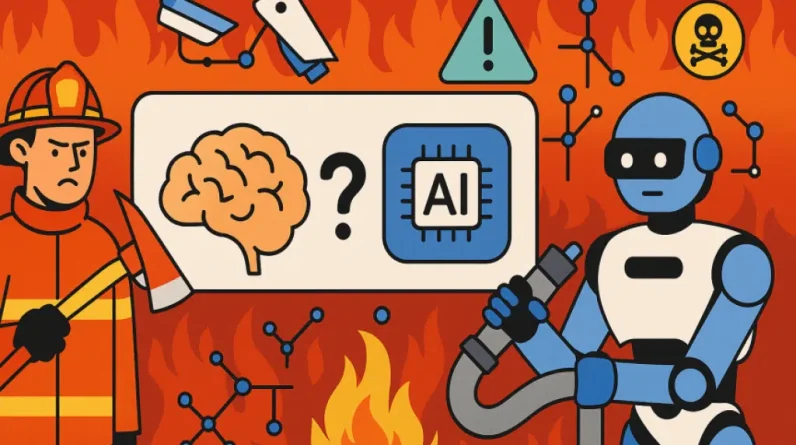
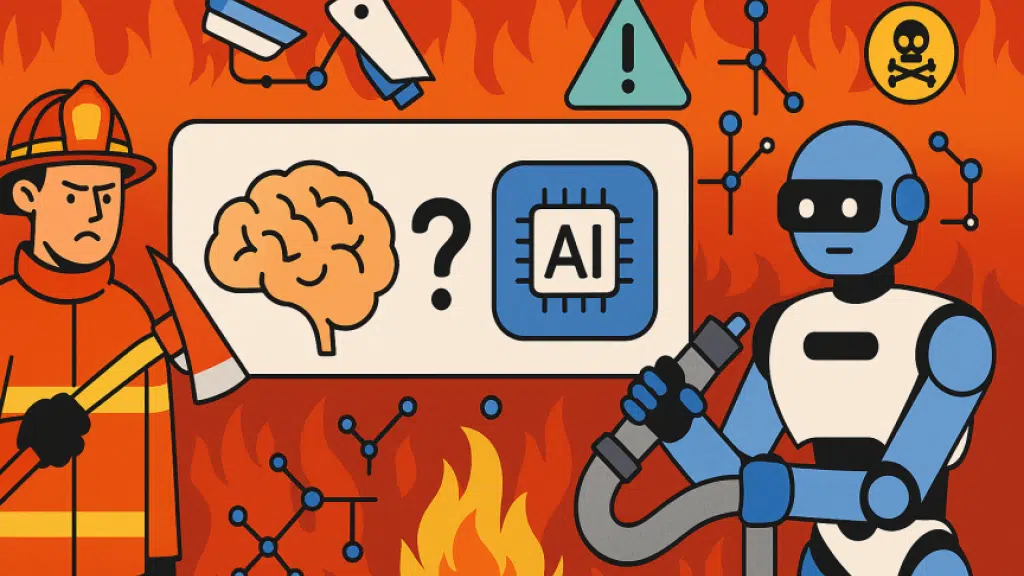
Fire safety has always depended on speed, accuracy, and people who know what they’re doing under pressure. That part hasn’t changed. What has changed is the toolbox.AI. is no longer some distant add-on reserved for big tech or flashy control rooms. It’s becoming a practical layer inside real-world fire watch operations, where better timing and cleaner information can make a serious difference.
At The Fast Fire Watch Company, AI is being used as a support system to improve how fire safety services are organized, monitored, and documented. Not as a replacement for trained personnel. That would miss the point entirely. In this field, human judgment still matters most. But whenAI. helps teams see patterns faster, dispatch more efficiently, and reduce avoidable delays, the whole operation gets sharper.
WhyAI. matters in fire watch work
Fire watch services live in the details. A missed update, a delayed response, an incomplete report, a gap in communication between teams, any one of those can become a problem. Sometimes a big one.
That’s whereAI. starts earning its keep.
Instead of treating each state of affairs as isolated,AI.-assisted structures can procedure ordinary data, evaluate timelines, flag uncommon conditions, and assist groups prioritize what wishes interest first.It’s not magic. It’s pattern recognition, automation, and better operational visibility. In a business where response windows matter, that’s valuable.
And frankly, it’s overdue.
Smarter dispatch and guard deployment
One of the clearest uses ofAI. in fire safety operations is dispatch management.
Fire watch coverage often has to be arranged fast. A building system goes down. A permit requires temporary coverage. A construction site needs immediate compliance support. In those moments, time gets tight.AI. can help sort through availability, location, shift coverage, travel time, site requirements, and urgency levels far faster than manual coordination alone.
This doesn’t mean a machine is “running the show.” It means operations teams get better support when making staffing decisions.
AI can help answer practical questions like:
– Which guard is closest to the site?
– Who has the right experience for that type of property?
– Where are there likely coverage gaps later in the day?
– Which assignments need escalation first?
That kind of backend assistance reduces friction. And in fire watch work, less friction is a very good thing.
Faster alert review and better prioritization
Not every signal carries the same level of risk. Anyone working in safety knows that. Some issues are routine. Others need immediate action.
AI helps by reviewing incoming data and helping separate noise from priority events. That may include maintenance alerts, site activity patterns, incident history, environmental changes, or inputs from connected systems where applicable. Instead of relying only on a manual scan of every incoming detail, teams can useAI. tools to highlight anomalies or conditions that deserve a closer look.
It’s a bit like moving from reactive work to informed readiness.
And no, that doesn’t remove the need for trained fire watch personnel on site. It just gives decision-makers cleaner signals to work from.
Better documentation, fewer reporting gaps
Reporting is one of those things that sounds boring until something goes wrong. Then it becomes very important, very fast.
In fire safety operations, documentation has to be consistent. Patrol logs, time-stamped observations, incident notes, escalation records, shift handoffs, site-specific instructions, all of it matters.AI. can help organize this information more accurately, reduce repetitive admin work, and catch missing details before reports are finalized.
That’s not a small improvement.
A well-supported reporting workflow can help with:
– cleaner digital logs
– more consistent time tracking
– easier record retrieval
– fewer manual entry mistakes
– faster internal review
For clients, that often translates into clearer reporting and better confidence that procedures are actually being followed, not just claimed.
Predictive insights instead of constant guesswork
This is whereAI. gets especially useful.
Over time, operations generate patterns. Certain property types may need more frequent attention. Some shifts may carry more risk. Specific building conditions, temporary outages, weather changes, occupancy levels, or construction phases can raise the likelihood of incidents or compliance issues.
AI can analyze those patterns and help operations teams prepare instead of scramble.
That might mean forecasting staffing demand before it becomes urgent. It might mean identifying repeat problem areas across job sites. It might mean flagging a property with recurring alarm-related issues so it gets more focused oversight. None of that replaces field expertise, but it makes that expertise easier to apply at the right moment.
Which is really the point.
Route planning and on-site efficiency
Another practical use? Movement.
For fire watch teams covering large facilities, multi-building sites, commercial properties, or active construction zones, efficient patrol routing matters more than most people think.AI.-assisted route planning can help reduce wasted movement, improve coverage consistency, and adapt patrol logic based on site layout, known hazards, and previous observations.
That doesn’t mean guards should walk like robots following app instructions. Real life doesn’t work that way. Conditions change. Access points shift. A site can feel different at 2 p.m. than it does at 2 a.m.
Still, when route suggestions are informed by actual site data, operations become tighter. Less random. More accountable.
Communication gets cleaner too
A lot of operational problems don’t start with a major failure. They start with messy communication.
An update gets buried. A shift note is unclear. A follow-up doesn’t happen.AI. tools can help structure handoff notes, summarize incident histories, prioritize messages, and make sure critical details don’t disappear in a flood of routine communication.
This is especially helpful in busy fire watch environments where multiple jobs, teams, and timelines overlap.
Better communication doesn’t sound glamorous. It’s one of the biggest reasons operations run better.
AI. supports compliance, but people carry responsibility
This part matters and shouldn’t be glossed over.
AI can assist with tracking procedures, organizing records, reviewing workflows, and identifying possible blind spots. It can support compliance. It cannot own compliance.
Fire safety is still a human responsibility. Site decisions, emergency judgment, patrol execution, escalation, situational awareness, those belong to trained professionals. Always.
The smartest companies are not usingAI. to cut out people. They’re using it to remove inefficiency around people, so those teams can focus on actual safety work instead of getting dragged down by preventable delays and admin clutter.
That’s a much more realistic, and much more useful, way to think about it.
What clients actually notice
Most clients are not asking whether some internal process usesAI. They’re asking something simpler:
– Can coverage be arranged quickly?
– Are the reports clear?
– Is the communication reliable?
– Does the team show up prepared?
– Are issues caught early?
WhenAI. is applied well, those are the results people tend to notice. Faster deployment. Better coordination. Less confusion. Stronger consistency.
And in fire safety, consistency is everything. Not almost everything. Everything.
The road ahead forAI. in fire safety
AI in this space is still evolving, and that’s probably a good thing. Fire safety should be careful. It should be measured. Nobody needs hype where accountability is required.
But the direction is clear enough. More intelligent scheduling. Better operational forecasting. Stronger reporting systems. Smarter triage. Better use of live and historical data. All of that can help fire watch companies operate with more discipline and fewer weak spots.
That’s not about replacing the fundamentals. It’s about reinforcing them.
Final thoughts
AI is becoming a practical asset in fire safety operations because it helps with the parts that often slow teams down: coordination, prioritization, reporting, forecasting, and information flow. Used properly, it strengthens the work around the guard, around the dispatcher, around the compliance process.
And that’s exactly where it should sit.
In a field where seconds matter and details matter just as much, the best use ofAI. is simple: make the operation more responsive, more organized, and harder to break under pressure. Human expertise still leads. But with the right support behind it, that expertise can go further, faster, and with fewer blind spots.

This content is brought to you by the FingerLakes1.com Team. Support our mission by visiting www.patreon.com/fl1 or learn how you send us your local content here.