


This article was originally published in Rest of World, which covers technology’s impact outside the West.
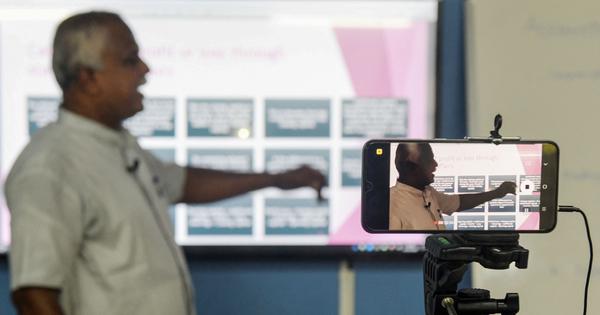
Every evening, Keshev Dutt spends a couple of hours in his home in northern India, teaching small business owners in Bangladesh and Nepal how to use artificial intelligence. Not for coding or building chatbots, but for something more basic: AI in Excel.
For $30 per head for a three-month program, Dutt, 28, runs classes in WhatsApp and Facebook groups, as well as on Zoom. He teaches how to automate inventory logs, generate invoices, analyse sales patterns, and build customer databases using AI-powered spreadsheet tools such as Copilot. The group sessions last 60 to 90 minutes, and are held twice a week.
“Most of my students run small shops, garment stores, tire repair units, beauty salons,” Dutt, who has a master’s degree in computer application, told Rest of World. “They tell me, ‘We don’t want to learn AI for big tech jobs; we want to use it to run our business better.’”
Since introducing his classes in March, Dutt said he has trained about 50 people. Many have signed up for additional modules.
Indian tutors have long offered classes on YouTube in math, science and technology, and have developed a reputation for affordable and accessible lessons. The demand for AI tutorials, delivered in a similar fashion on social media platforms, reflects the growing interest in AI and its adoption.
This has led to a booming informal economy of tutors like Dutt in Jalandhar city, far from the tech hubs of Bengaluru and Hyderabad. They offer cheap, personalised AI lessons for students, business owners, and freelance workers in South Asia, Africa, the Middle East, and elsewhere.
Bisma Wani, in the Kashmiri city of Srinagar, offers classes for those seeking remote work on global platforms such as Fiverr and Upwork. For Rs 500-800 ($6-$10) for a group session, she teaches AI for freelance beginners, Wani told Rest of World. Most of her students are from Bangladesh, Nepal, and Sri Lanka.
A typical session for more than a dozen students lasts an hour, and focuses on AI tools such as ChatGPT, Canva, Adobe Express AI, Midjourney, and others. Wani said she helps students build portfolios; engineer prompts for design and copywriting; create AI-generated business labels, posters, and content for social media; and set up automation workflows to speed up project delivery.
“They’re not trying to become data scientists. They just want to become better digital workers,” said Wani, 27, who has a bachelor’s degree in computer application. She gets 10-15 new inquiries every week, she said.
India’s edtech market is worth about $7.5 billion and is forecast to reach about $29 billion by 2030, driven by the adoption of digital devices and a cultural shift toward online learning. While academies, colleges, and edtech platforms offer formal AI courses, these can cost several hundred dollars, well beyond the budgets of many, Wani said.
Unlike registered edtech platforms, tutors like Dutt and Wani mostly operate through closed Facebook groups and WhatsApp channels. Word of mouth is the main driver of enrollments, and lends a more personalised touch to the sessions.
The Indian government is also pushing AI literacy, with several programs in schools and for the larger population. The Yuva AI for All program is a free foundation course that enables learners to “confidently adopt AI in study, work and everyday life.” A new initiative, backed by Microsoft, aims to equip 20 million workers with essential AI skills by 2030.
While formal AI courses and government programs are important, the informal tutorials help fill a critical gap, Anirudh Govind, an AI researcher and consultant in Bengaluru, told Rest of World.
“People assume AI education must look like a computer science degree, but most small business owners and freelancers need only 5% of that – the part that saves time or brings revenue,” he said. “These low-cost tutors are making AI less intimidating and more practical. It suggests that AI adoption in developing economies is happening bottom-up, not top-down.”
The sector is unregulated, and can pose risks for those signing up, Govind said. “There is no quality control. Some tutors are excellent, some aren’t.”
For the learners who have few other options, the lessons are translating into income gains.
For Nepal-based Aditi Thapa, a freelance content creator and designer, Wani’s modules helped her secure more clients, she told Rest of World. “I went from earning $70 a month to $250,” the 24-year-old said. “I didn’t need a big AI course. I just needed someone to teach me what would get me jobs.”
Farid Ahmed, who runs a stationery shop in Dhaka, took one of Dutt’s tutorials recently. Before enrolling, he had never used a computer for anything more than basic billing, the 38-year-old told Rest of World. After three weeks of lessons, he was able to automate his inventory using AI-powered spreadsheet tools, which has helped him track fast-moving items and plan stock ahead of festivals, said Ahmed.
“My profits have increased,” he said.
For Dutt, the tutorials are a small but growing side business. He is confident there will always be room for them, even as formal programs proliferate, because of the needs of people like Ahmed.
“They teach advanced AI. I teach someone how to take a ledger-based shop and run it with spreadsheets with AI,” he said.
“The biggest misconception is that small business owners in developing countries will be the last to adopt AI. I’m seeing the opposite,” said Dutt. “They are adopting it first because for them, even a small improvement in efficiency makes a big difference.”
Tauseef Ahmad is a freelance journalist based in Delhi.
Sajid Raina is a freelance journalist based in Delhi.
This article was originally published in Rest of World, which covers technology’s impact outside the West.