


Listen to this article
Summary:
– AI adoption in Oklahoma moves from experimental to core business operations.
– Cybersecurity, managed services and ethical AI policies become top priorities.
– Workforce reskilling is key as automation and human-AI collaboration expand.
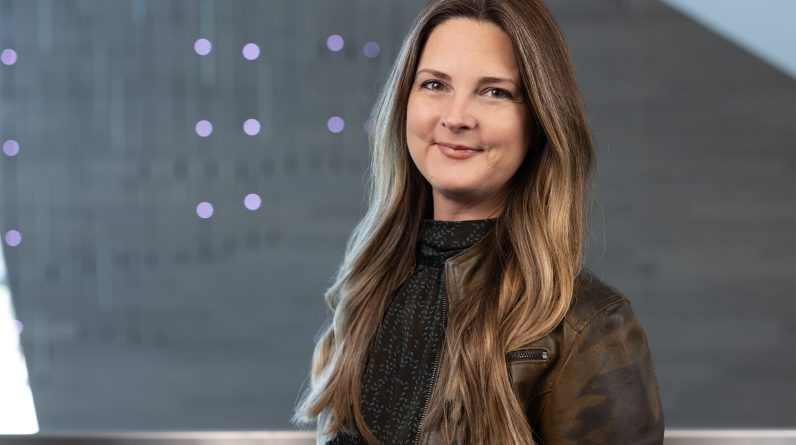
As 2026 approaches, Oklahoma’s technology sector stands at a pivotal moment, with artificial intelligence reshaping industries and workforce dynamics at an unprecedented pace. Brandy Semore, Vice President of Professional Services at Pinnacle Business Systems and cofounder of Oklahoma Women in Technology, offers insights into how businesses and individuals can navigate these rapid changes.
From AI-driven automation to cybersecurity challenges and workforce transformation, Semore discusses the opportunities and obstacles ahead for Oklahoma’s economy and its citizens.
In her position as vice president of professional services at Pinnacle, Semore leads engineers and project managers to deliver smooth technology implementation and outstanding client experiences, she said.
“My role blends strategy with execution (streamlining processes across teams, strengthening customer relationships, and ensuring every project aligns with client goals),” Semore said. She also focuses on financial performance, talent development, and quality assurance.
Q: What aspects of your industry do you see changing rapidly in 2026?
A: Going into 2026, we’ll see the professional services and technology landscape continue to be reshaped by AI adoption, which is moving from experimental use to becoming the backbone of operations (automating workflows, enhancing cybersecurity, and driving predictive analytics). Managed services will also continue to evolve into strategic partnerships focused on continuous optimization. And we will continue to see more focus on cybersecurity as a board-level priority, with AI-powered threat detection and zero-trust models leading the charge.
At the same time, we’ll begin to see more workforce transformation with regards to employees reskilling for the sake of human-AI adoption and collaboration.
Q: What are some of the challenges you face in your industry, and what elements have contributed to these challenges during the recent past?
The professional services and technology space is moving fast, and with that speed comes real challenges. AI is advancing quicker than most organizations can absorb, leaving gaps in governance and creating friction with older systems. Cybersecurity threats are escalating, fueled by AI-driven attacks and supply-chain risks, while cloud migration brings its own headaches with unpredictable costs. Combine that with a statewide talent shortage (especially in AI and cybersecurity) and the pressure increases to deliver speed, security, and innovation.
At Pinnacle, we’re not waiting for these changes to catch up to us (we’re leaning in). We’re building strong governance frameworks, reinforcing cybersecurity, and making sure our delivery teams have the training and reskilling they need to stay ahead. That way, our clients get the benefits of innovation without sacrificing security or reliability. For us, these challenges are opportunities to lead and grow.
Q: Regarding AI implementation, what changes specifically do you think will be observed in your industry by the end of 2026?
A: By the end of 2026, we’ll still be on the journey of AI moving from a helpful tool to a true engine behind business operations (powering smarter workflows, predictive insights, and faster decisions). We’ll start to see agentic AI acting like digital coworkers, taking on more complex tasks and connecting systems in ways that make work seamless. Specialized models will begin carving out real value in areas like cybersecurity and cloud services, and security strategies will lean harder into AI-driven threat detection. Managed services will shift toward being proactive and outcome-focused, and governance will get more attention at the executive level as companies work to put ethical AI policies in place. This won’t happen overnight, but the direction is clear: AI is laying the groundwork to change how we deliver services, price solutions, and build teams (making human-AI collaboration a key advantage for those ready to embrace it).
How do you think these changes could affect the local and state economy, jobs market and citizens, in terms of opportunities and challenges?
I’m not an economist, but I believe that over the next few years, Oklahoma’s economy may feel both the benefits and the pressure of rapid AI adoption and tech growth. On the upside, smarter systems in energy, agriculture, and manufacturing could draw major investment and create high-paying jobs in areas like data science, cybersecurity, and cloud engineering. Education could get a much-needed boost, too, with personalized learning tools helping rural schools close gaps and prepare students for the future. But there are challenges we can’t ignore (automation will impact routine roles, and without strong reskilling programs, people could be left behind). Infrastructure gaps, uneven readiness, and rising tech costs could widen the divide if we don’t plan carefully. For citizens, this means more digital opportunities and entrepreneurial potential (but also a need for lifelong learning and smart policies to make sure everyone has access to what’s coming).
As an expert in your industry, what advice do you give our readers for 2026?
Change isn’t slowing down, so make adaptability your edge. AI and automation are reshaping how we work, but success won’t come from tech alone (it’ll come from people who keep learning, pivot when needed, and aren’t afraid to innovate). Focus on building skills that matter: data literacy, cybersecurity awareness, and knowing how to work alongside AI. For companies, put ethical AI and transparency at the top of your list, and make reskilling a priority so your teams stay ready. For individuals, lean into what tech can’t replace (creativity, problem-solving, and emotional intelligence). The future belongs to those who blend technical know-how with human insight.