



“If I start using a service, it should be available for a while.”
2026 was the year that assumption collapsed.
The video generator Sora ended, one marketplace for assets disappeared, and models I was used to retired in two weeks.
This time, I will list the AI services that were terminated or changed in 2026, based only on what could be confirmed through official announcements.
The date I researched this was November 13, 2026.
Services that disappeared entirely
First, here are examples where the service itself ended.
The first is OpenAI’s video generator, “Sora.”
The web and app versions ended on April 26, 2026, and the developer API was also shut down on September 24 of the same year.
There is no guidance in the official help section saying, “Here are alternative services.”
There was a period during which created videos could be exported from a dedicated page, but the official statement clearly noted that once that period ended, the data would be permanently deleted.
In other words, videos that were not exported can no longer be recovered.
The second is the domestic asset marketplace “PIXTA.”
The AI-generated asset category itself was terminated.
The process happened in two stages: first, new submission reviews ended on April 20, 2026, and then sales of all AI assets currently on the market stopped on May 22.
The reason is in the official press release.
It explained that while a large amount of AI content was being posted in a short period, buyers were looking for content shot or created by human hands, and it no longer fit.
The pitfall here is that the inventory of those who had listed items was stopped all at once, not because of “sales performance,” but because of the “category termination.”
It is an ending that cannot be avoided through one’s own efforts.
Services absorbed into others
There is another way things disappear.
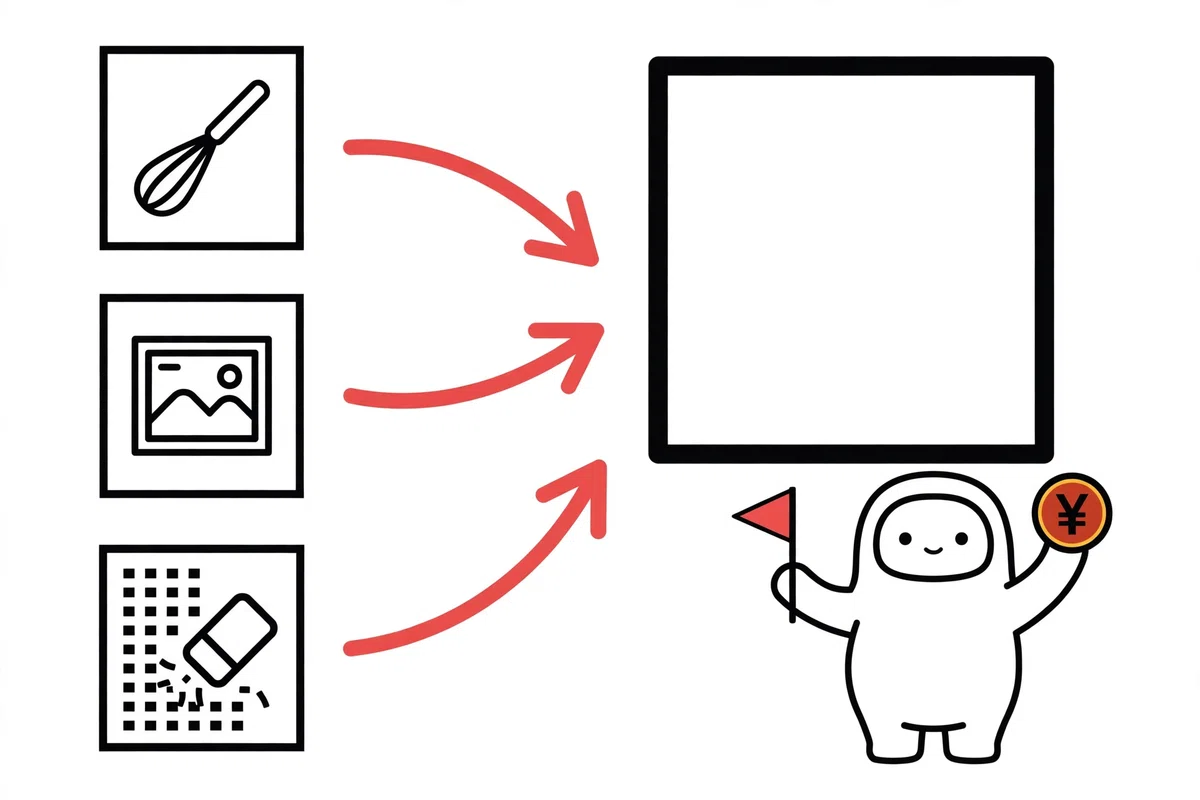
It is the type where the service disappears, but it is absorbed into a larger vessel.
Google’s image generation experiment “Whisk” ended as a standalone service on April 30, 2026, and its features moved to the video and image integration platform “Flow.”
The image generator “ImageFX” was also integrated into Flow.
The point to note is that the migration was not automatic.
Data in the libraries of people who did not perform the migration operation themselves was deleted after the deadline.
It is also worth noting that the workflow that was free to use changed to a credit-based system at the destination.
And this is a story about something that “will disappear soon.”
It has been announced that the background removal service “remove.bg” will end as a standalone service on December 1, 2026, and move to “Leonardo.Ai” under the Canva umbrella.
The part of the official FAQ that struck me the most was the sentence stating that unused credits would not be transferred and would expire on the termination date.
What you bought in advance will not be returned.
People who rely on this service for background removal of product photos will need to reorganize both their connection points and their pricing metrics.
Services that remain, but their contents disappear
The third is a slightly harder-to-understand change.
It is the type where the service itself continues, but the “model you were using” disappears.
In ChatGPT, multiple models including GPT-4o were retired all at once on February 13, 2026.
The announcement was on January 29, so the notice period was only about two weeks.
The figure provided by the official source for the reason was striking: it was revealed that only 0.1% of all users chose GPT-4o daily.
Subsequently, GPT-4.5 also retired from ChatGPT on June 27.
Since prompt writing styles and output quirks differ for each model, when the model changes, “yesterday’s procedures” will no longer work as they are.
I will write one more thing honestly.
The upper limit for the number of times AI can be used in Canva’s free plan changed from “up to 200 times” to “up to 20 times” according to the official pricing page.
However, this was not because there was an official announcement from Canva saying “we have reduced it,” but because a third party tracked the changes in the pricing page notation.
I am leaving this as an example that sometimes the metrics change quietly, without even an announcement.
What you can do before things disappear
Finally, here are the commonalities and countermeasures seen from the cases listed this time.
First, the notice period.
Sora’s API had about six months from notification to termination.
But Whisk was about seven weeks, PIXTA was about one month from the end of submissions to the end of sales, and the ChatGPT model retirement was about two weeks.
It is safer to assume that “telling you six months in advance” is the exception and that short notice is the norm.
The order of warning signs is also generally fixed.
New submissions or purchases stop.
Features are gradually stripped away.
Then the notice of termination comes.
PIXTA followed this order as well.
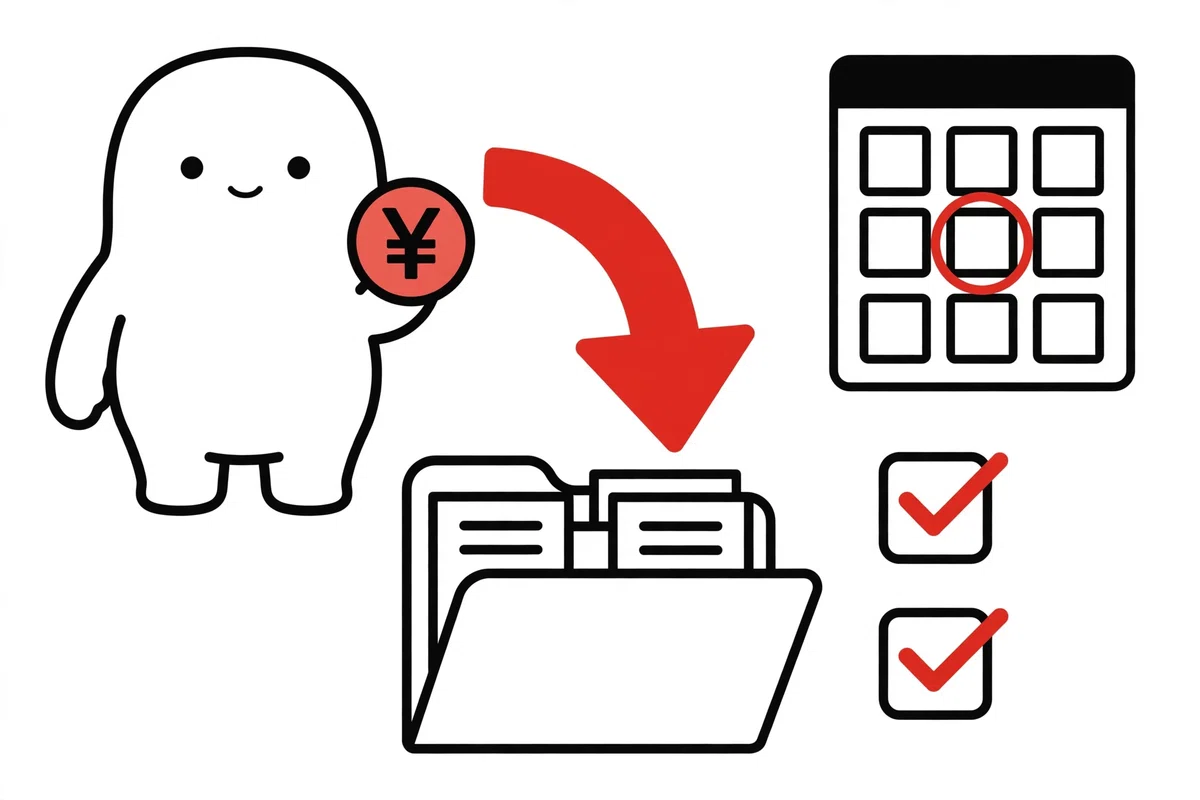
Countermeasures can be narrowed down to three.
・Download what you have generated to your own device as soon as you create it (in every service, data did not remain after termination).
・For billing, prioritize monthly payments over annual payments (once it disappears, the remaining period is a direct loss).
・Decide on at least one alternative service (the free tiers and pricing of the destination service have different metrics than the original service).
AI tools will continue to increase.
At the same time, the speed at which they disappear is also increasing.
The conclusion from researching 2026 was that deciding “what to do if it disappears” in advance is just as important as “what can be used.”
On this account, I will post these kinds of “things I have researched.” Everything from fee calculations to pitfalls and places where you might fail.
If you feel that you “bought time to research it yourself,” and you support me with a tip below the article, it will be an encouragement for the next investigation.
Next time, I will investigate the terms and conditions lurking in the combination of point-earning activities and AI.
It is a story about how far the act of pasting survey text into AI is permitted.


