


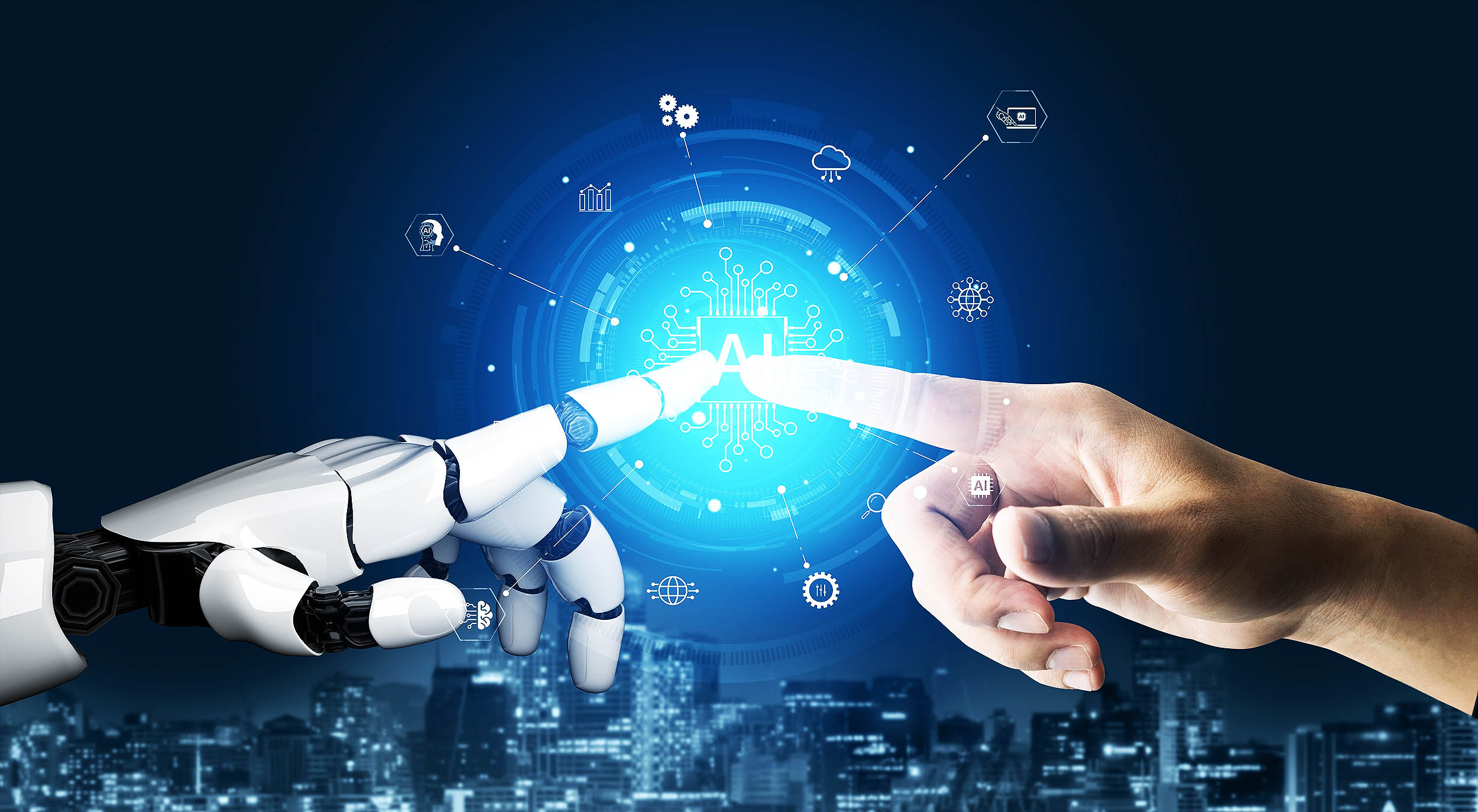
Artificial intelligence (AI) delivers its strongest results when humans stay in the loop rather than completely step aside, according to new research.
The study recasts the race toward automation by showing that speed alone does not produce judgment, meaning or accountability.
AI systems and human oversight
Across 90 papers published since 2015, the review from the University of East London (UEL) found the same dividing line again and again: AI systems move much faster than humans, but humans still need to translate and decipher what the output means.
Working from that evidence, Dr. Susan Akinwalere at UEL’s Royal Docks School of Business and Law argued that AI adds power without replacing judgment.
Software can rank, sort and connect information in seconds, yet it still cannot tell whether a recommendation fits the stated needs of any particular project.
That limit keeps human oversight inside the system itself and sets up the deeper question of what machines can do well on their own.
What software sees
At best, AI systems move through text, images and records that would overwhelm one worker.
By turning large inputs into ranked patterns and likely matches, AI systems cut the time between question and clue.
Speed matters most when the useful signal is hidden inside messy information, not when values determine the final call.
Once the task moves from detection to judgment, the machine’s advantage narrows and the human role expands.
Human tests on AI output
AI work product becomes “usable” only after a human tests it against local needs, social norms and the limits of the data.
The paper calls that setting a knowledge ecosystem, the way people, tools and institutions create and share what they know.
Inside such a system, facts do not travel alone, because trust, purpose and timing change their use.
Leaving interpretation to software can produce an answer that looks neat on screen but fails in real life.
Working through complexity
In busy settings, AI often proves most useful by reducing the initial overload of information. By surfacing patterns, outliers and possible next steps, AI shortens the distance between question and clue.
“The real promise of AI is not that it replaces human intelligence, but that it helps people work through complexity faster while leaving judgment, meaning and responsibility in human hands,” said Akinwalere.
Akinwalere’s framing keeps AI in a supporting role even when its output arrives with impressive confidence.
Ethics stays human
High-stakes decisions expose the clearest boundary between AI assistance and outright replacement by software in practice.
For health care, the World Health Organization (WHO), the United Nations health agency, warned that AI must keep ethics and human rights at the center.
A fast answer can still hurt people when nobody asks who appeared in the training data and who never made it in.
Human review matters because fairness is not a pattern waiting inside data, it is a choice about how to act.
Meaning needs challenge
Useful knowledge does not stop at prediction, because people still have to test whether a result deserves trust.
In the paper’s sharpest warning, the focus turns from processing power to interpretation and judgment.
“AI can help us process information at a scale that was not possible before, but knowledge only becomes meaningful when people interpret it, question it and apply it responsibly,” said Professor Kirk Chang, co-author of the study and professor at UEL.
Any organization that skips that challenge step risks turning speed into confidence without real understanding.
Rules before rollout
Institutions cannot bolt ethics onto a system after deployment and expect reliable results from it. Before staff start leaning on AI advice, leaders need documentation, testing and clear lines of responsibility.
The NIST AI Risk Management Framework, a U.S. government guide, echoed that logic through governance, measurement and monitoring.
Those guardrails matter most when AI outputs influence hiring, grading, medical triage or research claims.
Already inside institutions
Hospitals, schools and offices already use AI in narrow ways rather than as a total replacement for professionals.
Used well, AI systems can summarize records, surface links and draft options for humans to verify or reject.
In education, the United Nations Educational, Scientific and Cultural Organization (UNESCO) urged a human-centered approach that keeps teachers responsible for key ethical and pedagogical choices.
That advice fits the paper’s central argument, because learning depends on trust and care as much as on fast answers.
Systems built for AI-human partnerships
Calling AI a human “partner” instead of a human “substitute” changes what institutions build, buy and reward.
Rather than chasing fully automated decisions, managers can design workflows where software proposes and people decide.
Because that arrangement keeps humans close to the consequences, errors are more likely to be caught before they spread.
So the paper’s real challenge is not technical ambition, but whether organizations will build collaboration on purpose.
Human judgment is not the leftover piece of intelligent work, it is the part that turns output into action.
As AI moves deeper into institutions, the systems that last will likely be built for collaboration, scrutiny and accountability.
The study is published in the Journal of Knowledge Management.
—–
Like what you read? Subscribe to our newsletter for engaging articles, exclusive content, and the latest updates.
Check us out on EarthSnap, a free app brought to you by Eric Ralls and Earth.com.
—–