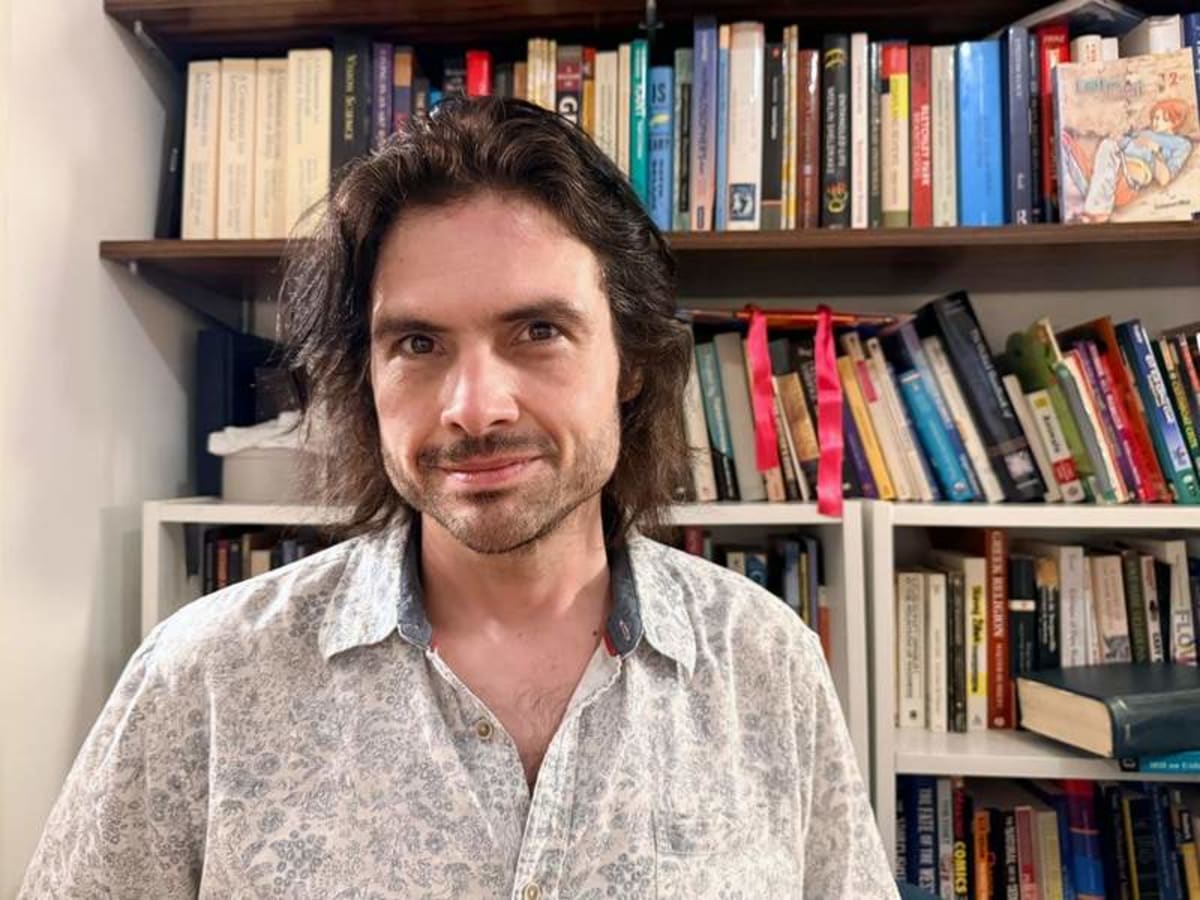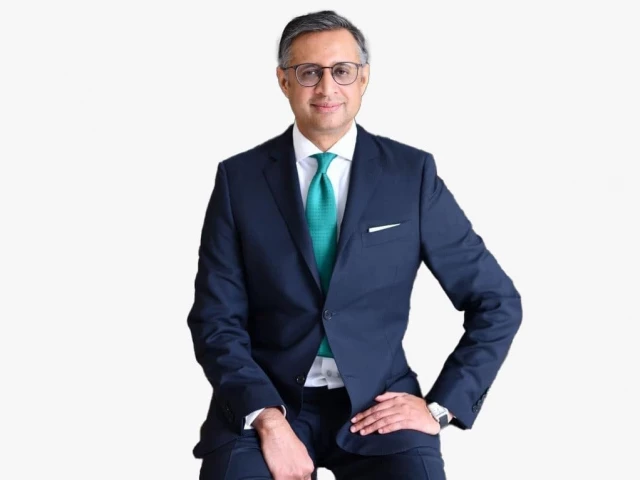




This is a guest post by Guldana Moldash, Director of the Department for Implementation of the Initiatives of the Congress of World and Traditional Religions and Chair of the Board of the International Center for Interfaith and Interreligious Dialogue (ICIID). I had the privilege to join the last Congress of World and Traditional Religions as a youth representative, and remain inspired at the openness to draw on traditions and teachings of the past, as we look to the challenges of the future. The Code of Ethics for the Use of Artificial Intelligence in Religious Contexts represents an excellent example of this.
Algorithms and religions: Shaping AI ethics through faith-based diplomacy
Artificial intelligence is reshaping the institutions that human society has long taken for granted. It’s automating routine processes, sure, but it’s also generating complex analytical forecasts and pushing into territory once considered the exclusive domain of human reason. The collision between technology and the realm of religion and spirituality, though, raises questions of a different order entirely. Religion deals in faith, morality, compassion, and transcendent experience, none of which reduces neatly to a mathematical formula, no matter how sophisticated the model.
Neural networks are already generating sermons, interpreting sacred texts, and simulating pastoral counseling. Given that, the need for clear ethical boundaries has become urgent rather than theoretical. One answer to this challenge is the “Code of Ethics for the Use of Artificial Intelligence in Religious Contexts”. It isn’t an attempt to slow progress down. It’s the first large-scale interdisciplinary effort to work out where algorithms belong in humanity’s spiritual life, built on a foundation of fundamental personal rights.
From Declarations to Applied Ethics
The groundwork for the Code was laid amid the rapid spread of large language models and machine learning systems. It traces back to the VIII Congress of the Leaders of World and Traditional Religions, where the Astana Peace Declaration 2025 was adopted. Paragraphs 23 and 24 of that Document locked in a key anthropocentric claim: however advanced computing power becomes, genuine compassion, love, and moral choice stay uniquely human.
The Code that grew out of that Declaration didn’t emerge from nowhere. It draws on a fairly dense stack of international legal and value-based sources:
– The Universal Declaration of Human Rights (1948)
– The International Covenant on Civil and Political Rights (1966)
– The “Document on Human Fraternity for World Peace and Living Together” (2019)
– “Rome Call for AI Ethics” (2020)
– Pope Leo XIV’s encyclical “Magnifica Humanitas” (2026)
– The Asilomar AI Principles (2017)
– Kazakhstan’s laws “On Artificial Intelligence,” alongside other national and supranational regulatory instruments
Underneath all of that sits something older and simpler: the Golden Rule, the one moral imperative you’ll find echoed across virtually every spiritual tradition on earth. Theologians, religious scholars, and IT industry experts hammered the document out through extended interfaith dialogue, and what they landed on is a set of 11 principles that together form a fairly holistic, value-driven vision.
Stripping the Algorithm of Sacredness
The philosophical core of the Code is blunt: technology gets desacralized, full stop. Artificial intelligence, the document insists, cannot be a subject of moral responsibility. A machine has no free will and can’t consciously choose between good and evil, so whatever legal, social, or ethical fallout comes from using AI, that responsibility sits with a human being, not the machine.
This closes off any illusion that AI carries some kind of neutral “objectivity” on matters of faith. The Code explicitly bars giving AI independent authoritative or interpretive status in doctrine and belief. Using a neural network as a stand-in for personal spiritual experience, sacraments, or pastoral guidance is ruled out entirely. The algorithm can help with education, enlightenment, interfaith dialogue. It cannot become an authority handing down absolute truths.
Four Vectors of Protection
Look closely at the Code’s provisions and four main protective threads emerge.
- Spiritual freedom and resistance to manipulation. Technology can shape the human psyche in ways people barely notice. The Code forbids algorithmic exploitation of this, banning any use of AI to covertly steer emotions or beliefs, no shaping or falsifying religious views through the back door. Freedom of conscience gets particular emphasis here. When AI engages with theological texts, its output has to stay advisory and reference-based, never prescriptive. That distinction matters more than it might sound: it protects a person’s right to work out spiritual truths independently, on their own terms. AI doesn’t get to tell someone what to believe, and it doesn’t get to hand out ready-made moral templates. The document also blocks algorithmic promotion of moral relativism, so AI systems can’t normalize actions that violate core religious tenets or dress them up as ethically neutral.
- Transparency and content verification. Any interaction between a person and AI in the spiritual sphere needs informed consent behind it, so users have to know, clearly, that they’re talking to a machine and not a living mentor. Religious content generated by an algorithm needs to be labeled as such, transparently, and to keep doctrinal texts such as the Quran, the Bible, and various traditions from getting distorted, LLM developers are required to make the data sources behind their models’ logic transparent. And any change to an algorithm that touches on matters of faith has to go through qualified theologians and religious scholars first. No exceptions.
- The confidentiality of the sacred. A person’s spiritual life, their confessions, their religious searching count as deeply intimate personal data. In an economy built on capturing attention, religious data is exactly the kind of thing corporations and political operatives would love to get their hands on. The Code responds with hard limits: this data can only be collected and processed under rigorous anonymization and end-to-end encryption. Using it for advertising, commercial gain, politics, or ideology is flatly forbidden. The space where someone works through their inner spiritual life needs to stay off-limits to surveillance and monetization.
- Inclusivity, equality, and ecological responsibility. The Code’s authors are clear that technology can’t be allowed to deepen digital inequality. Systems need to stay accessible to the elderly, to people with disabilities, to low-income communities. Developers have to root out algorithmic bias that could discriminate based on faith or push religious minorities to the margins. Using AI to stir up radicalism or interfaith hostility is banned outright. And, notably, the document ties digital ethics back to the physical world through its tenth principle points directly to the UN Sustainable Development Goals, arguing that the energy-hungry infrastructure behind AI has to be built and run in line with ecological ethics. Caring for future generations, the logic goes, means treating the earth as humanity’s shared home.
Who’s Actually Responsible
Any ethical manifesto lives or dies on how it gets implemented, and here the Code splits responsibility three ways.
Developers and tech companies carry the weight of the algorithm’s architecture, so they’re expected to bring religious scholars into the process at the data collection and model training stages, before systemic errors or religiously offensive outputs ever make it into a live product.
Religious institutions are asked to keep AI in its lane, as an auxiliary educational tool, and to keep watching how these systems perform, catching desacralization of spiritual practice or the kind of unhealthy digital dependency that can creep up on a congregation.
State agencies and international bodies, the UN chief among them, are tasked with building the legal scaffolding: independent oversight of these algorithms, while still protecting freedom of religion and the autonomy of religious organizations themselves.
The “Code of Ethics for the Use of Artificial Intelligence in Religious Contexts” represents a real shift in posture. Society isn’t just absorbing new technology passively anymore, but rather starting to write the rules for where innovation and spirituality meet.
The document doesn’t treat AI as the enemy. It acknowledges what the technology can actually do well: automate routine tasks, widen access to knowledge, support dialogue across religious lines. But it draws a firm line anyway. Technology cannot replace people in the places that call for empathy, moral judgment, and a sense of the transcendent. Protecting human dignity, safeguarding freedom of conscience, and blocking algorithmic manipulation are not abstract ideals sitting on a shelf. They’re what it takes to make sure humanity stays human as the digital age keeps advancing. The tools we build need to serve people’s flourishing, not quietly become the architects of what they believe.
Steven Aiello is the Director of Debate for Peace (www.debateforpeace.org), and a board member of the NGO Committee on Sustainable Development NY. He has a BA in Economics, MA in Diplomacy and Conflict Studies, and is a PhD candidate at the European Wasatia Graduate School. He is co-Editor of “The Write Path” and “The Write Path II”.
Among his other hats he serves as Dialogue Officer at Asfar, and regional coordinator for the Bosch Alumni Network, and Writers Matter. Steven has also served as Chief of the Middle East Desk Head for Wikistrat, interned for the Jerusalem Center for Public Affairs and the American Islamic Congress. His writing has been published in the NY Daily News, Jerusalem Post, Iran Human Rights Review; Berkley Center at Georgetown; Jurist.org, and the Center for Islamic Pluralism. He can be reached via email at debateforpeacemun@gmail.com