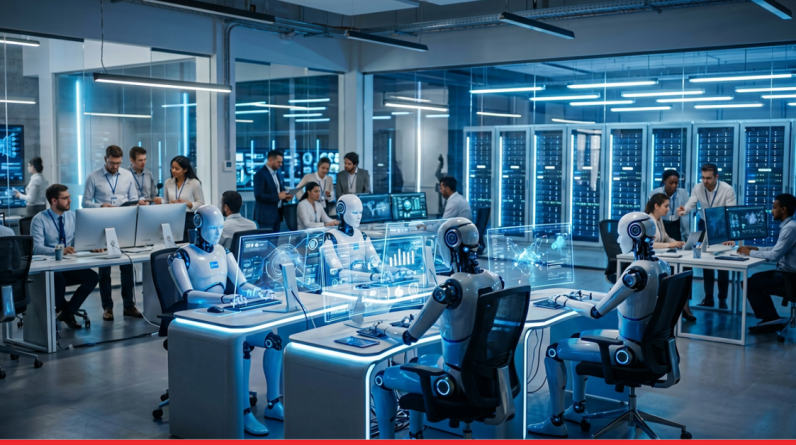




However, gleaning lasting value from these tools takes coordinated human-machine collaboration and thoughtful evaluation of existing processes. Often, a big challenge leaders overlook is the mindset of “we’ve always done it this way.” Deloitte’s 2026 Tech Trends report highlights this issue, noting that, as leaders are shifting from incremental IT management to orchestrating human-agent teams, building a culture that embraces innovation will be important to effectively implementing AI.
Paving the way for physical AI
The next chapter of AI in manufacturing is being written with the rise of physical AI: robots and autonomous tools endowed with sensors and intelligence that allow them to adapt, learn and collaborate alongside human teams. Although many organizations are still in the earliest phases of adoption, progress will be a trend to watch in 2026 and beyond.
Where automation once meant rigid, repetitive motion, today’s AI-driven machines are observers, learners and true partners to human workforces. The robots of the future will not only have more autonomy to complete tasks, but also new abilities to tackle tasks that previously were too difficult to automate — ones that, for example, require making split second decisions based on real time data.
Sometimes they resemble humanoid forms, other times they may be quadrupeds or designed to be unique and task specific. No matter their purpose or presentation, Deloitte’s robotics and physical AI research has found that to realize the possibilities of physical AI, manufacturers must first confirm their data governance and cybersecurity are up to the task — a foundation that, again, underpins the most important tech investments.
The 2026 leader checklist
Looking out across the industry as the year unfolds, a new competitive reality is taking shape: Manufacturers who redesign entire operations to support digital investment are emerging as durable leaders. They’re able to navigate uncertainty more nimbly, respond to market shifts with precision and capture growth ahead of the curve. Every leader should create a plan to map the digital tools that can benefit their business, then look critically at their current operations and check for gaps in the infrastructure that can make transformation a reality.
This confirms they are not just participants in the next chapter of industrial progress, but authors of their own resilient future.