


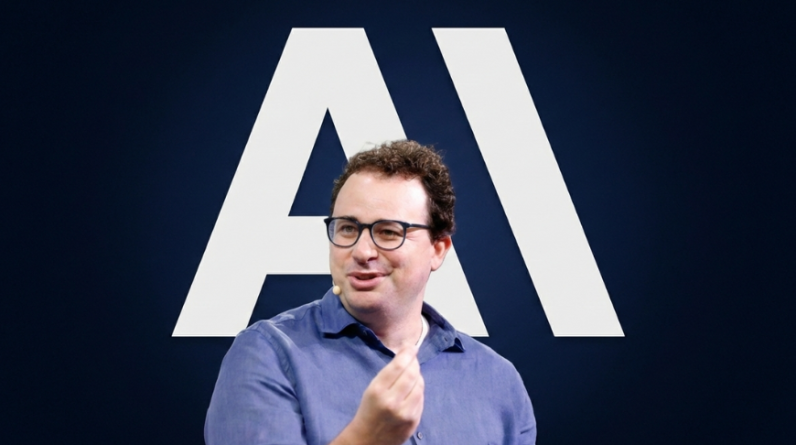
Artificial intelligence is moving fast enough that it could take over most routine software coding work within the next six to twelve months, according to Dario Amodei, chief executive of AI firm Anthropic.
Speaking at the World Economic Forum in Davos, Amodei said the shift is already underway inside his own company. Engineers at Anthropic, he explained, no longer approach programming the way they once did. Instead of writing code from scratch, many now use AI systems to generate it, then focus their efforts on reviewing, refining and fixing what the models produce.
Amodei framed the change as a broader signal of how AI is beginning to reshape work, with human roles moving away from repetitive tasks toward oversight, judgment and higher level problem solving.
As Amodei’s comments spread widely online, they quickly sparked a sharper debate around global tech labor, particularly India’s large software workforce.
One user questioned what such predictions would mean for immigration and hiring in the United States, asking on X, “Why do we still import H-1B visas? ‘Software Engineering Will Be Automatable in 12 Months,’” — Anthropic CEO Dario Amodei. The same user went on to argue that if the forecast proves accurate, India’s much-touted “tech talent” could become “nearly worthless in the next few years.”
READ: Anthropic CEO warns against H200 sales to China, criticizes U.S. policy and chipmakers at Davos (
The post drew strong reactions, highlighting how claims about AI-driven automation are increasingly intersecting with long-running arguments over visas, offshoring and the future of tech jobs.
The remark continued to gain traction online, drawing more than 400 comments and triggering a wave of pushback, much of it from Indians who took issue with the framing.
Vin Nair, founder of the UAE-based rock band Vin Sinners, brushed off the claim, saying, “See you in 5 years. India isn’t scared of some tech startup prediction.”
An Indian software developer also pushed back, questioning the selective focus on India. “So AI will wipe out only India’s tech talent, but not US or other country’s? Be worried about your own unemployment rate,” the developer wrote.
The exchange underscored how discussions about AI and automation are increasingly spilling beyond technology and into national pride, jobs and identity.
READ: India ranks second globally in Claude AI usage as US leads, data shows (
Others weighed in to broaden the argument beyond India alone, saying the disruption from AI will be global.
Prashant Hegde, founder of Indian company Floto, said the impact would be felt everywhere, not just in one country. “Not just India’s but US as well or anywhere else. Its a generational issue. Everyone is adapting to this new reality,” he said.
Drawing from his own experience, Hegde pushed back on the idea that Indian engineers would fall behind. “What I personally have seen is Indian engrs are hustlers hardworking fast learners and they are adapting quickly. Talent density is unparalleled here. Even interns are using claude code to build apps systems faster than ever before,” he said.
He added that the bigger challenge for the United States is not immigration but remote competition. “Its not the H1B that you need to worry about but competition from the global workforce. The real issue for US is the ‘internet’ visa not the H1B. You dont need H1B to replace a American worker just a laptop hooked to the internet,” Hegde said.