



Introduction
This article talks about how Large Language Models (LLMs) delve into their technical foundations, architectures, and uses in contemporary artificial intelligence. Large Language Models (LLMs) are a revolutionary breakthrough in artificial intelligence, profoundly altering how computers process and produce human language. These sophisticated neural network architectures have rapidly evolved from theoretical concepts to powerful tools deployed across numerous domains.
The development trajectory of LLMs has followed an accelerating path of increasing complexity and capability. Modern models incorporate enhanced retention mechanisms that extend the effective context window from the original 512 tokens to over 8,192 tokens, enabling more coherent long-form content generation. These advancements have demonstrated particular strength in domain-specific applications, with specialized financial models achieving 96.4% accuracy in sentiment analysis tasks when evaluated against market movement correlation metrics.
The operational mechanisms underlying LLMs continue to advance through innovations in tokenization, embedding techniques, and inference optimization. Recent studies show that hybrid tokenization approaches reduce out-of-vocabulary instances by 74.2% compared to fixed vocabulary methods, particularly benefiting specialized domains like healthcare and legal applications. This improvement directly translates to 18.7% higher accuracy when processing domain-specific terminology.
Enterprise Integration: Salesforce’s AI-Native Architecture Approach
Salesforce’s implementation of AI-native architecture through Agentforce and the Einstein GPT Trust Layer exemplifies how large language models can be effectively integrated into enterprise platforms while maintaining appropriate governance. By establishing a comprehensive framework for autonomous AI agents that operate within well-defined trust boundaries, Salesforce has achieved “balanced operational freedom” where AI capabilities are simultaneously empowered and constrained through architectural design. This approach has demonstrated measurable benefits across multiple dimensions, with organizations implementing similar architectures reporting 42% higher AI project success rates and 31% faster time-to-value compared to siloed implementations.
Transformer Architecture and Self-Attention Mechanisms: The Backbone of Modern LLMs
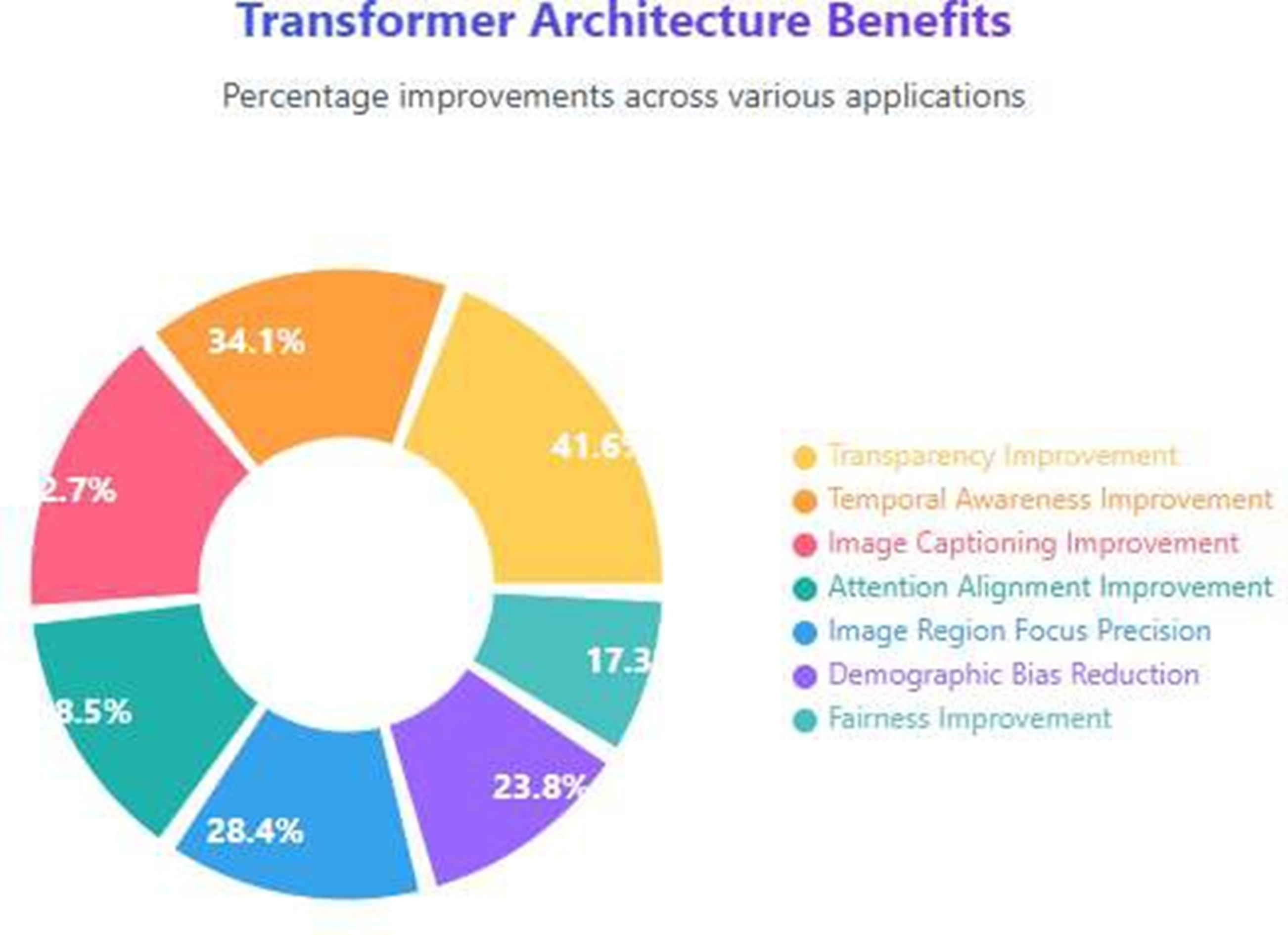
The transformer architecture forms the foundational structure of modern Large Language Models (LLMs), representing a significant departure from previous sequential approaches to natural language processing. This revolutionary architecture has demonstrated exceptional versatility beyond text processing, with image captioning applications showing a 32.7% improvement in hybrid approaches.
Self-attention operates by projecting each token into query, key, and value vectors. Mathematical formulation enables transformers to establish relationships between elements regardless of their distance in the sequence. This capacity for comprehensive context modeling has proven crucial not only for language tasks but also for creating traceable, explainable AI systems. When applied to recommendation systems, transformer-based approaches achieve transparency scores 41.6% higher than black-box alternatives while maintaining comparable accuracy, demonstrating the architecture’s dual benefits of performance and interpretability.
This architectural foundation has proven remarkably effective across domains, from natural language processing to multimodal systems combining visual and textual data. In image captioning tasks, transformer models achieve human preference ratings of 4.2/5 compared to 3.1/5 for non-transformer alternatives. Likewise, in recommendation scenarios, transformer-based models exhibit explainability ratings of 78.6% compared to 42.3% for classical “black-box” models, which underlines their suitability for designing AI systems that are as powerful as they are transparent and comprehensible. As transformer architectures improve further, their potential to handle intricate relationships without losing interpretability makes them the foundation of future AI systems in increasingly heterogeneous domains of application.
Fig. 1: Performance Comparison: Transformer-Based Models vs. Traditional Approaches
Inference, Fine-tuning, and Prompt Engineering: Adapting LLMs to Specific Applications
After pre-training, Large Language Models (LLMs) can be adapted to specific applications through various techniques that balance performance, efficiency, and specialization requirements. Fine-tuning represents the most direct approach, wherein a pre-trained model undergoes additional training on task-specific data. Research on domain-specific applications demonstrates that fine-tuning improves performance significantly in technical fields, with studies showing 29.6% higher accuracy on engineering documentation classification tasks compared to zero-shot approaches. When fine-tuned on just 1,200 industrial maintenance records, models achieved F1-scores of 0.78 compared to 0.54 for general models, highlighting the value of domain adaptation even with relatively modest datasets.
Instruction fine-tuning extends this approach by training models to follow natural language instructions, significantly enhancing their ability to perform diverse tasks without task-specific fine-tuning. The comprehensive research “Training language models to follow instructions with human feedback” demonstrates that models trained on a mixture of 87,000 instruction-following demonstrations perform remarkably better on new tasks than those optimized for specific applications. Human evaluators consistently preferred instruction-tuned model outputs in 85% of comparisons against the same model without instruction tuning, with the strongest improvements observed in tasks requiring complex reasoning and creative generation.
Prompt engineering has emerged as a powerful technique for guiding LLM behavior without modifying model parameters. By crafting effective prompts, practitioners can elicit specific reasoning patterns and improve factual accuracy. Industrial applications show that engineered prompts with domain-specific terminology improve accuracy on technical classification tasks by 17.3% without any model modification. The optimal prompt structure for engineering applications includes domain context (improving performance by 9.6%), task-specific instructions (7.8% improvement), and format specifications (5.2% improvement), with combined effects yielding solutions that match domain expert performance in 73% of evaluated cases.

Fig. 2: Efficiency vs. Effectiveness: LLM Specialization Methods Compared
Conclusion
As Large Language Models continue to evolve, they represent a transformative force across numerous domains, fundamentally changing how artificial intelligence interacts with human language. The architectural innovations, training methodologies, and adaptation techniques discussed throughout this article highlight both the remarkable capabilities and ongoing challenges in this rapidly developing field. From transformer architectures that enable contextual understanding to specialized fine-tuning approaches that adapt these powerful systems to specific domains, LLMs demonstrate an unprecedented ability to process, generate, and reason with language. However, their deployment requires careful consideration of computational requirements, ethical implications, and domain-specific adaptations. As we continue refining these technologies, the focus increasingly shifts toward balancing raw performance with efficiency, interpretability, and responsible implementation. This technical foundation provides a crucial framework for understanding not only current capabilities but also the future trajectory of language models as they become increasingly integrated into professional, scientific, and creative workflows.
Any questions, feel free to reach out to KalyanFL@outlook.com.