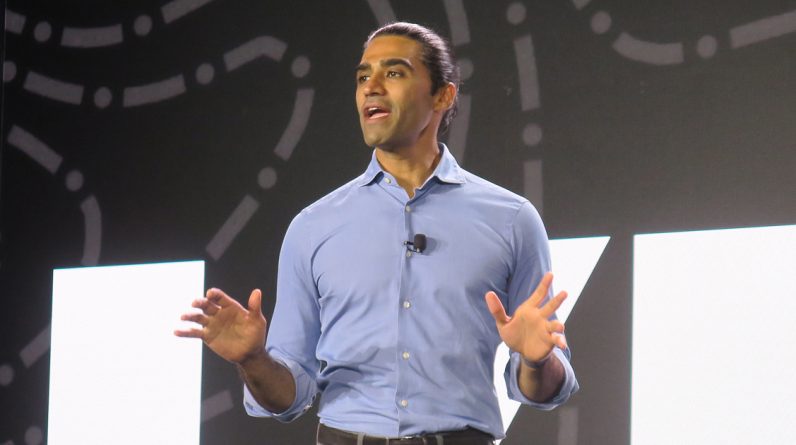




Cuong Nguyen Cao is DCSMO at CMC Global, leading global expansion and strategic partnerships.
The boardroom fantasy of AI is seductive. Just roll out GitHub Copilot, feed the backlog into ChatGPT and watch velocity metrics soar. If only it were that simple.
Here’s the reality that AI vendors won’t admit: AI is a force multiplier, not a foundation. If your delivery model is broken—with isolated teams, unclear expectations or poor coordination—AI will not fix it. It will make things worse: bad code written faster, confusing documentation at scale and miscommunication automated.
To truly scale innovation, you need structural agility. I’ve found that through the Best-Shore model. I’ve spent over a decade leading global delivery teams across Vietnam, APAC, EU and the U.S. Our team has refined the Best-Shore model across more than 3,000 engineers and hundreds of active clients. It’s not a theory for me, it’s the operating system we use daily to deliver mission-critical software without the burnout or rework that plagues traditional outsourcing.
The Myth Of The AI-First Fix
We’re currently witnessing a dangerous hype cycle. Leaders are rushing to use generative AI as a quick fix for deep-rooted problems. The logic seems to be: If we can just automate the tedious parts, our teams will magically become high-performing.
But here is what actually happens: AI makes individual tasks faster, yet does nothing to fix how teams work together. I have seen teams adopt AI tools only to generate more output than they can properly review. The bottleneck shifts from writing code to validating whether that code makes sense. When teams lack shared context and real-time communication, AI-generated work creates more confusion than clarity. What should have been a time-saver becomes a source of rework and frustration.
The result is a workforce spending the majority of their time on context switching. Recent University of California research shows developers lose 1-2 hours of daily coding time due to context switching. At typical developer salaries, this equates to an unseen annual cost exceeding $50,000 per engineer, an expense most organizations overlook.
The Anatomy Of A Broken Delivery Model
So, what does a broken delivery model actually look like? It can be defined by three distinct symptoms:
First is the silo trap. This is the classic “throw it over the wall” mentality where discovery, development and operations never overlap. Teams work in isolation, handing off incomplete requirements like a game of telephone. By the time the final output emerges, it barely resembles the original vision.
Second is the failure of pure time-zone arbitrage. Many organizations chased the lowest-cost offshore model, believing that “follow the sun” development would yield 24-hour productivity. Instead, many discovered that handing off work across 12 time zones creates 24-hour delays per ticket. A simple question can take a full day to answer.
Third is cultural friction. Misaligned communication styles, mismatched holiday schedules and differing work ethics lead to burnout on both sides. When teams do not feel like partners, progress slows down. People become feature factories focused purely on throughput rather than meaningful outcomes.
The Best-Shore Model
The Best-Shore model is not merely a location strategy but a talent strategy that combines the proximity of near-shore with the scale of offshore.
Near-shore provides shared time zones, cultural affinity and real-time collaboration. When teams operate within three hours of one another, they sit in the same stand-ups, understand nuance and move with agility. This proximity enables complex problem-solving and rapid feedback loops that prevent rework.
Offshore provides access to specialized talent pools and economic efficiency at scale. When treated as a center of excellence—data engineering, DevSecOps or quality automation—it unlocks deep expertise that would be prohibitively expensive to build in-house.
Together, these elements create a delivery model that is resilient, flexible and capable of leveraging AI for genuine acceleration rather than simply covering up inefficiency.
My Practical Playbook For Switching To (Or Optimizing) The Best-Shore Model
Here’s what I’ve learned from actually employing the Best-Shore model, including the hard parts no one likes to advertise.
3 Tips From My Experience
1. Pilot first. Run one 70/30 near-shore/offshore pod for two sprints. Measure only handoff lag and rework rate to see if this model makes sense for you. I’ve personally seen rework drop 35% in six weeks.
2. Mandate a living backlog. Every ticket needs acceptance criteria, technical assumptions and a short voice note from the near-shore lead.
3. Use AI after shared context. Have near-shore handle discovery without AI. Then feed clean context into the AI for test generation and boilerplate. AI should serve as the junior assistant, not the architect.
Real Challenges You’ll Face (And How To Handle Them)
• Challenge 1—Higher Cost: Near-shore is 20–35% more expensive, but I’ve found that rework reduction saves 3–4x that cost in year one. Consider cutting low-value offshore roles to help fund this.
• Challenge 2—Team Resistance: Offshore teams may feel demoted. To solve for this, I’ve found it helpful to reposition them as centers of excellence (automation, security, performance). When they unblock near-shore velocity, morale often improves.
How Best-Shore Can Unlock The True Value Of AI
AI needs clean inputs and immediate feedback to be valuable. Without experts ready to correct and refine outputs, technical debt builds quickly.
Near-shore teams work directly with stakeholders during core hours, using AI to prototype and test assumptions in real time. Offshore teams then take the approved architecture and use AI-driven automation for testing and specialized execution during their daytime hours, aligning with the overnight cycle for near-shore teams.
The result is continuous delivery: no wasted cycles, no handoff delays. AI becomes a tool for acceleration, not a source of extra work.
Final Words
AI is an accelerator, but it accelerates the trajectory you are already on. If your delivery model is fractured—siloed, misaligned or built around cost savings rather than collaboration—AI will make those problems worse, faster.
Organizations must prioritize resilient, human-centric delivery architectures. With the Best-Shore model, you can blend proximity with scale to create a foundation solid enough to support the speed AI promises. Innovation scales only when the structure beneath it is sound.
Forbes Business Development Council is an invitation-only community for sales and biz dev executives. Do I qualify?