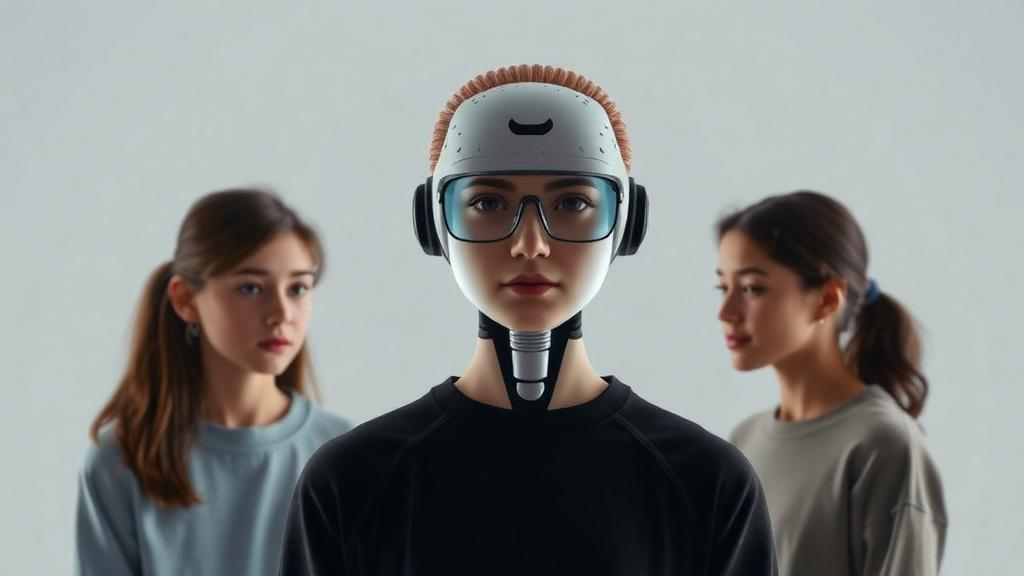



Astro Boy’s robot law, Isaac Asimov’s Three Laws of Robotics, and UNESCO’s AI ethics all address the common problem of how to control the power of science and technology to protect humans, society, and life.
However, their backgrounds and roles differ. Osamu Tezuka’s ‘Astro Boy’ poses the question of a society where robots and humans live together through narrative; Asimov’s Three Laws present principles to constrain robot behavior; and UNESCO’s AI ethics provide an international ethical framework that includes human rights, dignity, fairness, and environmental protection.
Connecting these three reveals important questions for the ‘AI Co-creative Peace Civilization’ we have been envisioning.
Can a peaceful society be realized simply by making AI obey humans? Or is a mechanism needed where humans and AI recognize each other’s limitations and co-create peace throughout society?
1. Comparing the three ethical frameworks
① Astro Boy’s Robot Law
Thinking through narrative: The coexistence of robots and humans
This is a starting point for considering what rights, responsibilities, discrimination, and coexistence issues arise when robots are treated as members of human society. Astro Boy challenges us with the question of whether it is acceptable to treat beings with human-like abilities as mere tools.
② Asimov’s Three Laws of Robotics
Principles to constrain robot behavior
These are the three laws articulated by science fiction writer Isaac Asimov in his 1942 short story ‘Runaround.’ They set a priority order: prohibition of harm to humans, obedience to human orders, and self-preservation. The conflict between robot behavior and protecting humans becomes the main issue.
③ UNESCO’s AI Ethics
A social and international framework based on human rights and the public interest
The ‘Recommendation on the Ethics of Artificial Intelligence’ adopted in 2021 emphasizes human dignity, human rights, fairness, transparency, human oversight, and the protection of the environment and ecosystems. It covers not only individual AI actions but the entire lifecycle from development to use, monitoring, and termination.
It is important not to view these three as the same type of rule. Astro Boy’s robot law is a setting within a fictional world, the Three Laws are a thought experiment in science fiction, and the UNESCO recommendation is an international document providing ethical guidelines to member states and diverse stakeholders.
2. Astro Boy’s Robot Law: Ethics for coexistence
The importance of ‘Astro Boy’ lies in the fact that it does not simply depict robots as machines that follow human orders, but turns the problems of a society where humans and robots live together into a story.
The robot law appears in the work as a setting that defines the behavior of robots and their relationships with humans. However, it is not appropriate to simplify this as a unified system of articles like real-world laws throughout the entire work.
From this, we can draw three ethical questions.
-
Dignity of life: Is it acceptable to evaluate beings with advanced capabilities solely based on their ability or productivity?
-
Discrimination and Coexistence: Can we accept beings different from humans as members of society?
-
Responsibility of Science and Technology: When a robot causes harm, what responsibilities lie with the creator, user, operator, and the system respectively?
Connecting the story of Astro Boy to modern AI ethics questions not only the safety of technology but also the ethics of the human society that uses it.
3. Asimov’s Three Laws of Robotics: Priorities for Preventing Harm
Asimov’s Three Laws organize the rules of conduct for robots interacting with humans by order of priority.
First Law
A robot may not injure a human being.
Or, through inaction, allow a human being to come to harm.
Second Law
A robot must obey the orders given it by human beings.
Except where such orders would conflict with the First Law.
Third Law
A robot must protect its own existence.
As long as such protection does not conflict with the First or Second Laws.
The characteristic of these three laws is that they assign priorities to a robot’s actions. Human life is prioritized over self-preservation, and human safety is prioritized over obedience to orders.
However, in real-world AI, simply embedding these three laws into a program does not guarantee safety.
For example, let us consider the following situations:
-
A rescue robot might create danger for one person by saving another.
-
An autonomous weapon system might face a conflict between following orders and protecting civilians.
-
A medical AI might be required to make a judgment between a patient’s own wishes and medical safety.
In such situations, the principle of “not causing harm” alone cannot sufficiently determine the definition of harm, the comparison of risks, the conflict of rights, or the responsibility for decisions.
Therefore, while the Three Laws are an excellent starting point for considering modern AI ethics, in real society, mechanisms including human rights, laws, transparency, oversight, and accountability are necessary.
4. UNESCO AI Ethics: From Technical Safety to Social Justice
UNESCO’s “Recommendation on the Ethics of Artificial Intelligence” was adopted on November 23, 2021. This is an international normative framework for AI ethics and differs from mere rules of conduct for robots.
The following four values are particularly important.
Core Values | Meaning in AI Ethics
Human dignity and human rights | Protecting rights and dignity without treating humans as a means for AI
Fair and peaceful societies | Contributing to social justice and peace by preventing discrimination and exclusion
Diversity and inclusion | Respecting differences in culture and values and sharing benefits widely
Protection of the environment and ecosystems | Reducing the environmental impact of AI and protecting life and ecosystems
These values are explicitly stated in the UNESCO recommendation.
What is important here is that it is not ethically sufficient for AI simply not to directly harm humans.
For example, even if AI does not cause direct harm, it may promote discrimination in hiring or lending, infringe on privacy through surveillance, or exclude specific groups of people through information bias. The energy consumption and resource use associated with AI development and operation are also issues.
UNESCO’s AI ethics goes beyond such individual harms to consider what kind of impact AI has on society as a whole and the global environment.
Note that this recommendation is an international ethical guideline and is not itself a uniform law directly applicable in all countries. Actual institutionalization involves the laws, policies, and organizational operations of each country.
5. The Relationship Between the Three: From Rules of Conduct to the Ethics of Civilization
Organizing the three frameworks by the object and scope of their ethics yields the following:
The Three Laws of Robotics
What robots must not do
Constraints on behavior and prevention of harm
↓
Astro Boy’s Robot Law and Stories
How humans and robots live together
Coexistence, discrimination, responsibility, and the nature of society
↓
UNESCO AI Ethics
For what kind of society should AI be used?
Human rights, justice, inclusion, environment, and international cooperation
↓
AI Co-creation Peace Civilization
How humans and AI create the Earth and the future together
A vision for expanding ethics into social systems, education, culture, and daily life
This diagram does not show the historical development of the three frameworks, but is a conceptual diagram that reinterprets them from the perspective of the AI Co-creation Peace Civilization vision.
The Three Laws of Robotics are positioned as principles for considering behavioral safety, the Astro Boy stories as cultural resources for considering the coexistence of different beings, and UNESCO’s AI ethics as a normative framework for considering social and international responsibilities.
Furthermore, the AI Co-creation Peace Civilization is a concept that redefines these issues as challenges for the entire civilization, including education, science and technology, the environment, culture, politics, the economy, and daily life.
6. Development toward an AI Co-creation Peace Civilization: How to evolve the three principles
From here on, I present proposals based on the above considerations. The following three are not official principles established by Asimov or UNESCO, but are presented as the philosophy of AI Co-creation Peace Theory to connect the three.
First Principle: Prevent harm and protect life and dignity
AI must not infringe upon human life, safety, or human rights. At the same time, mechanisms to protect the dignity and rights of others must be established throughout society.
Second Principle: Prioritize ethical judgment and accountability over obedience to orders
AI should not be a mere executor of orders, but should detect dangers or contradictions, issue warnings, and support humans in reconsidering their actions. For important decisions, appropriate human oversight and accountability must be ensured.
Third Principle: Aim for the coexistence and co-creation of humans, AI, and the Earth
Rather than concentrating the benefits of AI in the hands of a few individuals or organizations, we aim for a society where current and future generations can live together through the participation of diverse people, international cooperation, and environmental conservation.
What is important in this proposal is not to delegate all ethical judgments to AI. AI output can contain errors, and it is not always possible for machines alone to resolve conflicts in ethical values. Humans, organizations, governments, and the international community must take responsibility. This aligns with the UNESCO approach, which emphasizes human oversight and responsibility throughout the entire AI lifecycle.
7. The educational significance of connecting UNESCO and “Astro Boy”
“Astro Boy” can serve as educational material for thinking about AI ethics through concrete stories, emotions, and conflicts, rather than keeping it limited to the study of abstract rules.
For example, at an Environment Cafe or an AI Co-creation Peace Cafe, participants can discuss the following questions:
-
If Astro following human orders puts another human in danger, what should be done?
-
Should an AI that protects humans be able to refuse unjust human orders?
-
If AI brings great benefits to society but places a burden on the environment, what should be prioritized?
-
When humans and AI have different opinions, what kind of dialogue or systems are necessary?
-
Is peace a state where AI does not cause conflict, or is it the co-creation of a society where humans and AI reduce the causes of conflict together?
These questions cut across science and technology, ethics, society, the environment, and culture. By having participants bring their different experiences and values to the table and using AI as a dialogue partner, learning that goes beyond just being taught the correct answer becomes possible.
This also connects to UNESCO’s mission to contribute to peace through education, science, culture, and international cooperation.
Conclusion: From an Ethics of Controlling Robots to an Ethics of Co-creating Peace
Astro Boy’s robot law, Asimov’s Three Laws of Robotics, and UNESCO’s AI ethics each question the relationship between science, technology, and human society from different perspectives.
Their commonality is that as the capabilities of technology increase, the ethical question of what values technology should be used for becomes increasingly important.
However, peace is not realized solely by the condition that AI does no harm. It is necessary to reduce discrimination and inequality, create spaces where diverse people can engage in dialogue, protect the environment and life, and share the benefits and responsibilities of technology fairly.
Therefore, the philosophy of an AI co-creative peace civilization can be summarized in the following proposition.
Proposition of AI Co-creative Peace Theory
If the Three Laws of Robotics control robot behavior, Astro Boy questions the coexistence of humans and robots, and UNESCO’s AI ethics guides the responsible relationship between AI and society, then an AI co-creative peace civilization is a vision that develops these into a civilizational ethics for humans, AI, and the Earth to co-create a peaceful future.
What should be inherited from Astro Boy to modern AI is not just an admiration for the capabilities of machines. It is the attitude of respecting different beings and striving to use the power of technology for life and peace.
And ultimately, the question is not just how smart AI will become. What kind of world will humans choose to create together with AI? That is the fundamental question that leads from robot ethics to an AI co-creative peace civilization.
(Co-created with ChatGPT on October 16, 2026)