



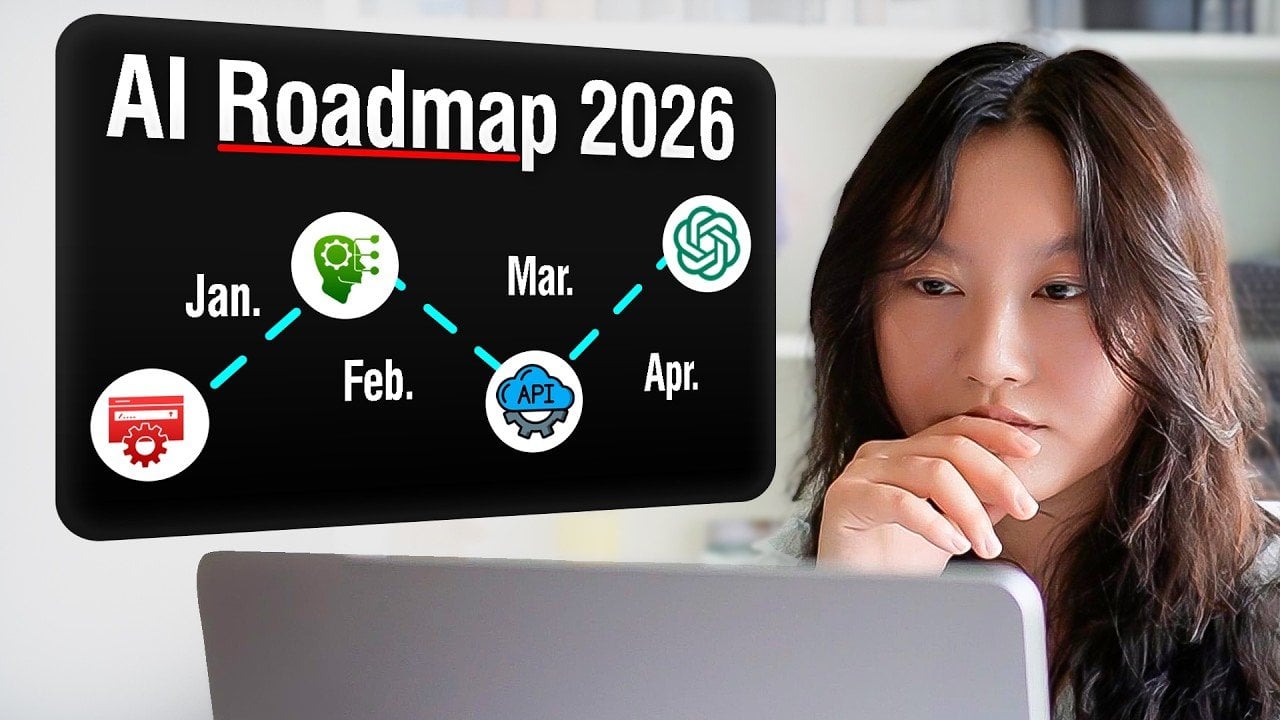
What will it take to stay competitive in the AI-driven world of 2026? As artificial intelligence continues to evolve, it’s no longer just about understanding the basics, it’s about mastering the skills that will define the future of work. Tina Huang walks through how professionals can position themselves at the forefront of this transformation in her insightful video, unpacking the critical AI capabilities that will separate leaders from laggards in the years ahead. From crafting precise prompts to using generative AI for creative and operational breakthroughs, the landscape is shifting fast, and those who adapt will thrive. The question isn’t whether AI will shape your career, it’s whether you’ll be ready to shape it back.
In this guide, we’ll explore the skills and strategies that can help you harness AI’s full potential, from AI-assisted coding to the rising importance of custom AI agents. You’ll discover how to apply these innovations in practical ways, whether you’re streamlining workflows, creating content, or solving complex problems. But it’s not just about technical know-how, staying ahead also means understanding ethical considerations and emerging trends like multimodal AI. By the end, you’ll have a clearer sense of what it takes to not just survive but excel in a world where AI is rewriting the rules of work and creativity.
Essential AI Skills 2026
TL;DR Key Takeaways :
- Understanding foundational AI knowledge, particularly Generative AI, is crucial for using its potential across industries, with applications ranging from content creation to healthcare.
- Prompt engineering is an essential skill for optimizing AI outputs, using frameworks like TCRIE and RSTI to refine and improve interactions with AI systems.
- AI tools and custom AI agents are transforming productivity and task automation, allowing professionals to streamline workflows and focus on higher-value tasks.
- Open source AI offers transparency, customization, and cost-effectiveness, making it a valuable resource for organizations and professionals aiming to innovate and reduce barriers to AI adoption.
- Emerging trends like multimodal AI and AI safety are shaping the future of the field, emphasizing the importance of ethical considerations and the integration of diverse data formats for creative and practical applications.
Foundational AI Knowledge
A strong grasp of AI fundamentals is the cornerstone of effectively using its potential. Among the most impactful advancements is Generative AI (Gen AI), a technology that enables the creation of text, images, audio, and other forms of content. Its applications span diverse industries, including content creation, customer service, healthcare, and beyond.
To build a solid foundation, it is essential to understand both the capabilities and limitations of Gen AI. This knowledge allows you to identify where AI can be applied effectively and where human oversight remains critical. Accessible resources such as online courses, tutorials, and community forums provide valuable opportunities to deepen your understanding and begin applying AI concepts in practical contexts.
Prompt Engineering
Prompt engineering is emerging as a vital skill for interacting with AI systems effectively. By crafting precise and well-structured prompts, you can optimize AI outputs for tasks such as content generation, problem-solving, and workflow automation. Mastering this skill ensures that AI systems deliver accurate, relevant, and actionable results.
Two widely recognized frameworks can guide your approach to prompt engineering:
- TCRIE Framework: Task, Context, References, Evaluate, Iterate. This method emphasizes clarity and iterative refinement to improve outcomes.
- RSTI Framework: Refine, Simplify, Test, Improve. This approach focuses on simplifying prompts and systematically testing for optimal results.
As AI tools become increasingly sophisticated, advanced prompting techniques will play a pivotal role in maximizing their utility and effectiveness across various applications.
Essential AI Skills For 2026
Here are additional guides from our expansive article library that you may find useful on AI skills.
AI Tools for Productivity
AI tools are transforming productivity by automating repetitive tasks, enhancing decision-making, and streamlining workflows. General-purpose AI chatbots, for example, can assist with tasks such as answering questions, rewriting emails, analyzing data, and generating reports. Meanwhile, specialized tools cater to specific needs, such as personalized learning, research, and project management.
To fully harness the potential of AI tools, focus on mastering one versatile platform that aligns with your professional objectives. This targeted approach allows you to integrate AI seamlessly into your daily workflow, boosting both efficiency and output. By using these tools effectively, you can free up time for higher-value tasks and strategic initiatives.
Custom AI Agents
Custom AI agents represent a significant advancement in task automation and process optimization. These agents are designed to perform specific functions, such as improving customer retention, automating reporting, or enhancing operational workflows. By integrating custom AI agents into your processes, you can achieve greater efficiency, accuracy, and scalability.
Developing and deploying custom AI agents requires familiarity with specialized frameworks and tools. Whether you are in a technical or non-technical role, learning to create tailored solutions can provide a competitive edge and open new opportunities for innovation. As organizations increasingly adopt these agents, professionals with the ability to design and implement them will be in high demand.
Open source AI
Open source AI is gaining traction as organizations seek cost-effective, customizable, and transparent solutions. These models, developed collaboratively by global communities, offer several key advantages:
- Transparency: Open source AI provides greater auditability, which is particularly valuable in regulated industries.
- Customization: These models can be adapted to meet specific organizational needs, offering flexibility and control.
- Cost-Effectiveness: Open source solutions often reduce financial barriers to AI adoption, making them accessible to a wider range of users.
As open source AI adoption grows, particularly in Western markets, understanding how to use these models will become an increasingly valuable skill. Professionals who can navigate and adapt open source solutions will be well-positioned to drive innovation and efficiency within their organizations.
AI-Assisted Coding
AI-assisted coding is transforming software development by making it more accessible, efficient, and collaborative. These tools simplify complex coding tasks, accelerate development timelines, and bridge skill gaps for beginners. For experienced developers, AI-assisted coding enhances productivity, allowing rapid prototyping and iterative improvements.
Open source coding tools further provide widespread access to access, allowing professionals to experiment and innovate without significant upfront costs. Whether you are building a simple application or tackling a large-scale project, AI-assisted coding can streamline your workflow and expand your technical capabilities. As these tools continue to evolve, they will play an increasingly central role in software development and innovation.
Emerging Trends
Multimodality
Multimodal AI, which integrates text, images, audio, and video, is advancing rapidly. These systems are becoming increasingly adept at generating high-quality outputs across multiple formats, allowing new possibilities in creative industries, marketing, and communication. For example, AI-generated videos and audio are now more realistic than ever, offering innovative ways to engage audiences and convey complex ideas.
AI Safety
As AI becomes more pervasive, making sure its safe and ethical use is critical. AI safety focuses on addressing risks such as bias, misuse, and unintended consequences. By prioritizing ethical considerations and implementing robust safety measures, professionals can contribute to the responsible development and deployment of AI technologies. This area is expected to grow in importance, making it a key focus for organizations and individuals alike.
Staying Ahead in the AI Landscape
AI is poised to redefine industries and workflows by 2026, offering fantastic opportunities for those who are prepared. Developing essential skills such as prompt engineering, mastering AI tools, and building custom solutions will position you for success in this rapidly evolving field. Additionally, understanding open source models, using AI-assisted coding, and staying informed about emerging trends like multimodality and AI safety will ensure you remain competitive and adaptable.
By staying proactive and informed, you can harness the power of AI to drive innovation, efficiency, and growth in your career and beyond. As the AI landscape continues to evolve, those who embrace these skills and technologies will be well-equipped to thrive in an increasingly AI-driven world.
Media Credit: Tina Huang
Filed Under: AI, Guides
Latest Geeky Gadgets Deals
If you buy something through one of these links, Geeky Gadgets may earn an affiliate commission. Learn about our Disclosure Policy.
Originally Appeared Here