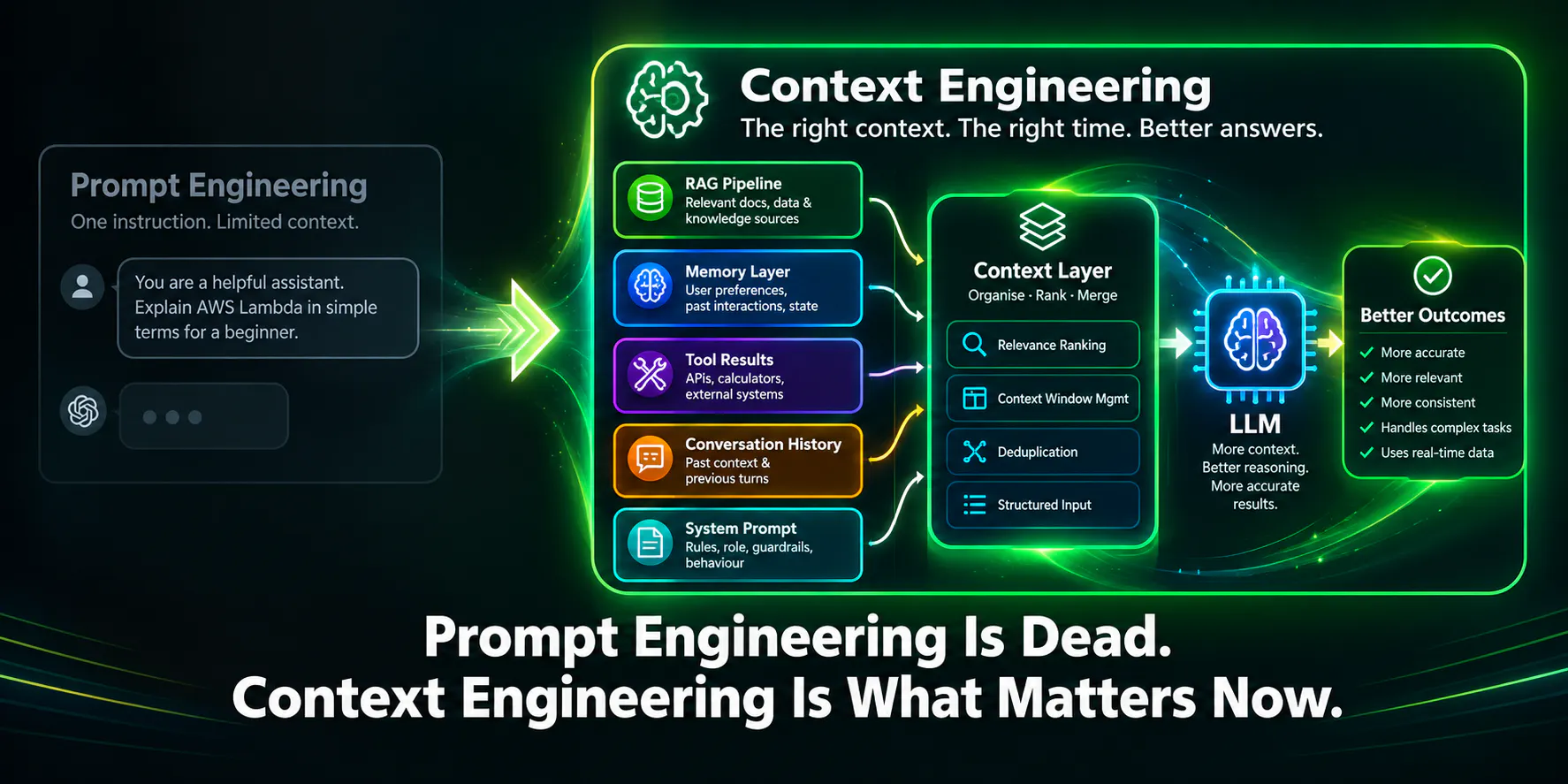



The story so far: For the past few years, improving AI largely meant improving what the model was told and what it could see. Prompt engineering emerged as a way of giving models better instructions. As tasks grew more complex, the focus expanded to context engineering, giving a model the right information at the right point rather than simply giving it more information.

AI agents take this a step further. An agent can plan a task, use software tools, retrieve information and take actions, rather than simply generate an answer for a person to act on. This means developers have to consider not just what the model knows, but what it can access, what it is allowed to do and how its work is checked. This is where harness engineering comes in.
The term is increasingly used for systems built around a model to help it carry out longer, more complex tasks. It does not make prompt or context engineering obsolete; they become components of a broader system.

There is no single industry-wide definition of a harness yet, but the term generally refers to the software and infrastructure that helps an AI agent use tools, maintain state, follow rules and have its work checked.
Why does this matter?
AI agents are increasingly being used to carry out tasks with limited human intervention. Stanford University’s 2026 AI Index reported that AI-agent performance on OSWorld, a benchmark for computer-use tasks, rose from roughly 12% to 66.3%, against a human baseline of 72.35%. The index noted that agents still fail roughly one in three attempts on the benchmark.
The International AI Safety Report 2026 says agents pose heightened risks because they can act autonomously, making it harder for humans to intervene before a failure causes harm. It also says current techniques can reduce failure rates, but no combination of techniques can yet guarantee the level of reliability required in critical domains.

The shift is already visible in business. A 2026 report from the Cambridge Centre for Alternative Finance found that 52% of financial-services respondents were at some stage of adopting agentic AI, 29% were piloting it and 23% were scaling or transforming their use of it. Software engineering was the most mature application. The report also identified unreliable outputs and loss of human oversight as important concerns.
The stakes become higher when agents move beyond low-risk tasks into areas such as healthcare, education, defence or industrial operations, where a wrong action can have consequences beyond a bad answer.
What is harness engineering?
A model can generate and reason, but an agent needs more than the model. Depending on the task, it may need information, tools, memory and the ability to act. The harness is the system that manages these, sets rules, checks the work and handles failures.
Microsoft uses the term more specifically to describe the runtime scaffolding that turns a language model into an agent that can perform work, driving model and tool calls, managing state and context, and applying approval policies.

Depending on the application, a harness can include tools and permissions that determine which tools an agent can call and what level of access it has; sandboxing that provides an isolated environment; state and memory that carry information between steps or sessions; automated tests and other verification mechanisms to check whether work has actually been completed; and approval gates and recovery mechanisms for risky actions or failures.
Put simply, telling a coding agent to “run the tests before declaring the job complete” is a prompt. Building a system that actually runs the tests and refuses to mark the task as complete when they fail is part of the harness.
The idea is already being applied by major AI developers. In February 2026, OpenAI engineer Ryan Lopopolo wrote about a five-month internal project in which the company built an agent-first software development environment. He said engineers’ work increasingly involved designing the environment in which agents operate, specifying intent and building feedback loops.
Anthropic has also described using harness design to improve AI performance on long-running software-development tasks, including breaking complex work into smaller tasks and passing structured information between sessions.
The broader idea is to avoid leaving the model responsible for remembering every rule, catching every mistake or deciding on its own when a task is complete. Wherever possible, those functions can be built into the system around the model.
What is intent engineering?
Even with a well-designed harness, another question remains on what should an agent actually optimise for?
On October 5, Coforge introduced what it calls an “intent engineering” framework, aimed at helping enterprises build AI agents aligned with business outcomes, governance requirements and operational realities. The framework focuses on defining an agent’s purpose, boundaries, success metrics, governance controls and escalation pathways.
Coforge executive vice-president Vic Gupta said the harder challenge for enterprises is deciding what an agent should optimise for when objectives conflict, risks increase or exceptions occur. The company says its framework is intended to establish that governance structure before agents operate autonomously at scale.
In simple terms, harness engineering is about how an agent operates, while intent engineering is about what it is supposed to achieve.
Published – October 07, 2026 06:18 am IST