


Introduction: The “Magic Words” Called Prompts
ChatGPT, Claude, Gemini. With the development of AI tools, everyone can now obtain “high-quality text,” “creative ideas,” and “complex analysis” in just a few seconds.
However, even when entering the same prompt, some people get “wonderful output” while others end up with “disappointing output.” What is the difference? It is the “precision of the prompt.”
AI tools are truly “honest.” If you enter a good prompt, you get good results. If you enter a bad prompt, you get results that make you think, “Oh, this isn’t what I expected.” Because this cause-and-effect relationship is so clear, “honing your prompts” becomes the most important skill for an AI side hustle.
I also initially thought, “ChatGPT is a tool that does anything just by talking to it.” But when I actually started using it, I hit a wall where I thought, “Oh, the accuracy is low with this.” The technique needed to overcome that wall is “prompt engineering.”
That is why I created the “30-Prompt Card Set.” Each of the 30 cards contains a “prompt that you can really use for an AI side hustle.” You draw one, and you can use it by copying and pasting it as is. It is that kind of “practical” content.
In this article, I will talk about the structure of these 30 prompts, how to use them, and the “conditions for a good prompt.”
The Evolution of Prompts: From Version 1.0 to 3.0
In the process of mastering prompts, I experienced “version upgrades” many times.
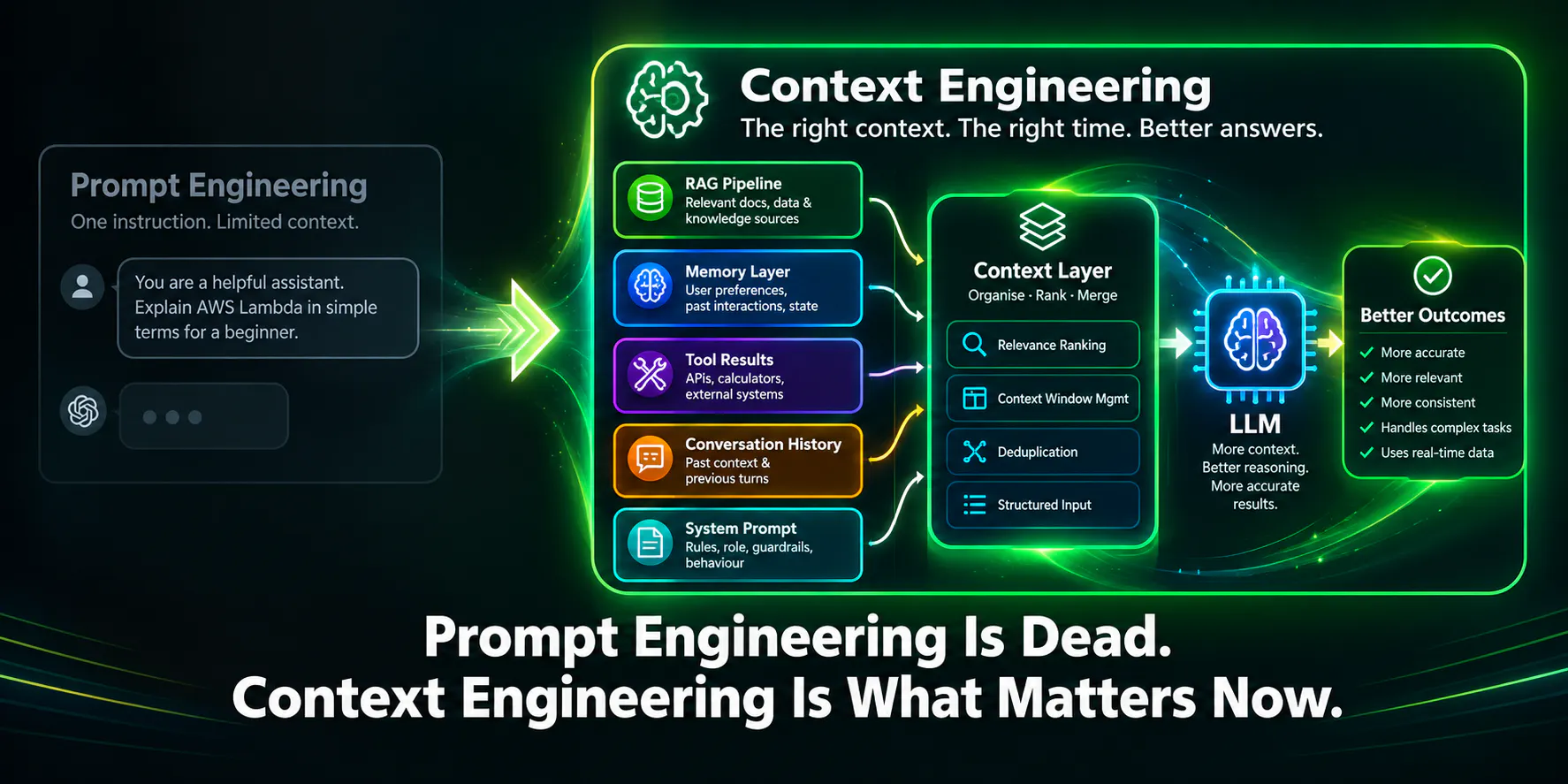
The first “Version 1.0” was a “simple instruction.” For example, just one sentence: “Please write an article.” With this, the “AI goes rogue,” resulting in “output that is too long at 2,000 characters” or “output that is off-topic.”
In the next “Version 1.5,” I added a “role assignment.” “You are a professional writer. Please write a 200-character article.” This improved things significantly. However, it is still at a stage where it is “not yet perfect.”
After that, in “Version 2.0,” I added “background information.” “You are a professional writer. You are writing a blog for AI side hustle beginners. Please write about this theme in 200 characters.” At this stage, “the accuracy increases quite a bit.”
Finally, in “Version 3.0,” I added “output format specification” and “quality standards.” “You are a professional writer. This is a blog for AI side hustle beginners. Please write the article in the following format: 100-character introduction, 100-character main body. Please include a call to action for the reader.”
By going through these version upgrades, “the AI’s output quality improves by 5 to 10 times.”
The “Quality of the Prompt” That Determines the Output Quality of AI Tools
Why is the quality of the prompt so important? There are several reasons.
1. AI tools only “follow instructions”
AI tools, especially LLMs like ChatGPT, are “language models.” In other words, they operate on the logic of “outputting the continuation of the input words in a statistically optimal way.”
This means that if you enter “proper instructions,” you will get “proper output.” Conversely, if you enter “vague instructions,” you will get “vague output.”
It may seem obvious, but many people think that “AI will find good answers on its own.” That is a mistake. AI is a tool that simply amplifies “the goodness of your instructions” and “the badness of your instructions.”
2. Small adjustments can double or triple your output
“Prompt engineering” is not a difficult technique. By knowing a few “small tips,” the quality of AI output can be dramatically improved.
For example, the trick of “specifying a role.” Saying “You are a professional writer. Please write this article” produces a completely different output than just saying “Please write this article.”
Or the trick of “specifying an output format.” Just by adding an instruction like “Keep each paragraph under 150 characters,” the AI will automatically generate output that fits that format.
It is the accumulation of these “small adjustments” that leads to “professional-level output.”
3. Prompting skills are essential for earning with AI tools
There are broadly three patterns for earning money through AI side hustles.
The first is “selling content generated by AI on your own platform.” For example, writing a blog and selling it on note, or creating videos and earning views on YouTube.
The second is “providing a ‘service’ using AI.” For example, a service that says “I will optimize your writing using ChatGPT” or a service that says “I will turn your ideas into reality using AI.”
The third is “selling the prompts themselves as a product.” This is an example of that. A good collection of prompts can “become a product in itself.”