


Hello, I’m Eiko (the person who uses AI to coach my life).
I usually work as an office employee handling AI promotion and business process improvement.
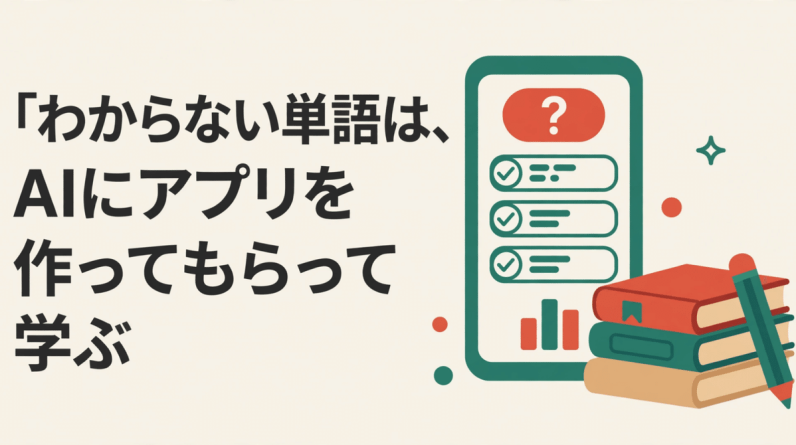
Today, I’m sharing a record of an AI coaching session about how I had AI build tutorial apps to learn unfamiliar words and prepare for the SPI aptitude test.
At first, I used to ask AI questions to grasp the context of news articles and technical jargon that came up at work. Recently, however, that has shifted from simply “asking questions” to “having it build study apps.” In this article, I’ll summarize what sparked that shift, the results, and the insight that this could also be applied to education.
The catalyst: Asking AI about unfamiliar words as they came up
While working, you inevitably come across technical terms you don’t know. Even when reading the news, knowing just the definition of a word often isn’t enough to grasp the context.
In those situations, I would ask AI. I’d ask for the meaning and have it explain the context. While that resolved my questions on the spot, it often ended right there after asking.
The turning point: SPI prep for job hunting
The turning point that changed my approach was having to take the SPI test for my job hunt.
The SPI covers a wide range of topics, so I needed to grasp the key points and learn how to solve questions within a limited amount of time. That’s why I decided to have AI build a quiz-style tutorial app focused on those essential points.
Here is how I used it:
-
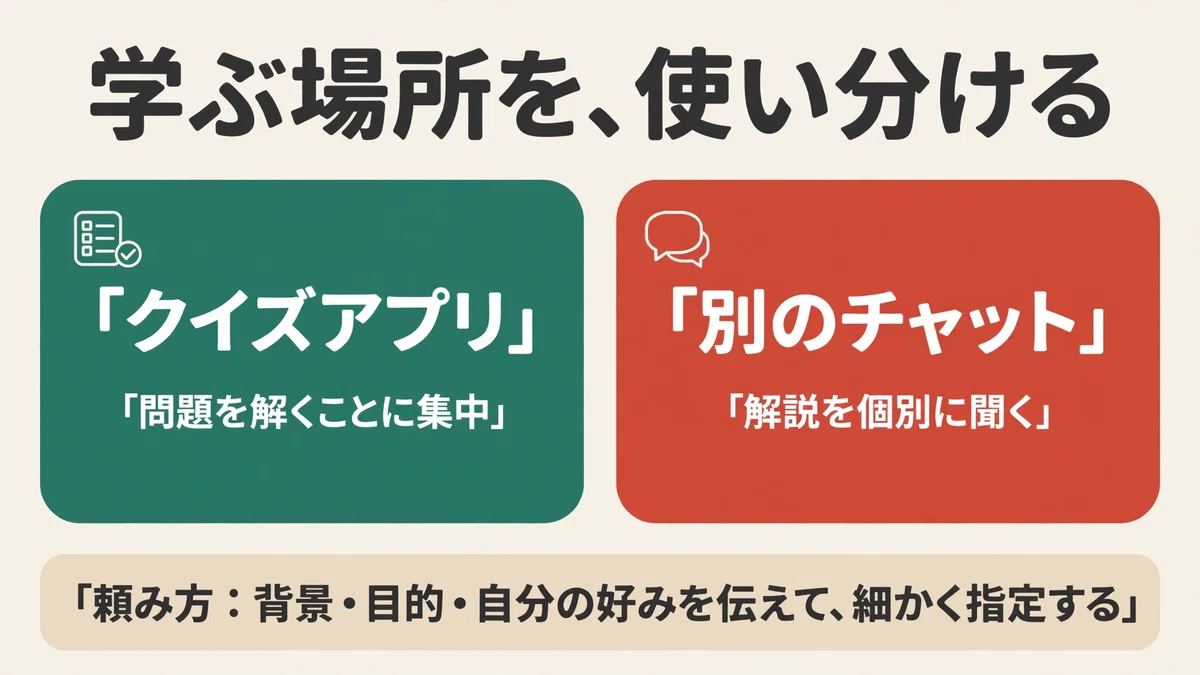
In the app, concentrate on the quizzes to solve problems
-
Ask for explanations separately in another Claude chat, not within the app
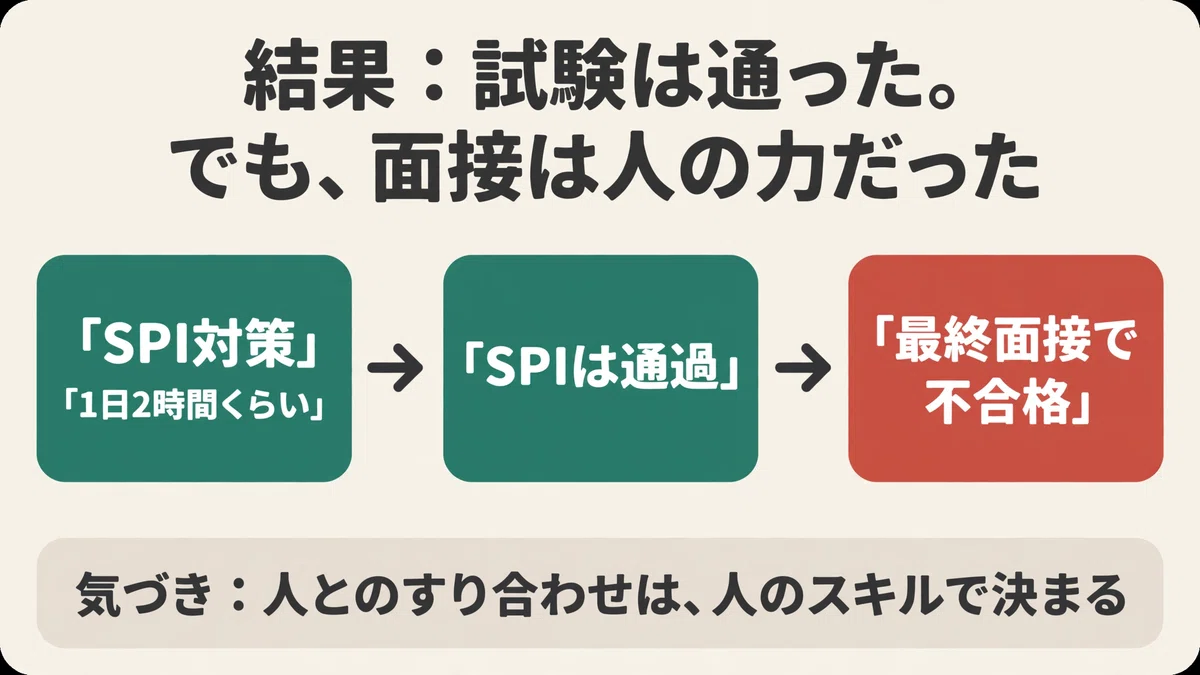
My study pace was about two hours a day.
Design approach: Sharing background, goals, and preferences with detailed specifications
I didn’t just casually ask it to “make an app.” I gave it detailed specifications after explaining my background, my goals, and my personal learning preferences.
If commercially available study guides are like off-the-rack clothing, this is like clothes tailored specifically to your body. Both the scope of key points and the style of questions can be customized entirely to suit your needs.
The result: Passed the SPI. But failed the final interview
In the end, I passed the SPI. It felt like I had done well.
However, I failed the final interview.
What I realized here is that, ultimately, coordinating with people comes down to human skills. While AI-generated learning materials were effective for the “grasping the key points and solving the problem” aspect—much like test preparation—when it came to engaging with people, I had no choice but to manage it on my own.
Recently: Learning Data Flow and History Through HTML Learning Materials as Well
Having grown accustomed to this approach, I’ve recently been learning about data flows and history using HTML-format materials.
The materials are structured to create a flow using diagrams and timelines. In the case of timelines, I believe I turned them into flowcharts. Being able to see the flow visually sticks in your head much better than just following text.
Realizing That This Could Also Be Useful for Education
While studying, I thought that this would also be great for educational settings. For example, with subjects like elementary math, concepts can be communicated to children in a visually accessible way.
I haven’t actually tested this with children yet; it’s still at the stage of “something I want to try going forward.” I believe the important first step is for me to thoroughly read through textbooks and think, “It would be great if something like this existed.”
So, this was a record of an approach where I had AI create learning materials to study things I didn’t understand, as well as where its limits became apparent.
Next, I’d like to try starting by creating math materials for children. That will begin with thoroughly reading through the textbooks.
If you’re wondering, “Can AI analyze this kind of problem I’m having, too?” please drop it into my question box, and I’ll feature it in an article 👉 https://note.com/qa/limber_kudu5475
If you found this article interesting or helpful, supporting me via the link below would be great encouragement for writing the next one.
Until then, see you in the next log.