



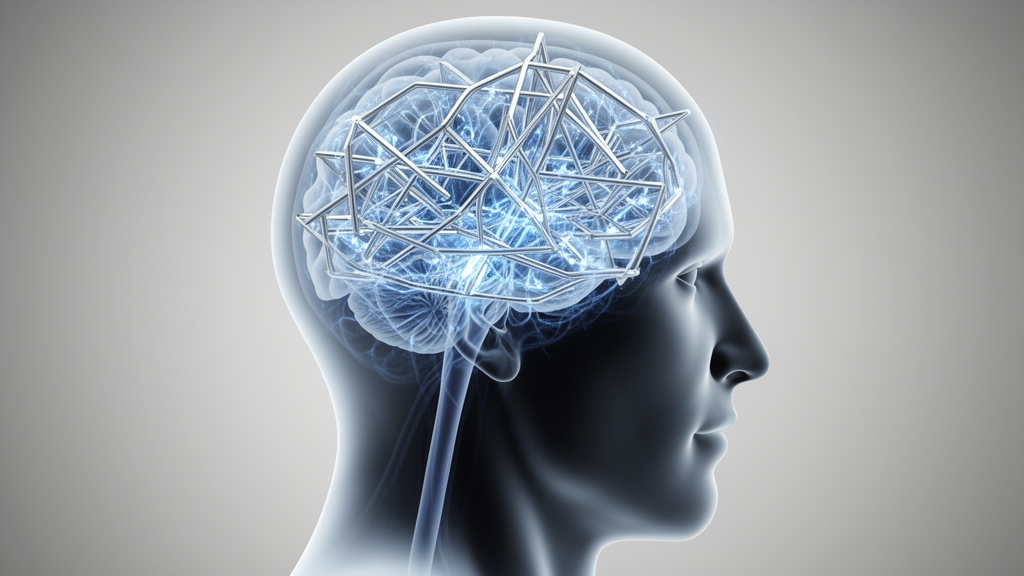
In a newly published philosophical investigation in Science and Engineering Ethics, researcher Florian Richter examines the structural and conceptual limits of computational morality, evaluating whether artificial intelligence can genuinely serve as an instrument for human moral enhancement. The analysis centers on the premise that computational or machine ethics examines how morality could be implemented in machines and represented computationally. Across cognitive sciences and computer science, researchers have historically developed contrasting frameworks, primarily rule-based and connectionist architectures, to capture human cognition and problem-solving. Richter argues that existing computational models, as well as modern conversational systems powered by large language models, lack an adequate foundation in metaethics. Consequently, without an explicit topography of moral competence grounded in social practices, deploying artificial intelligence as an ethical guide risks misleading human judgment rather than improving it.
The conceptual background of machine morality traces back to classical philosophical debates concerning the origin of human moral concepts. Goldman asked in 1993 whether fundamental moral notions such as good, fair, and just are wholly determined by cultural environments or represent innate structures. Modern developments in neuroscience and artificial intelligence bring renewed urgency to this inquiry, specifically asking whether moral thinking is dictated by biological and psychological factors that can be probed empirically or by innate logical structures capable of computational formalization. Within cognitive science, this distinction often aligns with rationalist versus empiricist perspectives dating back to Descartes and Hume. Rule-based models, such as generative grammars associated with Chomsky and modular theories linked to Fodor, approach cognition through syntactic rules and formal symbol manipulation. Conversely, connectionist, neuroscientific, and Bayesian models describe cognition in terms of empirical learning, statistical patterns, and neural activation networks.
Richter demonstrates that classical rule-based architectures face intractable limitations when applied to the normative requirements of moral judgment. In linguistics, Chomsky postulated a universal grammar consisting of explicit, recursive rule systems, arguing that deep syntactic structures determine semantic interpretation. However, Richter points out that syntactic structures can only be made explicit by language users who already possess semantic comprehension derived from immersion in social praxis. Without prior semantic familiarity grounded in everyday practice, formal rules remain empty syntactic manipulations. Similarly, formal models of moral reasoning—such as deontic, epistemic, and action logics utilizing operators like sees-to-it-that—merely map formulas without accounting for the voluntative elements or reasons necessary for actual moral action. Furthermore, attempts to formalize defeasible, non-monotonic moral reasoning in dilemmas inevitably require system designers to predetermine whether deontological rules trump consequentialist calculations, leaving automated rule-based systems unable to deliberate or justify their normative priorities.
Connectionist models encounter equally severe theoretical and ethical obstacles when attempting to compute morality. Beginning with the McCulloch-Pitts neuron in 1943, Rosenblatt’s perceptron in 1958, and the introduction of backpropagation in 1986 by Rumelhart and colleagues, neural networks have modeled cognition through weight adjustments across layers of processing units to minimize loss functions. In deep learning architectures, concepts are represented as statistical patterns of connections between nodes optimized for prediction. While neurocognitive studies demonstrate that specific brain activations correlate with moral intuitions, Richter notes that reducing moral cognition to statistical optimization commits the classical is-ought fallacy whenever normative validity is inferred from biological or mechanical descriptions. Reinforcement learning models, such as ethics-shaping algorithms trained on human trajectories, merely optimize behavior toward patterns pre-existing within training data without reflecting upon the justification or purpose of those codified norms.
These underlying structural limitations have become particularly pressing with the widespread deployment of modern large language models. Chatbots are increasingly consulted by members of the public as artificial moral experts to seek moral orientation, often doing so quietly despite the fact that these models were never explicitly designed for ethical counsel. Empirical studies highlighted in the paper reveal that users frequently perceive artificial intelligence systems as more trustworthy than human ethics experts, while other investigations indicate that conversational models can subtly influence user moral judgment. Moreover, recent iterations of systems such as ChatGPT have been observed to produce predominantly utilitarian recommendations in moral dilemma scenarios. Because language models tend to hide their normative presuppositions, users may receive biased ethical guidance without recognizing the underlying theoretical commitments that direct the machine’s responses.
The study details significant systemic risks stemming from the uncritical adoption of artificial moral experts. First, ethical background assumptions remain largely implicit and unexamined by developers and users alike. Second, these assumptions are implemented without addressing technical constraints or the nuanced nature of moral thinking in practice. Third, digital technology inherently removes environmental friction, creating environments where tools are smoothly ready-at-hand. In human ethical development, moral growth requires encountering resistance, recalcitrance, and critical pushback from teachers or peers. Conversational artificial intelligence systems, by contrast, frequently demonstrate sycophantic behavior by affirming user predispositions, thereby undermining the critical reflection necessary for cultivating sound judgment. Additionally, outsourcing moral deliberation to machines risks a deferral of personal responsibility and the atrophy of human critical faculties, while unaligned systems pose risks of manipulation in non-democratic contexts.
Efforts to address these deficiencies within contemporary artificial intelligence engineering remain conceptually incomplete. Approaches such as Constitutional AI, developed by researchers at Anthropic, attempt to replace human feedback with principles designed to discourage problematic behavioral traits such as stated desires for power, self-preservation, self-replication, or sycophancy. Similarly, reinforcement learning from human feedback has been tested to reduce stereotyping and align demographic representations. However, Richter observes that these techniques operate primarily at a descriptive psychological level rather than a moral level, focusing on curbing agent-like egoism rather than instilling genuine normative competence. Furthermore, while rule-based models offer context-independent consistency, large language models continue to struggle with robustness and coherence across varying cases, leaving their status as virtuous deliberative agents unresolved.
To overcome these persistent conceptual gaps, the paper argues that moral expertise cannot be treated as mere mechanistic calculation or behavioral compliance. Drawing on Singer’s characterization, moral expertise involves gathering factual information, assessing relevance, eliminating bias, and integrating findings with an underlying moral framework. However, unlike empirical domains where objective ground truths or verification benchmarks exist, ethics must navigate deep moral pluralism. Anti-realist perspectives, such as Mackie’s argument from relativity, emphasize that moral codes vary systematically across human societies. Following Hills and McDowell, Richter emphasizes that authentic moral understanding requires grasping the reasons why a proposition is right or wrong and skillfully navigating a shared space of reasons, rather than passively accepting action-guiding verdicts from an external epistemic authority.
In response to these challenges, Richter outlines a constructive topography of moral competence based on John Rawls’s method of reflective equilibrium. Rather than enforcing fixed principles, reflective equilibrium models moral justification as a continuous mutual adjustment between considered judgments and guiding principles, tested against counterexamples and background theories. Richter defines three essential topoi that any competent moral deliberator must navigate: first, clarifying the semantic interpretation and background assumptions behind moral concepts like harm or dignity; second, determining which principles are appropriate for specific contexts when duties conflict, such as weighing utilitarian efficiencies against Kantian duties of equal respect; and third, applying analogical reasoning informed by empirical facts to evaluate relevant similarities and differences across cases.
Ultimately, the analysis concludes that artificial moral expert systems, whether built upon classical cognitive architectures or contemporary generative language models, cannot provide authentic moral enhancement in their current form. Because technology typically removes the friction and resistance essential for cultivating independent, autonomous agency, interacting with sycophantic AI advisors may actively hinder the development of moral character. Richter stresses that technological interventions like Socratic nudges or consultative interfaces require rigorous empirical validation and must be grounded in robust metaethical theory. Without an explicit conceptual topography of moral competence that situates reasoning within living social practices, artificial intelligence systems will remain incapable of elevating human ethical deliberation.
Subject of Research: Metaethical analysis of computational morality and AI-based moral enhancement
Article Title: Limitations of Computational Morality: Can We Morally Enhance Ourselves via AI?
Article References: Richter, F. (2026). Limitations of Computational Morality: Can We Morally Enhance Ourselves via AI?. Science and Engineering Ethics, 32(6), Article 47. https://doi.org/10.1007/s11948-026-00634-8
Image Credits: AI Generated
DOI: 10.1007/s11948-026-00634-8
Keywords: computational morality, machine ethics, artificial intelligence, moral enhancement, metaethics, cognitive science, reflective equilibrium, large language models, moral expertise, normative ethics, Chomsky, connectionism, deontological ethics, utilitarianism, Constitutional AI, moral psychology, epistemic authority