


When you heard the word ‘prompt’ in the past, what was the first thing that came to mind?
It was the Windows ‘Command Prompt’.
At the very least, before AI became widely available, this word was not something most people used in daily conversation. It was a somewhat technical IT term used by people knowledgeable about computers, system engineers, and programmers.
However, the situation changed completely with the advent of generative AI.
Now, terms like ‘entering a prompt,’ ‘crafting a prompt,’ and ‘prompt engineering’ have spread beyond the IT industry into business, education, and even daily life.
Even though it is the same word ‘prompt,’ the subject we interact with and its role have changed significantly.
1. The prompt of the past was a prompt from the computer
When you open the Windows Command Prompt, text appears on a black screen.
For example,
C:UsersUser>
This display is the prompt.
The English word ‘prompt’ has meanings such as ‘to urge,’ ‘to stimulate,’ or ‘something that prompts.’
The command prompt was a place where the computer urged the user to ‘please enter the next command.’
Users enter commands according to a set grammar.
For example,
-
dir: Displays a list of files and folders
-
cd: Changes the directory
-
mkdir: Creates a new folder
-
ipconfig: Checks network settings
There, you cannot make vague requests to the computer.
If the command is written incorrectly, it results in an error.
In other words, with the traditional command prompt, humans had to adapt to the language the computer could understand.
Humans learned the machine’s rules and gave commands to the machine.
This was the fundamental relationship with computers in the past.
2. Prompts in the AI era have become a way to communicate with computers in human language.
With the advent of generative AI, the way the word “prompt” is used has changed.
In generative AI like ChatGPT, the text or instructions that the user inputs are themselves called prompts.
For example,
“Please explain the causes and countermeasures for Japan’s declining birthrate and aging population in a way that a high school student can understand.”
This is also a prompt.
Furthermore,
“You are an experienced management consultant. Please explain how to utilize generative AI to small and medium-sized business owners, along with concrete examples.”
This is also a prompt.
Compared to traditional commands, there is a major difference.
Humans do not necessarily need to memorize command syntax specific to the computer.
They have become able to convey their intentions and wishes in the natural language they use every day.
Of course, ingenuity is still required when instructing AI. The quality of the response changes depending on how specifically you convey the purpose, background, conditions, and output format.
However, the fundamental change is clear.
From an era where humans adapted to the machine’s language, to an era where machines try to understand human language.
The spread of the word “prompt” symbolizes this change.
3. From commands to prompts. A shift from operation to dialogue
I would like to consider this change from a slightly broader perspective.
The history of computers is also the history of how humans have evolved the way they operate machines.
With early computers, it was difficult to operate them without specialized knowledge.
Later, command input via keyboard became widespread.
Furthermore, with the advent of GUIs (Graphical User Interfaces) like Windows, people could use computers without specialized knowledge through icons and mouse operations.
And then, the era of generative AI arrived.
Of course, command lines and GUIs are still important technologies today, and it is not simply a case of the old being replaced by the new.
However, the center of gravity for the skills required to use computers is shifting.
Previously, it was important to know how to operate them or know the commands.
Now, it is becoming important to be able to put into words what you want to achieve.
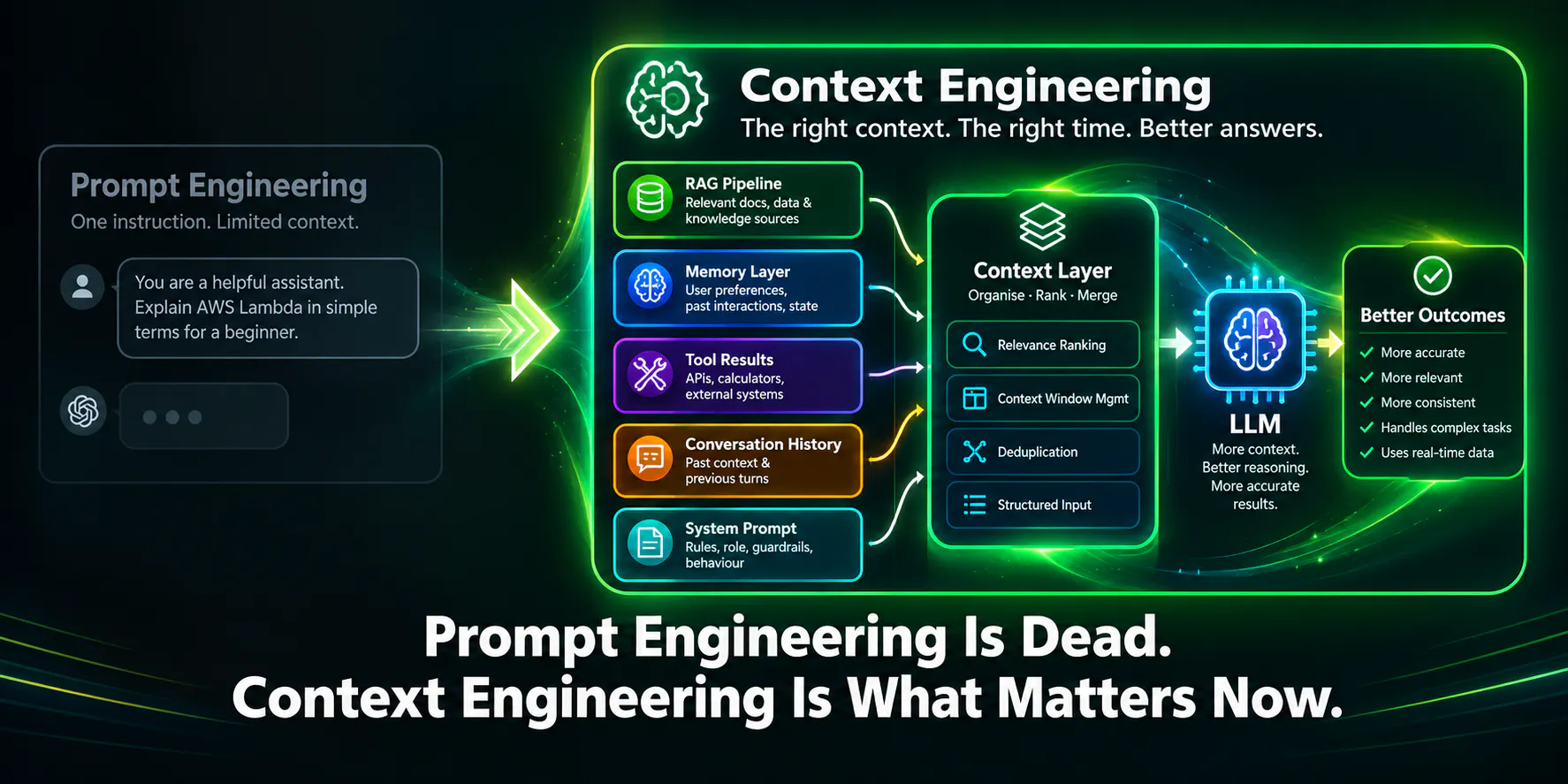
4. What will become important from now on is not the skill of writing prompts, but the ability to formulate questions
With the spread of AI, the term prompt engineering has also become widespread.
It is a technique for designing instructions to elicit good answers from AI.
Certainly, there is meaning in devising ways to write prompts.
However, I believe that what will truly become important in the AI era is not simply the skill of writing good prompts.
It is the “ability to formulate questions.”
For example, it is easy to ask an AI, “Tell me how to increase sales.”
However,
-
what is the real reason why our company’s sales are sluggish?
-
What do customers find value in?
-
What is our company lacking compared to competitors?
-
Where should limited management resources be invested?
Whether or not you can formulate such questions significantly changes the results you get from AI.
AI is shifting from being a mere entity that answers questions to a partner that deepens thinking.
That is precisely why, more than prompt engineering, the ability to understand your own challenges, clarify your objectives, and think of appropriate questions is becoming important.
5. The significance of ‘prompt’ becoming a common term
Come to think of it, there is great significance in words that were once used only by experts spreading throughout society.
‘Cloud,’ ‘algorithm,’ ‘database,’ and ‘programming’ were also once highly specialized terms.
They became understood by the general public as technology spread.
And now, ‘prompt’ is following the same path.
However, this change is a little different.
The generalization of IT terms until now was mainly due to an increase in the number of people using new technology.
On the other hand, the generalization of prompts in the AI era is due to a change in the very way we communicate with computers.
In the past, it was necessary to learn specialized commands to make a computer do something.
Now, if you convey your thoughts and wishes in natural language, AI interprets them and generates text, images, programs, analysis results, and more.
This is not just an improvement in operability.
The hurdle for using computers is shifting from technical knowledge to thinking and expressive ability.
Conclusion: Prompts are the new communication language of the AI era
In the past, ‘prompt’ was a technical term that brought to mind the Windows command prompt.
Now, however, it has become a word that everyone uses to tell AI what to do.
While it is the same word, there is a major shift in our relationship with computers behind it.
In the era of the command prompt, humans had to understand the computer’s rules and input precise commands.
In the era of generative AI, humans can put their thoughts into words and convey their intentions to the AI.
And from now on, what matters is what we ask the AI, what we make it think about, and what we make it achieve.
From an era of operating computers to an era of creating value by interacting with AI.
The change in this single word, “prompt,” tells us that we are currently standing at a major turning point where the relationship between technology and humans is changing.
In the coming era, what is needed is not just the ability to memorize commands.
I believe it is the ability to think for yourself, formulate questions, and communicate them in words.
By Michael
If you found this article helpful, please let me know by clicking “Like”✨
I am also waiting for your thoughts or requests for “I want to know more about this!” in the comments.
Actual implementation examples and detailed service information are summarized here.
Please feel free to reach out even if you just want to “consult a little.”
▶︎ https://innate-ss.co.jp/