


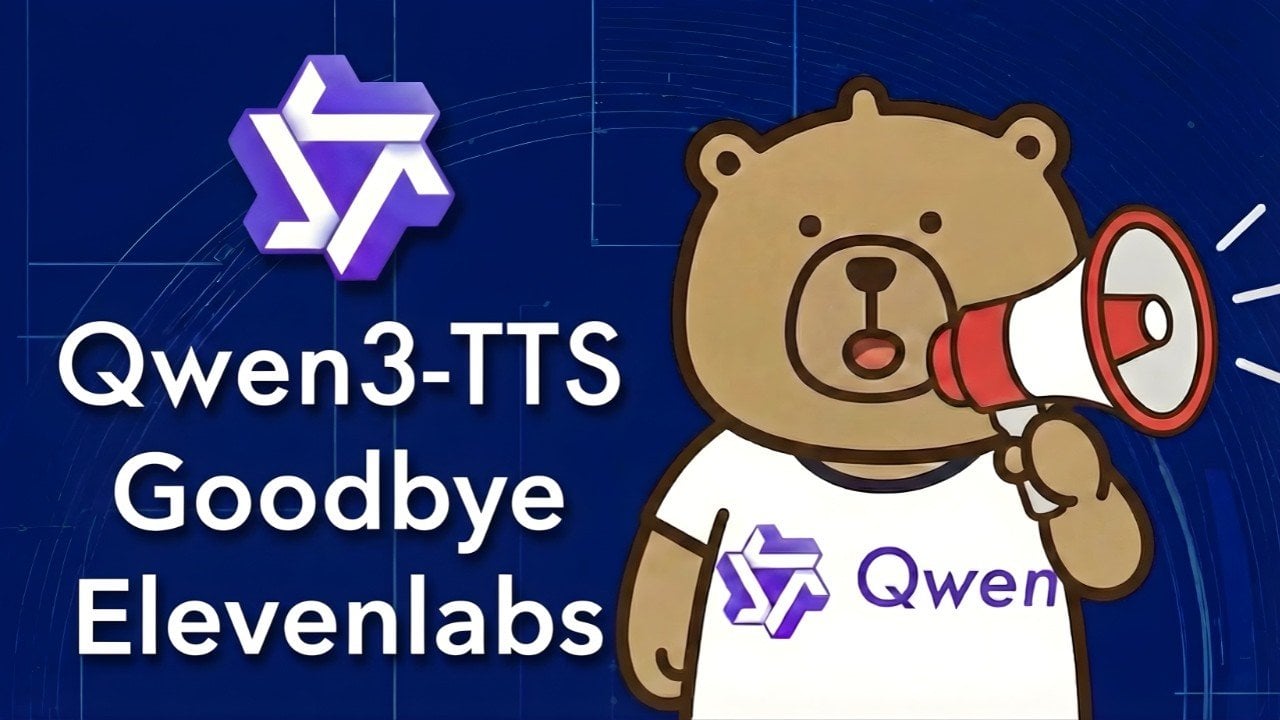
Is the text-to-speech world on the brink of a revolution? With the release of Qwen3-TTS, some are calling it the “ElevenLabs killer,” and for good reason. In this guide, Prompt Engineering explains how this open-weight model is redefining what’s possible in speech synthesis, from lifelike voice cloning to multilingual capabilities. Imagine creating a custom voice for your brand or generating emotionally rich narrations for a global audience, all with a few simple prompts. Qwen3-TTS isn’t just another TTS system; it’s a bold step toward making high-quality, real-time audio generation more accessible and versatile than ever before.
But does it live up to the hype? This feature dives into the standout capabilities that set Qwen3-TTS apart, like its ability to replicate voices with minimal input or craft entirely new ones through detailed descriptions. You’ll also discover how its scalable architecture balances performance and efficiency, making it suitable for everything from gaming to live customer interactions. Whether you’re intrigued by its promise of emotionally resonant audio or curious about its potential to challenge industry giants, this breakdown offers a closer look at what could be the next big leap in text-to-speech innovation.
Qwen3-TTS Core Features and Capabilities
TL;DR Key Takeaways :
- Qwen3-TTS is an advanced open-weight text-to-speech model offering features like voice cloning, custom voice creation, and multilingual support for up to 10 languages, making it ideal for global applications.
- The model provides two scalable architectures: a 1.7 billion parameter version for flexibility and a 6 billion parameter version for high-quality audio, both optimized for edge devices.
- It excels in customization, allowing users to control tone, style, and emotion through text prompts, allowing tailored audio for storytelling, branding, and gaming.
- Qwen3-TTS supports real-time and non-streaming scenarios with low-latency streaming and efficient audio generation, making it suitable for voice assistants, live broadcasting, and interactive content.
- Despite its strengths, challenges like output variability and hardware demands for running multiple models highlight areas for improvement, though its innovative features position it as a strong contender in TTS technology.
Qwen3-TTS distinguishes itself with its ability to generate lifelike, consistent speech. Its standout features include:
- Voice Cloning: This feature allows you to replicate a voice using minimal reference audio, allowing the creation of highly accurate voice imitations or entirely new voices.
- Custom Voice Design: Users can generate unique voices tailored to specific needs through detailed text descriptions, making it ideal for branding, storytelling, or specialized applications.
- Multilingual Support: With support for up to 10 languages, Qwen3-TTS is well-suited for global use cases, making sure accessibility across diverse linguistic audiences.
These features make Qwen3-TTS a versatile tool for industries such as entertainment, customer service, and education, where high-quality, customizable audio is essential.
Model Architecture and Scalability
Qwen3-TTS is built on a robust architecture, offering two distinct model families to address varying use cases:
- 1.7 Billion Parameters: This model is optimized for flexibility and customization, making it ideal for creating tailored voice outputs for niche applications.
- 6 Billion Parameters: Designed for superior quality and performance, this model is better suited for high-demand scenarios requiring exceptional audio fidelity.
Both models are engineered to run efficiently on edge devices, making sure accessibility without sacrificing performance. This efficiency, combined with its multilingual capabilities, positions Qwen3-TTS as a valuable tool for applications such as global content production and multilingual voice assistants.
Qwen3-TTS : The ElevenLabs Killer?
Explore further guides and articles from our vast library that you may find relevant to your interests in Qwen AI.
Customization and Emotional Depth
One of the most compelling aspects of Qwen3-TTS is its ability to control tone, style, and emotion through text prompts. This unparalleled level of customization enables users to:
- Align the tone and mood of the audio with the content, whether for calm narrations or emotionally charged dialogues.
- Create distinct voices for storytelling, branding, or gaming, enhancing audience engagement and immersion.
- Adapt audio outputs to specific contexts, making sure relevance and resonance with the target audience.
This flexibility enables developers to craft unique and immersive audio experiences, making Qwen3-TTS a powerful tool for creative and commercial projects alike.
Performance and Real-Time Functionality
Qwen3-TTS is designed to excel in both real-time and non-streaming scenarios, offering a balance of speed and quality. Key performance highlights include:
- Low-Latency Streaming: This feature ensures smooth, real-time interactions, making it ideal for voice assistants and live applications.
- Efficient Non-Streaming Output: The model can generate approximately 7 seconds of audio in 10-15 seconds, providing a practical solution for pre-recorded content.
- Consistency Over Time: It maintains voice quality during extended conversations, a critical feature for interactive systems and long-form content.
These capabilities make Qwen3-TTS a reliable choice for applications requiring high-quality, real-time audio generation, such as virtual assistants, live broadcasting, and interactive storytelling.
Technical Specifications and Accessibility
Qwen3-TTS is optimized for resource efficiency, making sure it is accessible to a broad range of users. Key technical details include:
- GPU Requirements: The model operates with 3-4 GB of GPU VRAM for single-model usage, making it compatible with most modern systems.
- Platform Support: It is compatible with platforms like Google Colab and MacOS (via the MLX version), offering flexibility for developers.
- Custom Tokenizer: This feature enhances performance by allowing low-latency audio generation, making sure smooth and efficient operation.
However, users with limited hardware resources may face challenges when running multiple models simultaneously, as this can increase GPU memory demands.
Applications Across Diverse Industries
The versatility of Qwen3-TTS makes it suitable for a wide range of applications, including:
- Real-Time Voice Agents: Enhance customer interactions with natural, responsive voice assistants that improve user experience.
- Narration and Storytelling: Produce engaging audiobooks, podcasts, or interactive stories with lifelike and emotionally resonant voices.
- Gaming: Create dynamic, emotion-driven characters for immersive gaming experiences that captivate players.
- Multilingual Speech Synthesis: Cater to global audiences with high-quality, multilingual audio outputs that bridge language barriers.
Its seamless integration with other AI tools further expands its potential use cases, making it a valuable asset for developers, content creators, and businesses seeking innovative solutions.
Challenges and Areas for Improvement
Despite its impressive capabilities, Qwen3-TTS is not without its limitations. Key challenges include:
- Output Variability: Achieving optimal results may require multiple runs, as the quality of the generated audio can occasionally vary.
- Hardware Demands: Running multiple models simultaneously can strain GPU resources, particularly on less powerful systems, limiting scalability for some users.
These challenges highlight areas where further refinement could enhance the model’s usability and performance, making sure it meets the evolving needs of its users.
Future Potential in Speech Synthesis
Qwen3-TTS represents a significant advancement in open-weight TTS technology. Its combination of natural, customizable, and multilingual audio outputs positions it as a strong contender in the speech synthesis landscape. While it may not yet surpass established players like ElevenLabs, its innovative features and resource-efficient design make it a compelling choice for developers and businesses seeking advanced TTS solutions.
As the technology continues to evolve, Qwen3-TTS has the potential to set new benchmarks in AI-driven voice generation, offering a glimpse into the future of text-to-speech systems. Its ability to deliver high-quality, customizable, and multilingual audio ensures it remains a valuable tool for a wide range of applications, from entertainment to global communication.
Media Credit: Prompt Engineering
Filed Under: AI, Technology News, Top News
Latest Geeky Gadgets Deals
If you buy something through one of these links, Geeky Gadgets may earn an affiliate commission. Learn about our Disclosure Policy.
Originally Appeared Here