


In 2020, COVID-19 moved high school speech and debate operations online across the country. That forced the National Speech & Debate Association to allow competitors to use the internet during rounds for the first time, changing the way speech and debate events were run and judged.
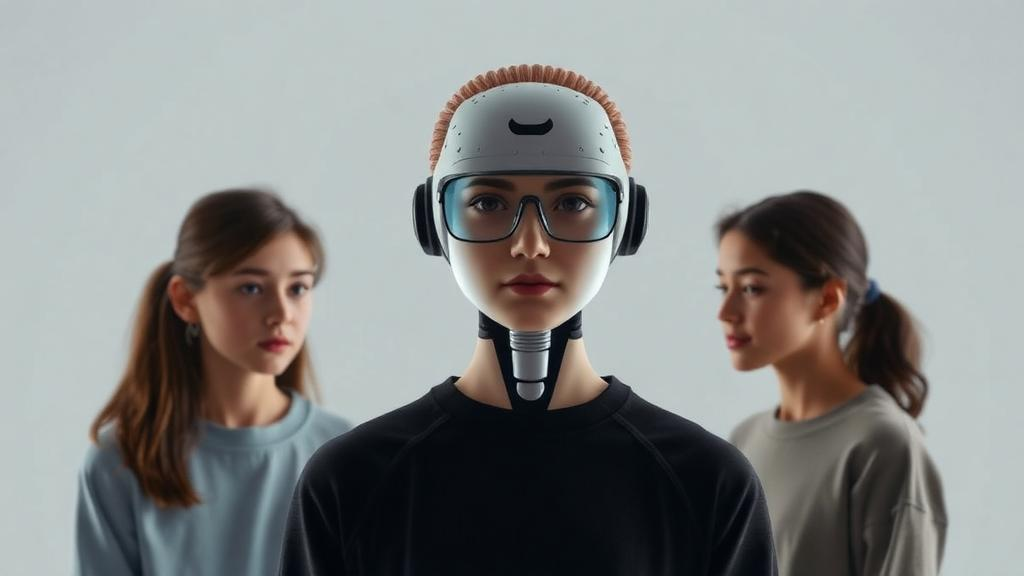
Now, with AI tools continuing to improve, debaters, administrators and coaches have to decide how to treat AI as it becomes more prevalent in the speech and debate space. Generative artificial intelligence models are creating arguments for students, aggregating evidence in seconds and sounding more believable year after year.
National Speech & Debate Association rules dictate students can’t paraphrase or quote any of their arguments directly from AI. Despite these restrictions, competitive speech and debate students said they’ve debated or spoken against teams who used AI.
Pierce Felts, a second-year debater at Hickman High School in Columbia, recalled judging a debate round in which he suspected both teams were using AI to write their arguments.
“It was just horrible because there were ‘nothing’ arguments as everyone says, don’t make any sense,” Felts said. “There’s no link. There’s no evidence. It’s just words that I’m hearing that just run off of me for two hours straight.”
Students who believe they’ve debated or spoken against AI report common themes in computer-generated responses. The arguments tend to sound prewritten or formulaic, and in some cases, use made-up evidence — or none at all.
“You can catch it really quickly, because when they don’t have any sources in their case, they’re not able to expand on what they were saying in later speeches or in cross-examination,” said Aanya Shetty, a second-year debater at Rock Bridge High School. “You can really tell that they weren’t the ones that came up with those ideas.”
Students who notice their opponents are using AI will often go on to win those rounds. Some, like third-year Hickman debater Tessa Johnson, aren’t so lucky.
Johnson said she and her freshman debate partner lost a tournament round to a pair of varsity-level debaters who were using AI.
“It just felt very unfair to not only be the more experienced person, but to also then just cheat when you should have built up the experience throughout your time if you’re a varsity speech-and-debater,” Johnson said.
Using AI in a round is grounds for disqualification from a speech and debate tournament. However, reporting an opposing team for using AI can be risky.
An accusation to a judge stops the round to investigate the accused team’s technology for AI use. If the accusers are wrong, they instantly forfeit the round.
Outside NSDA restrictions, it’s up to students to decide how much or how little they use AI. Some students use tools like ChatGPT or Google Gemini for idea generation or to find sources for their arguments.
Other students don’t use AI at all. Battle High School debater Remington Frost said he sees AI assistance as disingenuous and an unfair advantage over students who refuse to use AI.
“Speech and debate is about having the ability to come and present a topic … but also to research on both sides of the topic,” Frost said. “If you’re having AI do that, you’re not learning, you’re not improving and you’re not having this natural human relationship that you normally would have inside of this event.”
Students said AI is only becoming more common in speech and debate since ChatGPT launched in 2022. Some startups create dedicated AI programs to specifically automate speech and debate-related tasks.
Districtwide speech and debate coach and teacher Danielle Johnson said she thinks AI is here to stay.
Johnson doesn’t forbid AI use in her classrooms. Instead, she encourages students to use the technology responsibly.
“I try to be like, ‘Hey, not a super big fan of AI, but if you are going to use it, here’s this cool way you could use it,’ and that way, maybe if they recognize that there are some good things to do with it, they won’t be as tempted to use in the ways that I don’t think are as beneficial,” said Johnson, who is Tessa’s mother.
Johnson said part of her strategy to keep AI use fair and ethical is not overvaluing success at tournaments. For debaters, especially those less experienced, AI can seem like an enticing tool for securing easy wins.
“If you’re the kind of person that values and prides yourself on competing, but the thing you’re good at is writing and reading, this is like your one place to get trophies and get recognition,” Johnson said. “And I think for some people, they could become addicted to that success if they come from a team that really overvalues success.”
Johnson prioritizes learning and growing communication skills. She said the technique built through speech and debate will last students a lifetime.
“Life’s hard if you can’t read, but it’s doable. Life’s hard if you can’t write, but it’s doable … if you can’t communicate well, every aspect of your life is going to be harder,” Johnson said. “Effective communication skills, I think, are the end goal, and learning to exist in a community and learning to perspective-take and to have hard conversations and to not be right all the time, to listen. That’s what matters most to me.”
The work of the Missouri News Network is written by Missouri School of Journalism students and editors for publication by Missouri Press Association member newspapers.
Wei He/Missourian photo:
Hickman senior Thurlo Peterman discusses with district speech and debate coach Danielle Johnson on Tuesday, April 14, 2026, at Hickman High School in Columbia. Peterman said he doesn’t consider AI a threat in debate. “If you are not reading, if you are not studying your own arguments, then sure, AI can write the stuff for you,” Peterman said. “But when you start debating it, someone can quickly get around you and out argue you.”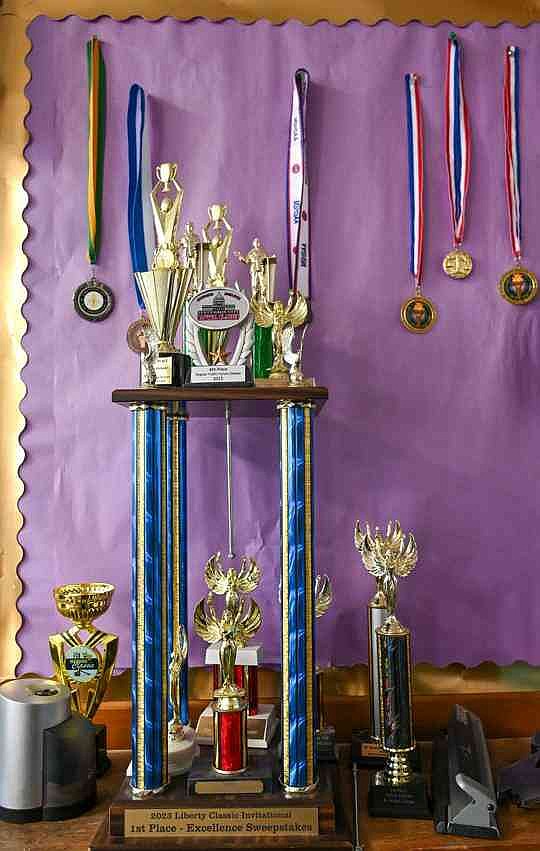 Wei He/Missourian photo:
The speech and debate trophies and medals are displayed in a corner of a classroom on Tuesday, April 14, 2026, at Hickman High School in Columbia. Hickman just earned the first pace in Debate Sweeps and qualified for nationals.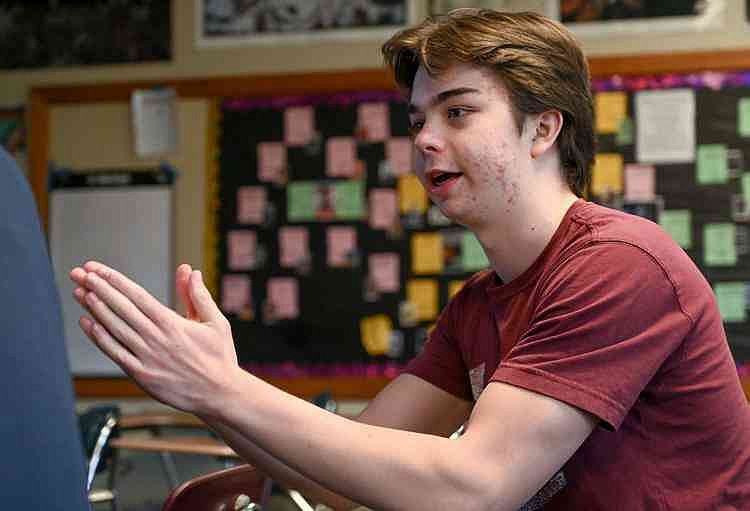 Wei He/Missourian photo:
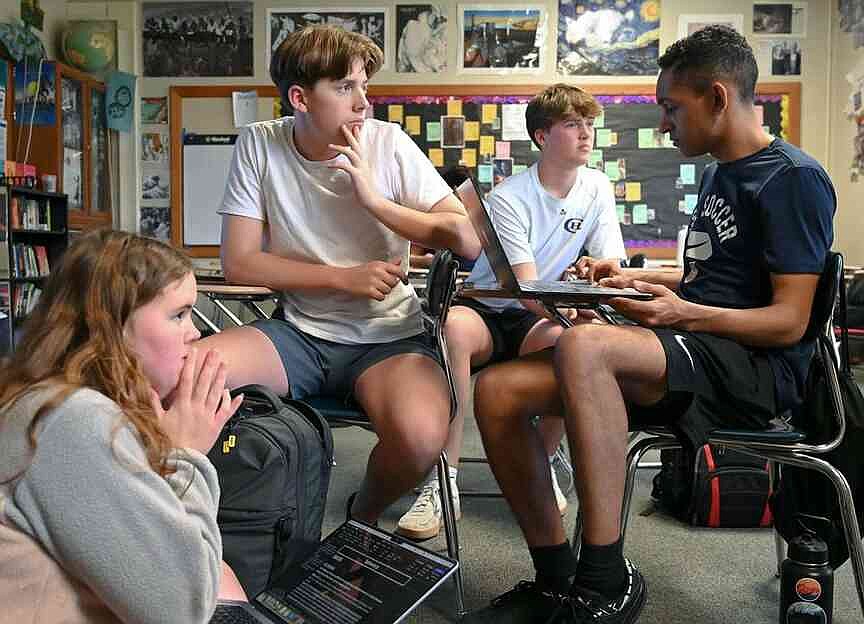
Hickman junior Pierce Felts discusses U.S. policy relating to the Arctic with other speech and debate students on Tuesday, April 14, 2026, at Hickman High School in Columbia. Felts said he is against using AI due to it’s negative effects on the environment and has led to bad investments. “It hurts your reliance, but I understand why it happens a lot,” Felts said.