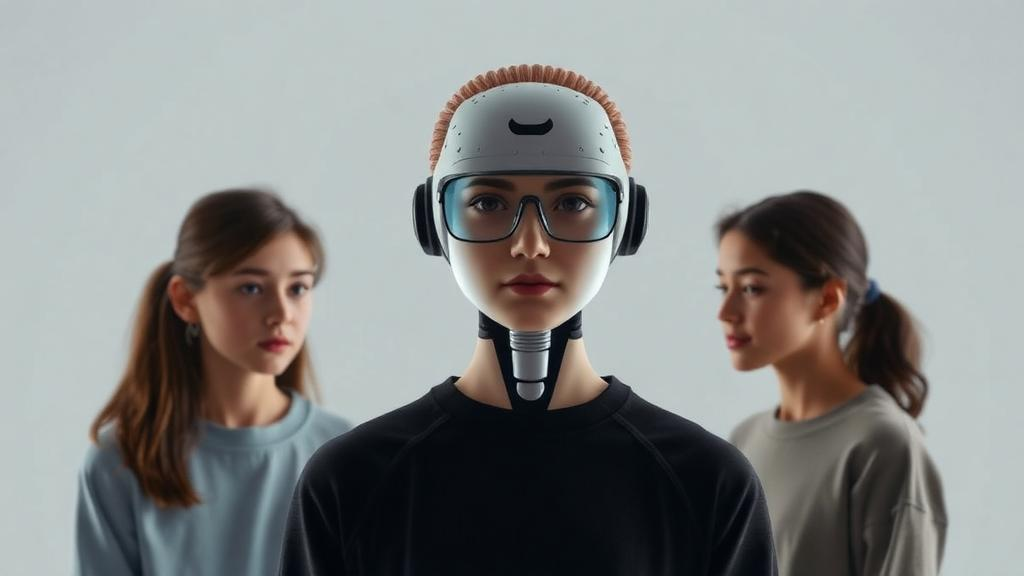



A photo of ChatGPT, one of many AI tools students use to help them with coursework. Credit: Melissa Meloui | Former Lantern Reporter
Ohio State is expanding its AI fluency initiative, incorporating arts and humanities for students to study AI through language, culture and ethics.
The Arts and Humanities AI Institute, led by Chris Coleman, interim director of the institute, aims to create humanities-centered opportunities using AI for students.
“The arts and humanities have a very specific and unique kind of conversation around AI,” Coleman said.
He said he expects it to become a space where teachers, students and staff can discuss and exchange ideas on how AI intersects with humanity.
“If every single student was learning AI in the exact same way, it would not be useful,” Coleman said. “What literacy is, is different for everybody.”
The institute aims to use AI as a tool to develop unique discussions from the perspectives of the arts and humanities, Coleman said.
The institute is still in its early stages, and several programs are currently underway, Coleman said.
Coleman said there are currently few faculty with expertise in AI, resulting in most of the workload falling on them. To address that issue, the institute provides a space for faculty curious in AI to learn how to incorporate AI into their teaching and research as AI Explorers.
The institute also hosts recent Ph.D. graduates with AI expertise on two‑year teaching and research appointments. Coleman said these postdocs will help develop new curriculum, teach courses and support the institute’s certificate programs.
In addition, the institute is developing three humanities-focused certificate programs: AI art and creativity, AI ethics and society and language and mind.
The first certificate is scheduled to begin this fall, while the other two started this semester.
“AI gives us a new benchmark to use to examine our understanding of language and mind,” said William Schuler, the faculty program advisor of AI language and mind certificate.
According to the proposal, the goal of the certificate program is to expose students to the similarities and differences between human linguistic reasoning and processing in language models that form the basis of modern artificial intelligence.
To complete the certificate, one required course, three elective courses and create a reflective portfolio. Schuler said that the portfolio maintenance makes it possible to link disparate classes and tie the various course requirements together.
Schuler said that the certificate is not designed to teach students how to build AI systems themselves. Rather, it aims to help students understand how AI works well enough to critically engage with it and collaborate with those who do develop the technology, without facing a steep learning curve.
From a humanities perspective, AI is also examined as a potential model of human language and reasoning. While large language models often appear human‑like in conversation, Schuler said that AI’s underlying processes differ in important ways such as what kinds of linguistic tasks it finds difficult or how it handles everyday reasoning.
“AI behaves in a human‑like way, but that doesn’t mean it reasons in a human‑like way,” Schuler said.
Coleman said once people become as familiar with AI as they are with the internet and learn to use it effectively, specialized organizations will no longer be necessary.
“One way the institute succeeds is if it becomes less needed,” Coleman said.
However, as long as it continues to evolve, the institute will remain a place where people work together and share knowledge, Coleman said.
“The arts is special because it’s human to human,” Coleman said. “I still believe that human‑to‑human connection in learning is different from what AI can offer.”