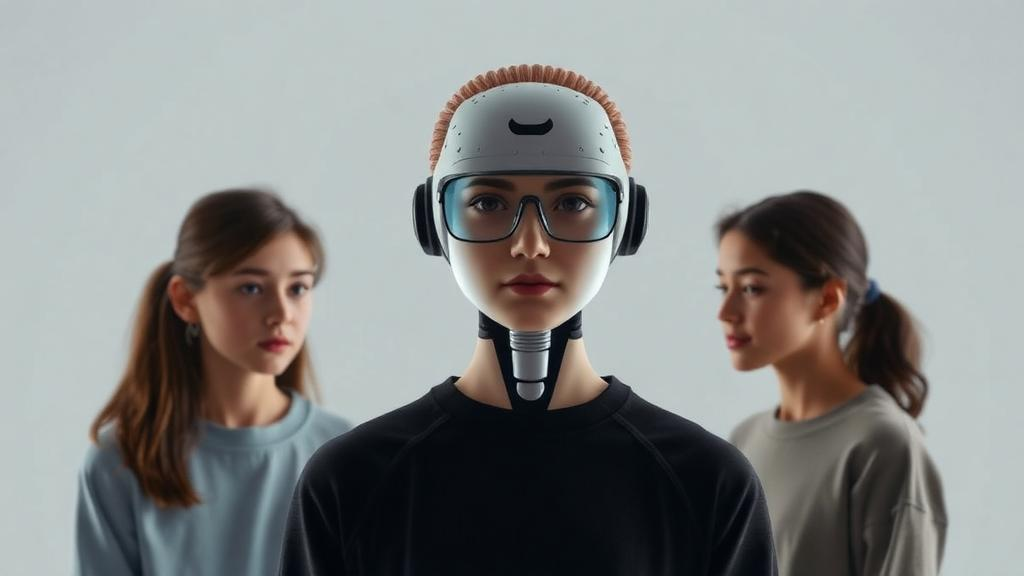



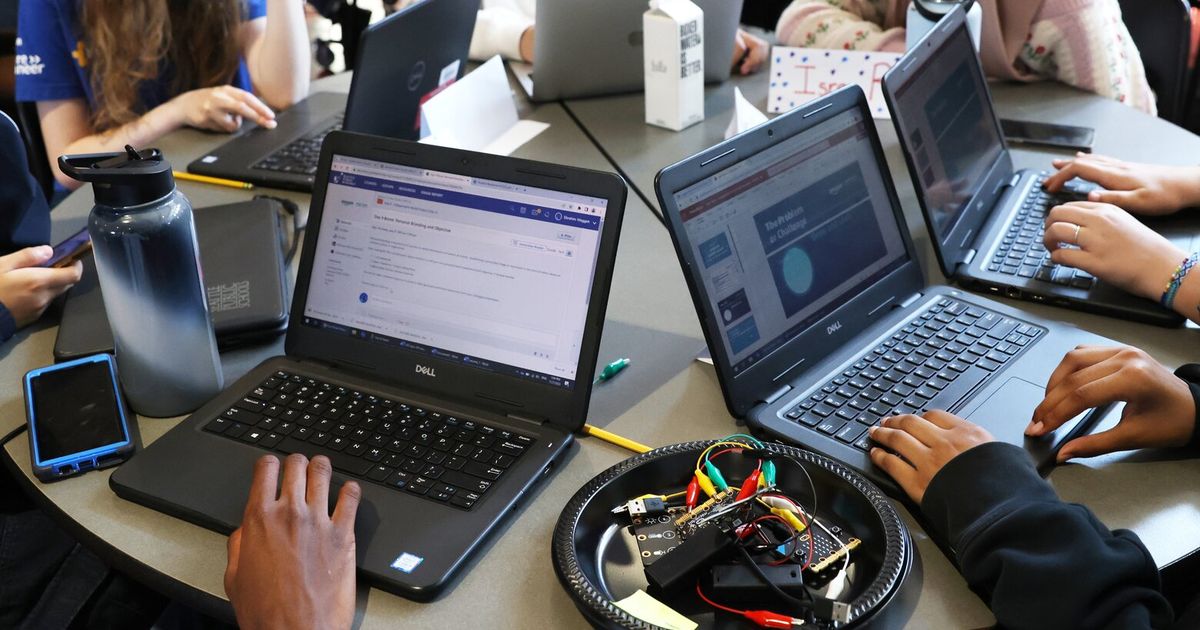
Thousands of parents in the Puget Sound region spend their days building artificial intelligence systems at Microsoft, Amazon, Google and countless startups. After work, they pick up their kids from Washington public schools, where the state’s official guidance on AI ethics tells students they are “the ultimate AI tester” and that learning with educational AI is “like playing a game and figuring out all the best moves.”
These parents know better. As University of Washington linguist Emily Bender argues in her new book “The AI Con,” “AI” is fundamentally a marketing term obscuring what these systems actually do and whose interests they serve. Large language models, for instance, don’t understand anything; they manipulate patterns in text, confidently producing outputs that may be false, biased or nonsensical. The gap between what the industry markets and what the state tells educators and families is vast enough to be dangerous.
Washington’s Office of Superintendent of Public Instruction published its AI ethics framework in July 2024. Its centerpiece is the “H ▷ AI ▷ H” model: start with human inquiry, use AI, end with human reflection. State Superintendent Chris Reykdal frames AI as the latest in a long line of classroom technologies, writing that “AI is here and slowing down isn’t an option.”
That framing is part of the problem. As Bender and co-author Alex Hanna document, a rhetoric of inevitability accompanies AI. But innovation and adoption are different things. The claim that students and teachers who don’t jump on the bandwagon will be left behind is deeply contested. This is the hype cycle working as designed, serving the companies selling these tools, not the children using them. Remember the hype over smartphones as educational tools? Now, there’s a global movement to ban smartphones and social media in schools altogether.
Consider a January 2026 report from The Brookings Institution. Drawing on hundreds of interviews across 50 countries and over 400 articles, the researchers document how AI overuse erodes students’ critical thinking through cognitive offloading, fosters emotional dependency on chatbots, degrades trust between students and teachers, and exposes children to manipulation and harmful content. Their conclusion? Right now, AI’s risks to children’s education overshadow its benefits.
OSPI’s framework predates this research, and we can’t fault them for that. But the framework contains no discussion of concerns that have been voiced for years, such as cognitive offloading or dosage. It says nothing about the emotional risks of AI companions. Its privacy recommendations amount to “continue to evaluate.” And it makes a startling philosophical claim, seemingly unaware: it declares that ethics is “an inherently subjective topic” with “not one correct answer.”
Whether or not that’s true, asserting it as a given in a statewide ethics framework is self-undermining. As philosopher Nicolas Tanchuk’s recent work in the journal Educational Theory suggests, if we tell students and educators that ethical questions have no better or worse answers, we strip away the motivation for sustained inquiry that might help us govern these systems well. You can acknowledge that ethics is hard and culturally situated without suggesting all positions are equally defensible. An ethics framework should be where careful reasoning begins, not where certain conclusions — for example, a moratorium on AI in K-12 education — get preemptively shut down.
This is especially frustrating because Washington has the intellectual resources to do far better. Yet OSPI’s AI Advisory Group included no experts in ethics, computational linguistics, human development or learning sciences, and no one from the robust community of AI critics based in our state.
The authors of the 2024 guidelines were right when they said, “you don’t need to be an AI expert to have a sense of what’s morally right or wrong.” But expertise doesn’t hurt, either. Washington should replace its current framework with guidance that is both more protective and more intellectually serious. That includes treating the ethics of AI with more respect than anything-goes conversation.
The parents building AI at work and sending their kids to our state’s schools should not have to choose between their professional knowledge and their trust in public education. OSPI acted responsibly by getting ahead of the game. But the state of the research on AI in education demands a framework that meets the seriousness of the moment.
Tomas de Rezende Rocha: is an assistant professor of philosophy of education at the University of Washington.