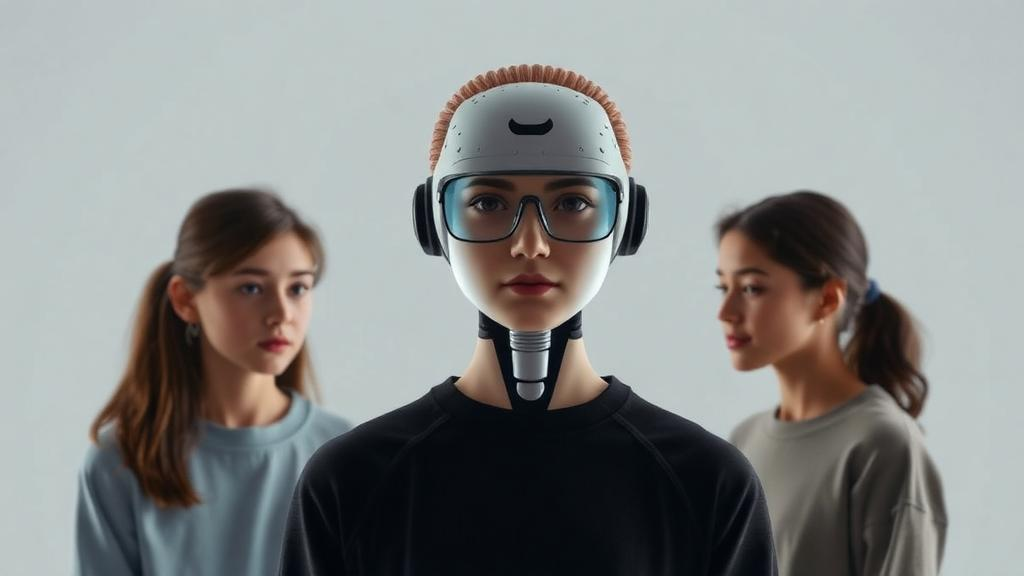



Breathing the ‘ethics’ of certified public psychologists and social workers into AI logic
(This content is once again a bit formal and professional, so please feel free to read through it lightly.)
What is missing from AI’s ‘perfect proposals’
So far, I have shared how to utilize AI as an ‘excellent analyst’ or ‘bias checker.’ In objective data processing and presenting new hypotheses, AI is undoubtedly a powerful partner in the field.
However, no matter how brilliant or novel the approach AI outputs, you can never simply copy and paste it and apply it to the field.
This is because the text AI outputs does not contain the ‘ethics’ and ‘responsibility’ that are most important in interpersonal support. Breathing the life of a professional into AI’s objective and logical proposals and adjusting them to fit the life of the user in front of youâthat is the final ‘work of putting in your soul‘ that we professionals perform.
The perspective of a certified public psychologist: Respect as an ‘irreplaceable being’
AI’s greatest strength is deriving statistical optimal solutions from vast amounts of past data, such as ‘this approach is effective for people with this tendency.’
However, Article 2 of the ‘Code of Ethics of the Japanese Certification Board of Clinical Psychologists’ states the following:
‘…Respect every person as an irreplaceable being.’
In a clinical setting, this is a strong admonition never to reduce the subject to data (patterns) such as ‘diagnostic names’ or ‘categories.’
Even if AI presents an average and general correct answer, we psychology professionals re-examine it by asking, ‘How will this approach resonate with the background and emotional fluctuations of the one-and-only individual, Mr./Ms. C, who is right in front of me?’
The stance of not taking AI’s answers at face value and thoroughly staying close to individualityâthis is the ‘soul of a psychology professional‘ that will never dwell in AI.
The perspective of a social worker: ‘Holistic understanding’ and ‘respect for self-determination’
On the other hand, what about from the perspective of a social worker? In the Code of Ethics of the Japanese Association of Certified Social Workers (and the global definition of social work), there are important principles that put a stop to the ‘efficient correct answers’ derived by AI.
These are ‘holistic understanding’ and ‘respect for self-determination’.
AI often suggests the “shortest route to solve a problem most efficiently.” However, social workers view clients as a holistic being (person-centered understanding) consisting of physical, psychological, social, cultural, and spiritual aspects.” Efficiency that only interprets text data while ignoring a person’s culture or spirituality cannot be called support.
Furthermore, even if an AI’s proposal is objectively a perfect 100-point answer, if the individual has different intentions, a social worker will reject that answer, shielded by the “respect for self-determination.” Even if it is inefficient and messy, ensuring the process that the person desiresâsaying “I want to do my best this way”âand advocating for that right is the soul of a social worker.
The weight of signing your name in the name of “responsibility”
If personal information is anonymized, AI can process data coldly without being swayed by emotions. However, AI bears no responsibility for the direction of support that results from that. It is necessary to recognize that AI utilization is merely a supplementary role to support thinking. The final decision-making support and responsibility are always borne by on-site managers or service management supervisors.
At the end of explaining an individual support plan, watch the person sign it. Then, promise them, “Let’s work on this together.”
This promise is the true meaning of the phrase “putting your soul into it.”
Reorganizing the logical “100-point answer” provided by AI into small-step proposals tailored to the individual’s situation, or adjusting the tone to be encouraging and in sync with their pace, so that it is easier for the person to accept.
It is in this “ethics-based adjustment work” that our professionalism shines the brightest. Of course, coming up with ideas for such “ways to communicate with the individual” is also an area where AI excels.
The value of hesitation and continued conflict in the heart
Operational efficiency, productivity improvement, and time-saving are extremely important in DX in welfare settings, including Type B continuous employment support. However, you must not seek answers from AI for “ethical dilemmas (conflicts).”
“AI says this, but will this really lead to the person’s happiness?” We are required to create time to stop, worry, and engage in discussions among staff.
That is by no means wasted time, but an essential process for continuing to hone our sensibilities as supporters.
It is precisely because we have acquired the overwhelming efficiency tool that is AI that we can face human “ethics” more deeply. Using the time saved by AI to “deepen our thinking” is extremely beneficial as a professional.
Next time (the 19th installment) will finally be the last of the second phase: “AI as a mirror: After finishing the second phase of rediscovering one’s own professionalism.” We will summarize our significance in the AI era while looking back on our dialogues so far.
This is the previous article #17. Please take a look at that as wellâ¨