


This article examines whether the ability to write prompts is still necessary in the era of AI agents, by looking at official documentation and actual feelings of discomfort.
To give the conclusion first, the ability to write prompts has not disappeared. However, what is important is not polite phrasing, but providing the work’s premises, constraints to be followed, reference samples, and methods for judging completion.
Even short instructions can take shape. But the output will be similar results.
If you just instruct an AI agent like Claude Code or Codex to “make a landing page,” it will return a working page in a few minutes.
An AI agent is a mechanism that, when told a goal, proceeds with research, creation, and correction. The color scheme is organized, and the text is included.
Previously, it wasn’t this easy. Changing the phrasing slightly would change the result, and it was necessary to rewrite instructions many times until it approached the ideal form.
However, when you line up several finished pages, they all look similar. The order of headings and the words used become forms seen somewhere before.
When I created an article with short instructions, the same thing happened. It wasn’t bad, but it didn’t look like my own writing.
Some people call this discomfort “AI-ness.” However, whether the cause is a lack of instruction technique cannot be judged by feeling alone.

There is one question to verify in this article. Now that AI agents have become widespread, has the technique of instructing via prompts really become unnecessary?
This time, I will check whether pages dealing with how to write instructions still exist, whether those pages extend to agent products, and whether the elements recommended there can be organized. I will not measure how much the quality of output improves when instructions are changed.
Three terms to know beforehand

A prompt is an instruction text given to an AI. In this article, it refers to the entire text passed when asking an AI to do work.
Prompt engineering is the technique of designing and improving instruction texts to obtain ideal output. Anthropic’s official documentation covers clarity, exemplification, structuring, role specification, and splitting instructions.
Context engineering is the concept of designing not just the instruction text, but all the information the AI can refer to at that point. Anthropic explains this as a concept that naturally evolved from prompt engineering. It does not mean that the previous technique disappeared and was replaced by another.
By making this distinction, it becomes easier to organize what the talk of “prompt engineering has become unnecessary” refers to. This is because the work of refining instruction phrasing and the work of preparing premise information to pass to the AI are not the same.

I used Jina Reader for the investigation. It is a service that converts web pages into text that is easy for machines to read.
The scope was limited to official documentation from Anthropic and OpenAI. Explanatory articles and social media posts were used as references to find pages to investigate, but were not used as grounds for the conclusion.
Before starting the investigation, I decided that if I could confirm the following three points, I could answer this question.
-
The fact that official pages dealing with how to write instructions still exist
-
The fact that these explanations extend not only to chat but also to agent products
-
The ability to organize the recommended elements into instruction phrasing and work prerequisites
Whether or not it seems useful is not included in the criteria for this judgment.
Conclusion: Prompt instruction design is not unnecessary.
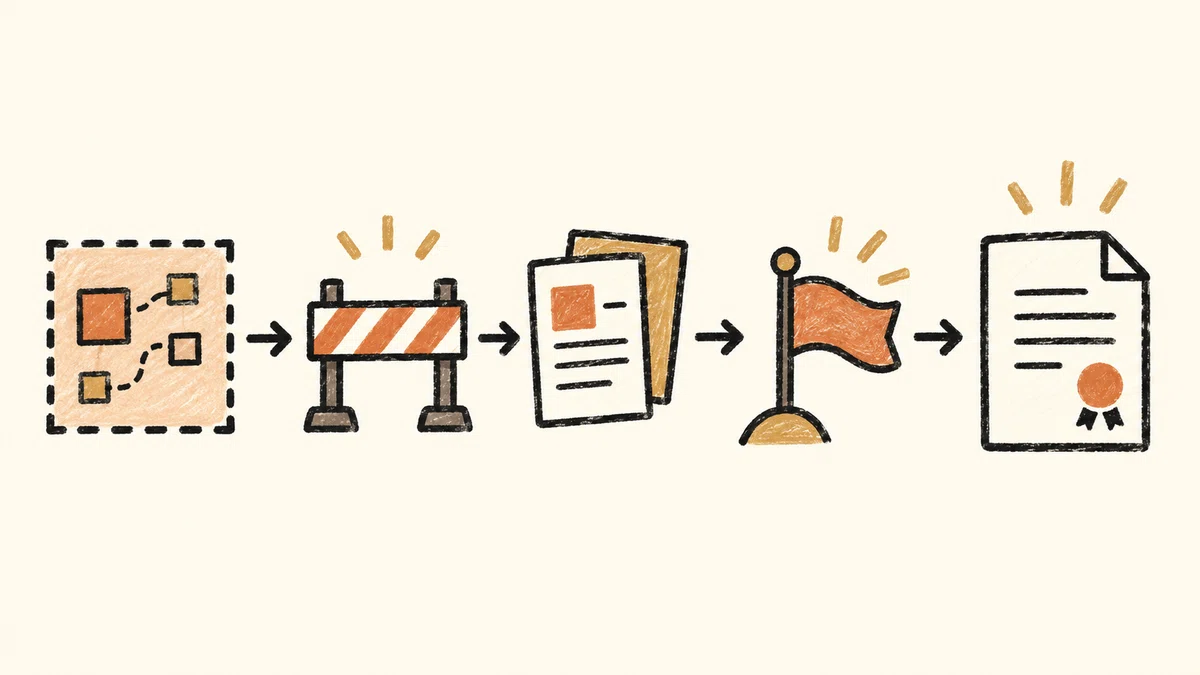
Anthropic’s developer documentation still contains a section on prompt engineering. There are also pages explaining how to provide instructions for each model.
One cannot conclude that “instructions are necessary” just because there are model-specific pages. However, at the very least, the developers explain how to provide instructions based on the differences between models. It cannot be said that instruction design has become completely unnecessary.
The recommended procedures for Claude Code explain that making instructions precise can reduce the number of corrections. Specifically, methods such as specifying the scope of work, indicating where the answer is located, referencing existing examples, and writing down the symptoms and the corrected state are introduced.
For example, change an instruction like “add a test to foo.py” to one that targets an exceptional situation, such as a logged-out user, and includes the condition of not using fake data for testing. What is being added is not polite phrasing, but rather the conditions for the target and what must not be done.
The same document also recommends preparing methods for running tests, building, and checking the screen so that the AI can verify whether the task is complete.
OpenAI’s developer documentation also has a section on prompts. For important tasks, it explains that instructions should include four elements: purpose, context, output format, and boundaries. Boundaries refer to things that must not be changed, things to avoid, and things that require confirmation rather than proceeding on one’s own.
The explanation for Codex recommends writing the desired behavior specifically, indicating the relevant sections or reproduction steps, and leaving behind constraints to be followed and verification methods.
Up to this point, I have confirmed the existence of the official pages and organized the elements recommended therein. I will explain how readers can try this in their own work later.
For prompt instructions, specifying prerequisites and completion criteria has become more important than how to phrase the instructions.

From here on is my interpretation after reading the official documents. What was central in the official documents was not boilerplate phrases for declaring roles or polite tones of request. It was the scope of the target, constraints to be followed, examples to reference, and methods for judging completion.
With short instructions, the AI processes unspecified parts in a general way. Therefore, I believe that the shorter the instruction, the more likely it is that the output will be similar regardless of who writes it. This is not a fact written in the official documents, but a conjecture based on my experience that multiple outputs tend to be similar with short instructions.
The person who can concretize missing conditions is someone who knows the work in that field. For a web page, you specify what you want to show in the initial visible area, or whether you want to improve the click-through rate or the number of inquiries. For text, you can set conditions such as sentence length or the reader’s knowledge level.
In this sense, what has decreased in importance is the task of choosing words to suit the quirks of the model.
Conversely, what has become important is the task of writing out the prerequisites and judgment criteria considered common sense in your field in a form that can be passed to the AI.
It is more accurate to think that writing skills have not become unnecessary, but rather that in addition to writing skills, the ability to organize work prerequisites has become more important.

If you want to try it in your own work, four steps are enough

First, choose one task you always rely on AI for and write down the instructions you currently use.
Next, add three rules about that task that you take for granted. For accounting, this could be how to handle account titles; for manuscripts, the length of a sentence; for images, how to set margins. The things you tell a new hire verbally are perfect candidates.
In the third step, add one line on how to judge completion. Since it is hard to judge based on “being easy to read,” set a condition that can be verified later, such as “each sentence must not exceed 60 characters.”
In the fourth step, perform the same task several times and record the number of revisions. If the number of revisions decreases, the added conditions may have been helpful.
There is also information that should not be given to AI. This includes names and contact information of business partners, internal unpublished documents, customer personal information, and prices or contract terms that have not yet been announced. Whether input content is saved depends on the service’s settings and terms of use, so you must check before using it.
Recording the instruction text, the number of revisions, and the date of implementation is sufficient. As you accumulate records, you can compare which conditions you added when the number of revisions decreased.
What can and cannot be said from this investigation

What can be said from this investigation is that developers maintain documents on how to write instructions, and documents for agents specifically cover scope, constraints, examples, and completion criteria.
Start today by choosing one task you always revise and write down three obvious conditions. As the amount of work you entrust to AI increases, you need to put into words what you are delegating and what humans should judge.
Reference Information
-
Anthropic “Prompt engineering overview” https://platform.claude.com/docs/en/build-with-claude/prompt-engineering/overview (Claude Platform Docs, publication date not listed, confirmed September 22, 2026). Used to check the prompt section and model-specific pages. Prompt engineering overview
-
Anthropic “Effective context engineering for AI agents” https://www.anthropic.com/engineering/effective-context-engineering-for-ai-agents (Published September 29, 2025, confirmed September 22, 2026). Used to confirm the positioning of context engineering. Effective context engineering for AI agents
-
Anthropic “Best practices for Claude Code” https://code.claude.com/docs/en/best-practices (Claude Code Docs, publication date not listed, confirmed September 22, 2026). Used to confirm instruction accuracy and revision methods. Best practices for Claude Code
-
OpenAI “Prompting” https://learn.chatgpt.com/docs/prompting (OpenAI documentation, publication date not listed, confirmed September 22, 2026). Used to confirm objectives, context, output formats, boundaries, and conditions for Codex. Prompting
-
ITmedia AI+ “Is prompt engineering dead? Why the theory that spells for AI are unnecessary is being whispered” https://www.itmedia.co.jp/aiplus/article/2505/15/1250515087/ (Hiromichi Kobayashi, published May 15, 2025, confirmed September 22, 2026). Used as a reference to organize the arguments of the unnecessary theory. Is prompt engineering dead?