



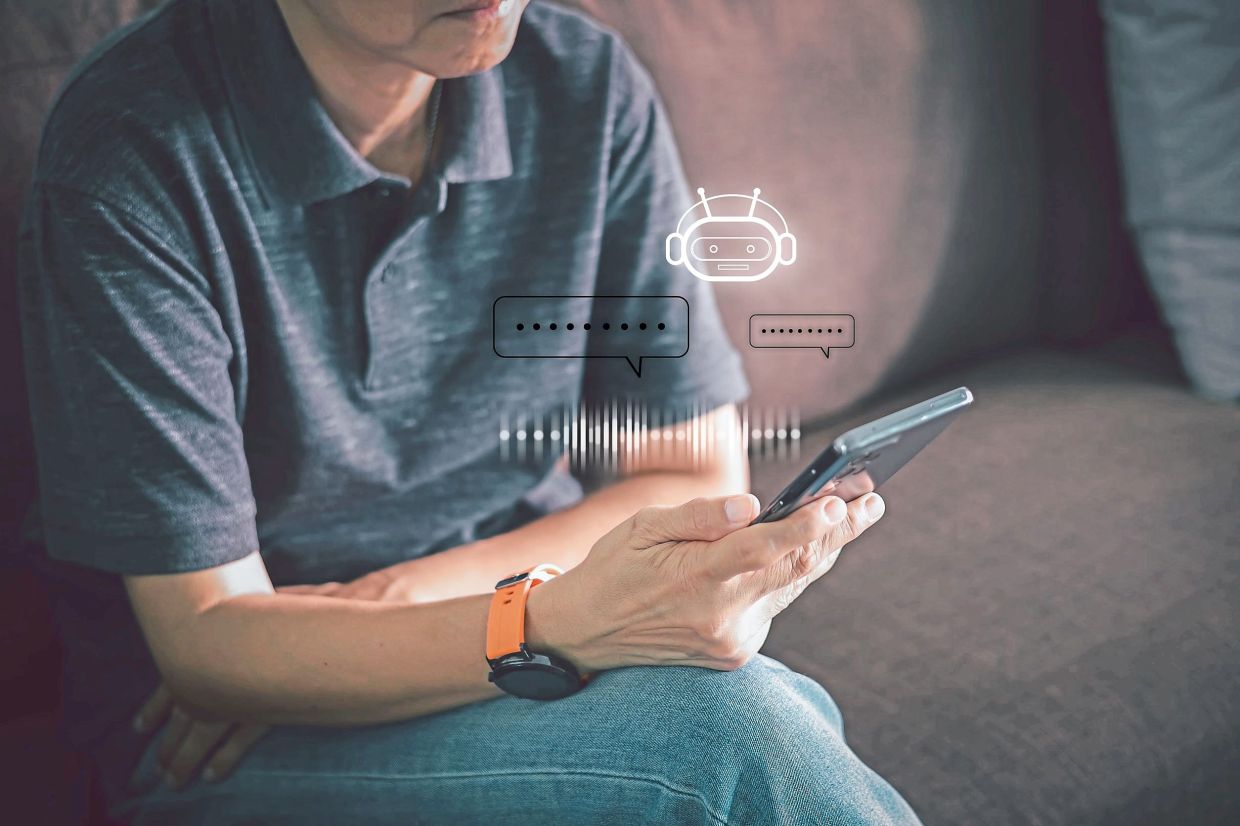
ARTIFICIAL intelligence is rapidly changing almost every aspect of human life, and the mental health field is no exception. There is growing interest in what AI means for the future of mental health care. Early research findings suggest that AI-based interventions can help reduce mental health symptoms and improve access to care, although concerns remain about the psychological and safety risks associated with human-like yet non-human AI systems, particularly general-purpose chatbots commonly used for emotional support.
While these concerns warrant careful attention, it would be misleading to view AI in mental health care solely through the lens of conversational chatbots, particularly general-purpose platforms that were never designed to provide mental health support in the first place. Such a narrow perspective risks obscuring the broader opportunities AI presents for transforming mental health services at a time when affordable, accessible and scalable care is needed more than ever. The real question is not whether AI has a place in mental health care (this is already happening), but how it can be adopted responsibly, ethically and effectively to improve outcomes for clients and communities.
Lessons from medicine
The mental health profession can take a leaf from the broader medical field, which is already integrating AI across a wide range of applications from diagnostic imaging analysis to personalised treatment planning (and even assistance with surgical procedures). If you have undergone an X-ray or radiology scan recently, it is likely that AI played a role in analysing the images that informed your physician’s assessment. These innovations have not replaced doctors or clinical judgement, but support them by improving the efficiency and quality of care within established ethical standards.
The most important lesson for mental health from the medical field is that AI is not here to replace mental health professionals. Instead, it is a tool that can augment human expertise, improve service delivery and free counsellors, psychologists and psychiatrists to prioritise clinical judgement and meaningful interactions with clients. The future of mental health is unlikely to be AI versus therapists, but rather AI integrated into clinical practice led by mental health professionals.
Post-pandemic opportunities
The mental health landscape has evolved in recent years, particularly since the Covid-19 pandemic, making AI adoption more practicable than ever. Digitally delivered mental health services, including telephone, video and app-based support, are increasingly accepted by the public. Given the global mental health crisis, workforce shortages and an ever-widening demand-supply gap, AI-enabled solutions can scale these services further.
Mental health is also increasingly seen through the wider lens of wellbeing, prevention and early intervention, rather than clinical treatment after the fact. This shift has encouraged stepped-care models that match the level of support to individual needs, ranging from self-help resources to specialised clinical interventions. Such flexible models create a conducive environment for AI-supported systems, particularly for low-intensity support earlier in the care pathway, including awareness, screening and detection.
Potential applications for clients and practitioners
AI offers wide-ranging possibilities in mental health care, as it can be not only conversational but also predictive in analysing risks and agentic in completing multi-step tasks. Potential applications include psychoeducation in mental health, real-time sentiment analysis during sessions, data-driven identification of self-harm and suicide risk, and personalised treatment planning that makes care more tailored and responsive. Moreover, purpose-built chatbots with clinical safeguards, clear escalation processes and real-time links to human therapists in crisis situations can address some of the safety concerns about general-purpose chatbots.
AI can also improve the efficiency of mental health administration and caseload management, including client scheduling, automated reminders, service planning and resource allocation. Irrespective of the application, clinical judgement must remain central to mental health care. In fact, the AI era makes professional expertise more valuable than ever, as technology can identify patterns and provide information but cannot replace human insight, interpersonal rapport, cultural awareness and safety oversight.
Foundational ethical principles
Many of the psychological and safety risks associated with AI in mental health care are ethical concerns as much as clinical ones for mental health professionals. Across jurisdictions and professional bodies, mental health professionals are guided by common obligations to promote wellbeing, avoid harm, respect autonomy, protect dignity, demonstrate cultural sensitivity, safeguard confidentiality, maintain competence and act in the best interests of clients. These same ethical standards have become even more important as AI is adopted in mental health care.
AI is not creating new ethical questions so much as requiring us to apply prevailing ethical standards in uncharted territory. AI in mental health is neither ethical nor unethical in itself, as the outcome depends on how the technology is used. Mental health professionals have a responsibility to apply existing ethical standards to AI use, with particular focus on justice and equity to ensure technology-based mental health systems are inclusive and available to people from all backgrounds.
Inclusion by design
Mental health care already faces unequal access across socioeconomic groups, while technology brings its own digital divide between the haves and the have-nots. There is heightened concern that AI-based mental health services could deepen this marginalisation and inequality, particularly for older adults and communities with limited digital literacy who face barriers to access. However, this need not be a foregone conclusion if we build inclusion by design from the outset in the planning and implementation of AI-based tools in mental health.
The design priority is to make AI-based tools simple, intuitive and accessible through voice-activated and multilingual systems that overcome barriers of age and literacy, while meeting diverse visual, hearing and cognitive needs. Trust and confidence must also be built among those less likely to embrace technology with community-based digital literacy and public education programs, which can create opportunities for intergenerational learning. It is imperative that AI-based mental health tools are designed with older adults and people from different backgrounds, and not only for them, to address concerns about exclusion, safety, privacy, scams and algorithmic bias.
Necessary mindset shift
If the focus is on clients shifting their mindset to embrace AI-based mental health care while ensuring its safe use, the same impetus applies to mental health professionals.
Questions like “Will AI replace therapists?” are alarmist and unrealistic, as AI is already part of the mental health ecosystem and cannot replace clinical judgement. The more helpful question is how to use AI more purposefully, ethically and responsibly to achieve better clinical outcomes.
Rejecting AI outright would be a disservice to clients given its extensive range of uses beyond chatbots, including clinical decision support, data analysis, psychoeducation and administration. When it comes to chatbots, mental health professionals need to recognise that many clients are already using AI-based tools for emotional support and we have an ethical obligation to understand what is driving this, while ensuring its informed and safe use. If the answer lies in accessibility, convenience, immediacy and responsiveness, mental health professionals need to ask how we can offer the same in our own services with the support of AI.
Leveraging AI
AI in mental health is not a hypothetical future but a present reality, with potential applications far broader than conversational chatbots. Like the medical field, mental health care can benefit from AI that augments human expertise, improving efficiency and quality of care without replacing humans. All of this will require upholding the ethical standards that bind mental health professionals, even more so in a rapidly changing AI landscape.
Ultimately, this future will require more meaningful conversations about AI in mental health, including its challenges, promises and ethics, among mental health professionals, technology providers, policymakers and, most importantly, community members, particularly older adults and people from diverse backgrounds.
Mental health professionals have an ethical responsibility to use AI in ways that improve access, prevent a digital divide and preserve the human connection that defines our profession. The question is no longer whether AI belongs in mental health, but how we shape its use responsibly to improve the quality of care with ethics and inclusion.
AI is not our competitor, and it is up to us to shape and guide its use for a better mental health system of the future.
Dr Arman I. Rashid is a Melbourne-based policy analyst-turned-mental health professional, trainer and researcher. He has been a member of the National Coalition for Mental Wellbeing (NCMW) since its inception. The views expressed here are solely of the writer’s own.
NCMW is jointly organising the Regional Symposium 2026 with the Consortium of Institutes on Family in the Asian Region (CIFA) themed “Building Bridges: Mental Health and Resilience Across Generations in the AI Era” from 18-20 November 2026 in Kuching, Sarawak. The symposium will be an opportunity to have meaningful conversations on how AI can help improve mental health service delivery and resilience across generations. For more information, go to ncmw.com.my/cifa2026/